Quick Answer
The first Starbucks holiday drink ever was the Eggnog Latte, introduced in 1986 and credited to Starbucks coffee director Dave Olsen.
It stayed on the winter menu almost every year for 35 seasons before being quietly discontinued in 2021 to make room for dairy-free holiday additions.
Starbucks in 1986: a very different company
When the Eggnog Latte first hit the counter, Starbucks was still a small Seattle chain focused on selling coffee beans, not a global cafe network. The company had only recently started serving espresso drinks in-store, and Howard Schultz was in the middle of buying the original bean-roasting business from its founders to reposition it as an Italian-style espresso bar.
Dave Olsen, the coffee director and blending pioneer of early Starbucks, wanted a specialty drink that would capture the feeling of an American family Christmas. Instead of building a new syrup from scratch, he grabbed a carton of commercial supermarket eggnog and poured it directly into the steaming pitcher.
The engineering problem: curdling eggnog
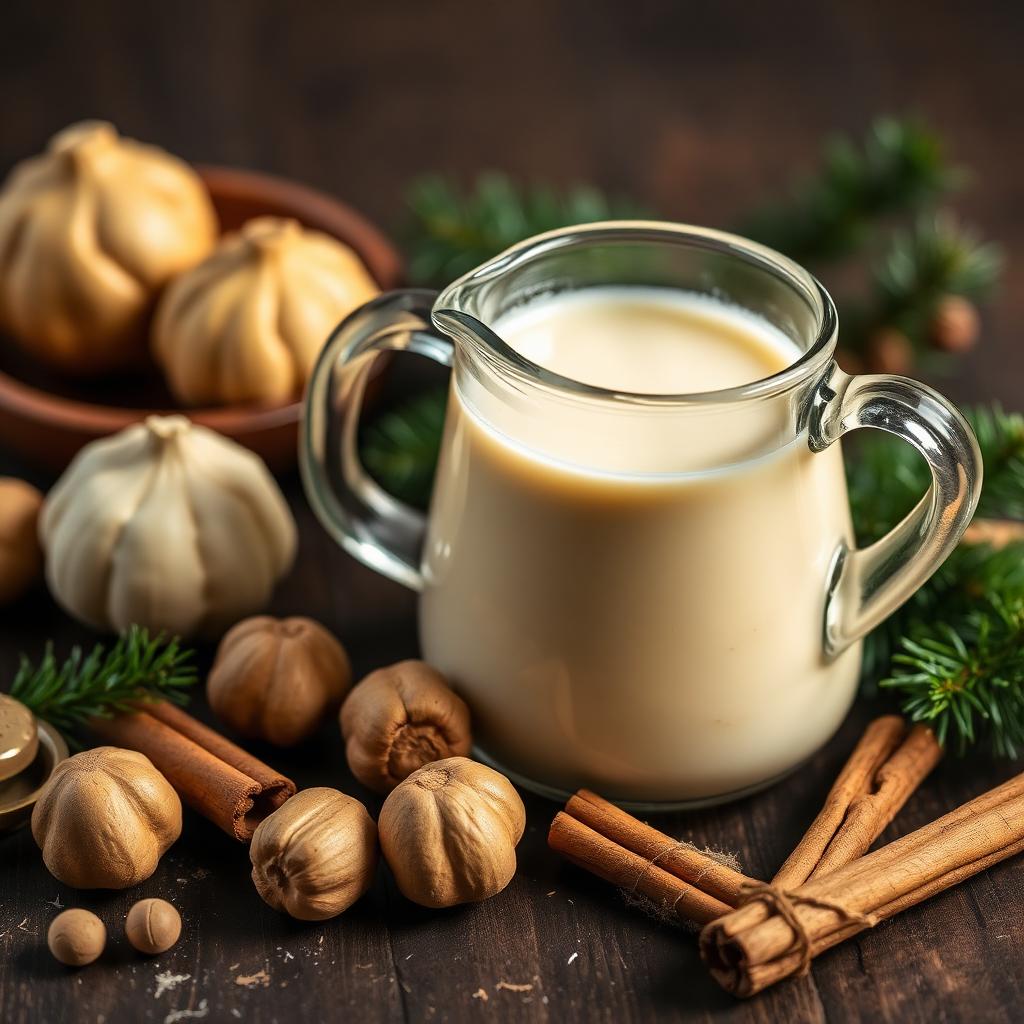
Straight commercial eggnog is dense and heavy, loaded with egg yolks, cream, and sugar. When Olsen aimed a high-pressure steam wand at pure eggnog for the first time, the egg proteins cooked instantly, the fat separated, and the pitcher let out a loud shrieking sound.
The fix was a simple dairy ratio. Cutting the eggnog with thinner low-fat milk dropped the viscosity enough that the steam wand could aerate the liquid smoothly without cooking the egg. The resulting drink was rich but pourable, with a velvety micro-foam texture on top.
The original 1986 recipe
The classic Grande Eggnog Latte was built with a specific set of ingredients:
- 2 shots of Starbucks Signature Espresso (a bolder holiday roast in later years)
- Roughly 2 parts eggnog to 1 part 2 percent milk, steamed together
- No added syrup: the eggnog itself supplied the sweetness
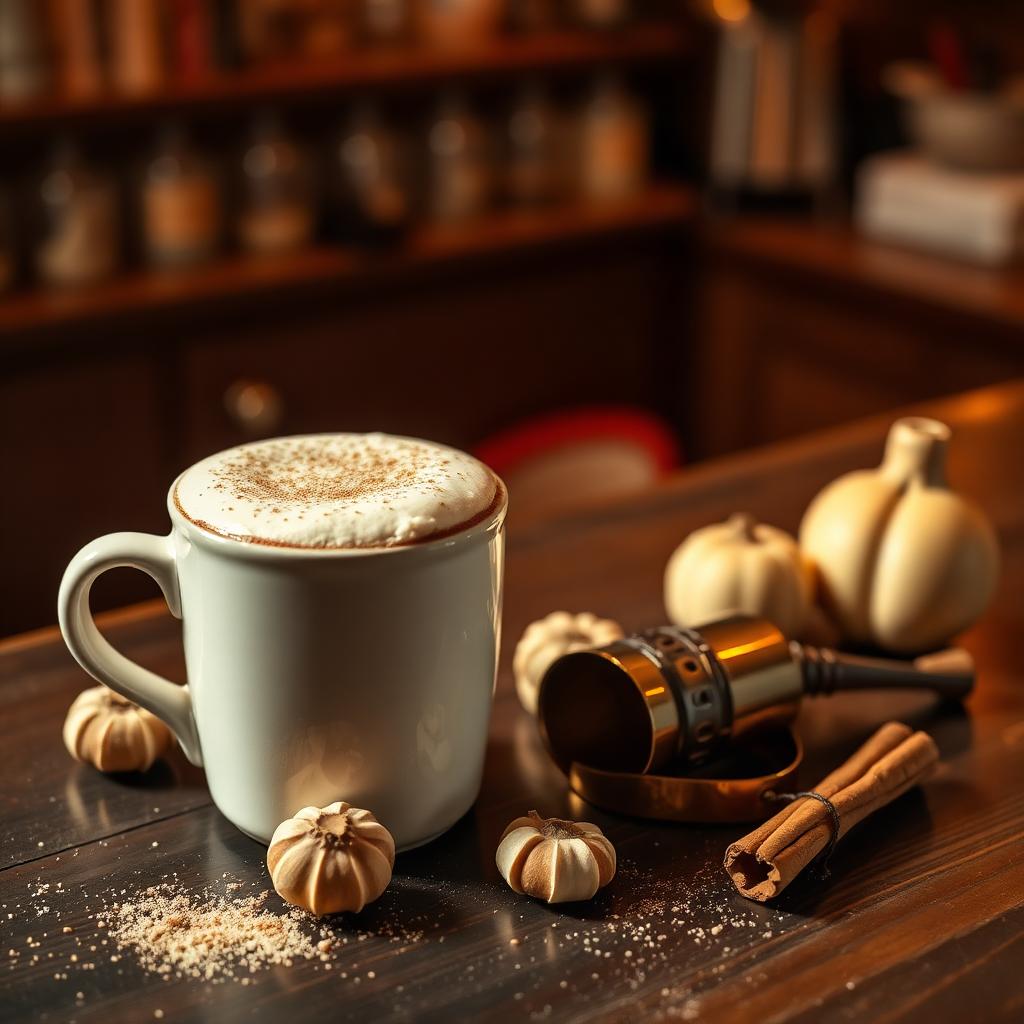
- A heavy dusting of freshly ground nutmeg on top
The absence of a separate syrup was a defining trait. Almost every modern holiday drink relies on a pumped syrup or sauce. The Eggnog Latte pulled its flavor from a real dairy product, which is exactly what made it feel more like a homemade holiday treat than a factory-built cafe drink.
Historical anatomy of the original
| Component | Ingredient | Purpose |
|---|---|---|
| Coffee | Espresso, later Christmas Blend | Bold, smoky base that cut through the sugar |
| Dairy | 2/3 eggnog, 1/3 milk | Prevented curdling under the steam wand |
| Sweetener | Sugar naturally in eggnog | No added syrup needed |
| Garnish | Freshly grated nutmeg | Signature holiday aroma on first sip |
Why it worked for 35 years
The Eggnog Latte gave Starbucks something valuable: a truly seasonal identity for the winter months. Before it existed, there was no distinction between the drinks a customer ordered in July and the drinks they ordered in December. After it launched, seasonal menus became a formal part of the corporate playbook, eventually growing into the Pumpkin Spice Latte in 2003, the Peppermint Mocha in 2002, and today’s multi-drink holiday rotations.
Loyal customers built their own winter traditions around the drink. Ordering the first Eggnog Latte of the season became a quiet November ritual for regulars for decades.
The 2021 retirement
By the late 2010s, consumer preferences had shifted heavily toward lighter, dairy-alternative options. Eggnog is calorically dense: a Venti Eggnog Latte packed around 610 calories and more than 50 grams of fat, well above most other menu drinks. Perishable eggnog jugs also created a cold-storage burden inside compact cafe fridges during the busiest weeks of the year.
In 2021, Starbucks quietly removed the Eggnog Latte from the core holiday menu, opening the seasonal roster to newer dairy-free launches like the Sugar Cookie Almondmilk Latte and the Iced Gingerbread Oatmilk Chai. The company never announced a full retirement, but the drink has not returned to the national menu since.
Can you still order it?
Some individual stores keep eggnog cartons in stock through December for special requests, and a barista may build the drink for you off-menu if inventory allows. The success rate depends on the store manager and how much eggnog was ordered that season. Do not count on it, and always ask politely rather than expect it.
Bottom line
The very first Starbucks holiday drink was the Eggnog Latte, launched by Dave Olsen in 1986 as a simple, honest combination of steamed eggnog, milk, espresso, and grated nutmeg. It defined the entire concept of a seasonal cafe menu for a generation, held its slot for 35 years, and was retired in 2021 to make space for lighter dairy-free winter drinks.
How the Eggnog Latte changed the industry
Before 1986, no major coffee chain ran a formal seasonal menu. The Eggnog Latte was quietly revolutionary because it introduced the idea that a drink could be scarce on purpose, tied to a specific window of the year, and marketed as a return event. That template shaped everything that followed. When Peets, Caribou, Dunkin, and Tim Hortons all launched their own holiday drinks in the 1990s and 2000s, they were following a blueprint Starbucks wrote first.
The Eggnog Latte also proved that customers would happily pay a premium for a limited-run beverage. That single insight built the foundation of the entire modern seasonal cafe economy.
Making a copy at home
The original recipe is easy to reproduce in a home kitchen. Steam or heat a mix of two parts store-bought eggnog and one part 2 percent milk until it just steams (do not boil). Pull two shots of espresso, or brew a strong 2 ounce concentrate with a moka pot. Pour the eggnog mixture over the espresso, then grate fresh nutmeg on top. Do not add extra sugar; the eggnog already carries it.
The only detail worth respecting is the fresh nutmeg. Pre-ground nutmeg loses its top notes within weeks, and the whole point of the original drink was that first hit of bright, warm holiday aroma on the top sip.