Quick Answer
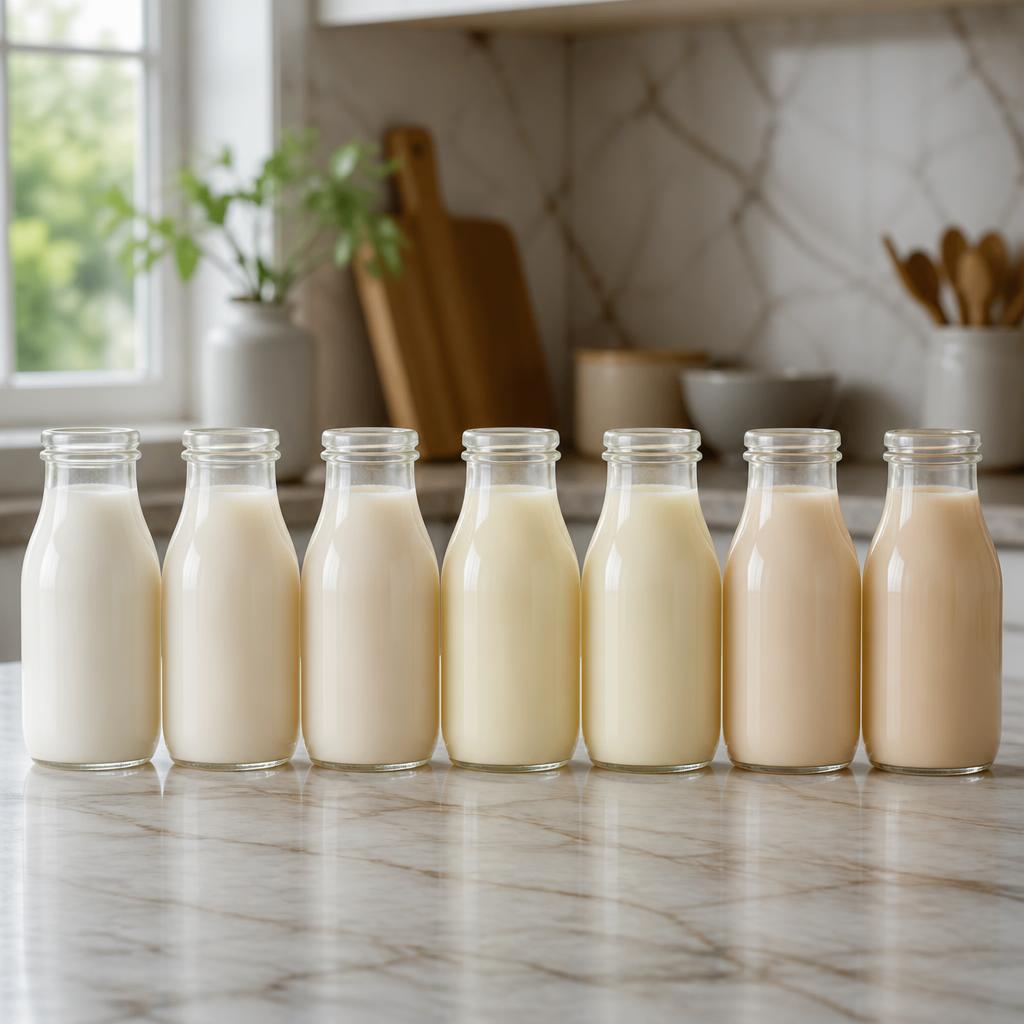
Starbucks offers seven standard milk options today: three dairy (whole, 2 percent, nonfat), and four non-dairy (oatmilk, soymilk, almondmilk, coconutmilk). Half-and-half and heavy cream are also available on request.
2 percent is the default in every handcrafted latte, mocha, cappuccino, and macchiato unless you swap it out.
The dairy lineup
Whole milk is the default in Flat Whites and the required base for the best latte foam. Higher fat content builds a denser, longer-lasting micro-foam.
2 percent reduced-fat milk is the corporate default. It balances calories against texturing performance and works for the widest range of customers without modification.
Nonfat skim milk is the lowest-calorie dairy at Starbucks (about 90 kcal per 8 oz). It steams into a stiff, dry, airy foam that many baristas find hardest to work with, but it is a solid choice if you are counting calories tightly.
The non-dairy lineup
Four permanent non-dairy milk options are stocked in every US Starbucks. Each carries a small upcharge (roughly $0.70 to $0.85 depending on market) though Rewards members sometimes see reduced or waived fees during promotional windows.
- Oatmilk (Starbucks Oatmilk, formulated with Blue Diamond): the richest non-dairy option. Creamy, slightly sweet, steams into velvet foam. The best choice for lattes if you skip dairy.
- Soymilk (Starbucks-branded, vanilla-infused): high protein, stable under heat, mildly sweetened out of the carton. Can curdle in very acidic drinks like shots of straight espresso if overheated.
- Almondmilk (Starbucks-branded): thinnest and lowest in calories (~60 kcal per cup unsweetened). Does not foam well. Best in cold drinks or iced lattes.
- Coconutmilk (Starbucks-branded): light body, tropical sweetness, formulated for Refresher and coconut drinks like the Pink Drink.
Nutrition comparison per 8 oz (1 cup)
| Milk | Calories | Fat | Sugar | Protein |
|---|---|---|---|---|
| Whole | 150 | 8 g | 12 g | 8 g |
| 2 percent | 130 | 5 g | 12 g | 8 g |
| Nonfat | 90 | 0 g | 12 g | 8 g |
| Oatmilk | 120 | 5 g | 7 g | 3 g |
| Soymilk (vanilla) | 130 | 4 g | 10 g | 7 g |
| Almondmilk | 60 | 3 g | 3 g | 1 g |
| Coconutmilk | 80 | 4 g | 7 g | 0 g |
Heavy cream and half-and-half
Both live in the low fridge and are available on request. They are the go-to for keto customers because they carry almost zero sugar per ounce.
- Heavy whipping cream: ~50 kcal per tablespoon, ~0 g sugar. Splash into any coffee for a keto-friendly boost.
- Half-and-half: ~20 kcal per tablespoon, ~1 g sugar. Order a "Breve" latte to swap milk for half-and-half entirely.
Discontinued and regional milks
A few milks that used to be on the menu are gone or regional:
- Lactaid: Available in select stores. Ask before ordering.
- A2 milk: Not offered at Starbucks in the US.
- Cashew milk: Tested in 2016 but never rolled out nationally.
Which milk works best for what
- Best foam: Whole milk or oatmilk.
- Lowest calorie: Almondmilk (or plain black coffee).
- Highest protein: Any dairy at 8 g per cup, or soymilk at 7 g.
- Keto-friendly: Heavy cream splash in an Americano.
- Dairy allergy: Oatmilk (rich), coconutmilk (light and tropical).
- Nut allergy: Skip almondmilk. Oat, soy, coconut all safe.
The non-dairy upcharge
In November 2024, Starbucks briefly removed the non-dairy upcharge in the US. That change was reversed in early 2025, so as of today the surcharge is back in most US stores at roughly $0.70 per drink. Rewards members occasionally see targeted no-surcharge promotions in the app.
Frequently asked follow-ups
Can I mix two milks in one drink?
Yes, ask for a "split" (e.g., "half oatmilk half 2 percent"). No extra charge over a normal non-dairy sub.
Is oatmilk vegan?
Yes. All four Starbucks non-dairy milks are vegan.
Which milk is gluten-free?
All of them. Oatmilk uses gluten-free-certified oats.
What steaming does to each milk
Steam heat changes each milk differently. Whole milk foams thick and long because milk fat coats air bubbles. Nonfat foams dry and stiff. Oatmilk foams surprisingly well because the barista formulation includes stabilizers. Almondmilk resists foam because its protein content is too low. Soymilk foams well but can curdle if the espresso is very acidic.
Ordering tips that actually work
Ask for "extra foam" if you want more air on top. Ask for "steamed but not foamed" if you hate bubbles. Ask for the milk at "kids temperature" (about 130 F) if you want to drink it right away without waiting. All three modifications are free at every US store.
What actually changes with each swap
Swapping 2 percent for oatmilk in a Grande latte adds about 10 kcal and cuts sugar by 5 g. Swapping to almondmilk cuts 70 kcal and 9 g sugar but flattens the foam. Swapping to whole milk adds 20 kcal but doubles foam thickness. These are small numbers per drink; multiply by 5 lattes a week and the annual difference is real.
How to know your barista is using the right milk
Every non-dairy milk lives in its own labeled jug in the low fridge. Ask the barista to grab a fresh pitcher when they build your drink; that way you know oatmilk did not accidentally get grabbed from a soymilk container. On busy mornings mistakes happen; a quick "make sure that is oatmilk please" saves a return trip.
Bottom line
Starbucks offers three dairy milks (whole, 2 percent, nonfat), four non-dairy milks (oat, soy, almond, coconut), and heavy cream and half-and-half on request. That is seven standard milk options at every US store. For the best latte texture skip default 2 percent and ask for whole milk or oatmilk instead.