Quick Answer
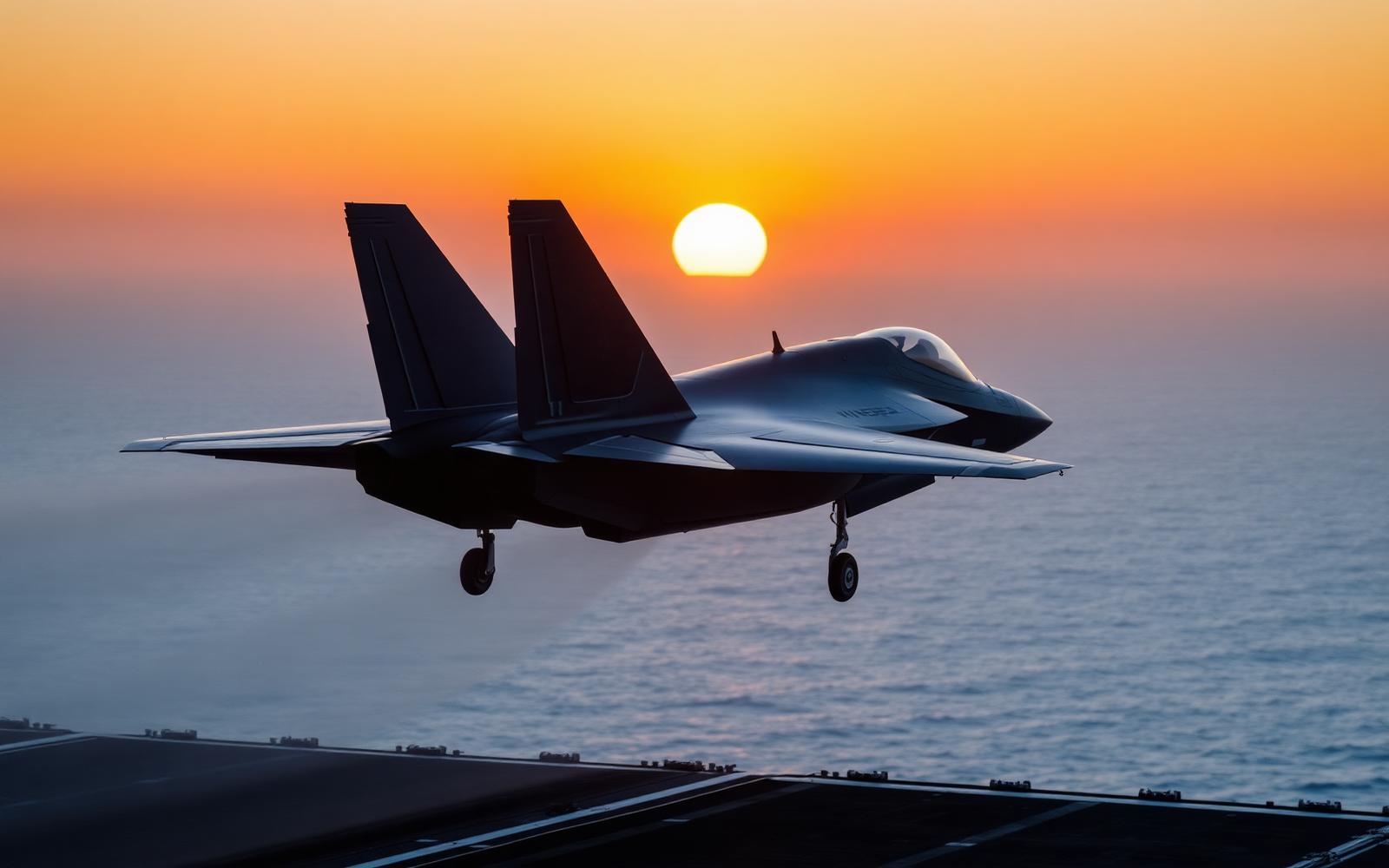
The F-35B Lightning II is short takeoff and vertical landing (STOVL) capable because it carries two extra pieces of hardware no other variant has: a large Rolls Royce LiftFan mounted behind the cockpit, driven by a shaft from the main Pratt and Whitney F135 engine, and a three bearing swivel module on the rear of the engine that lets the main exhaust nozzle vector almost 90 degrees downward. Together they let the aircraft hover, land vertically, and take off in a few hundred feet from an amphibious assault ship or a damaged runway.
The trade off is fuel capacity, weapon payload, and maximum G load compared with the runway based F-35A.
The basic problem STOVL solves
Conventional fighters need a long runway to take off and land. That makes them dependent on a small number of fixed bases, which are obvious targets. STOVL aircraft can operate from short flight decks on amphibious ships, from austere forward bases, and from damaged airfields that would be unusable for a conventional fighter. For the United States Marine Corps and several international F-35B operators, that flexibility is the entire reason the variant exists.
The hard part is doing this while remaining a supersonic, low observable fighter. The earlier AV-8B Harrier achieved STOVL by routing hot engine exhaust through swivelling nozzles, but it was subsonic and limited in payload. The F-35B had to be faster, stealthier, and far more capable, without giving up the vertical capability.
The LiftFan, in plain terms
The single biggest innovation in the F-35B is a counter rotating, two stage LiftFan sitting in a bay directly behind the cockpit. When the pilot selects STOVL mode, a clutch engages and a driveshaft from the main F135 engine spins the LiftFan at high speed. The fan pulls cool air down through doors in the top of the fuselage and pushes it out through a louvred door in the belly.
The result is a column of cool, unheated thrust pointing straight down at the runway. The LiftFan alone produces roughly 20,000 pounds of vertical thrust, and crucially it does so without scorching the deck or boiling the asphalt the way pure jet exhaust would.
The three bearing swivel module
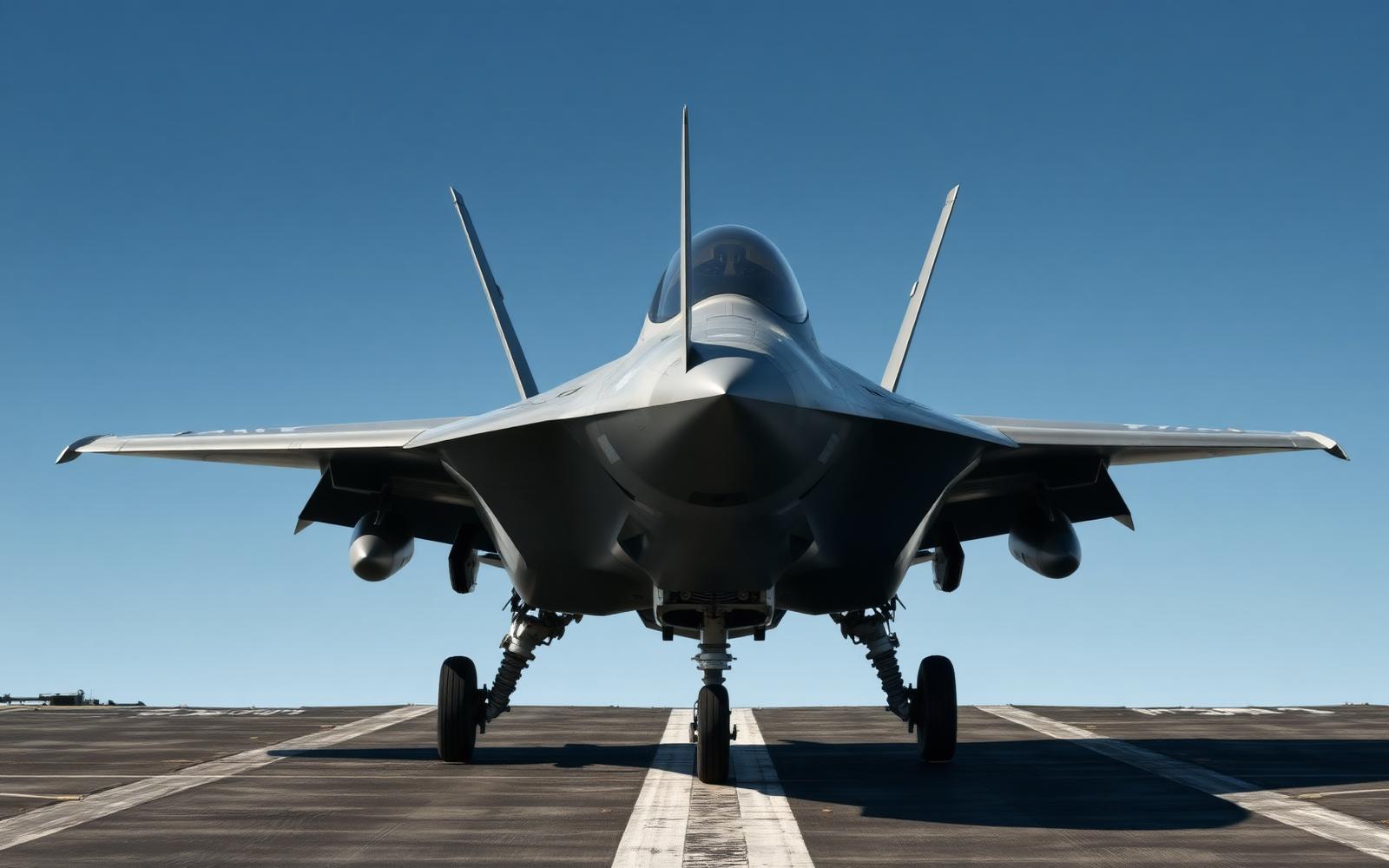
While the LiftFan handles the front of the aircraft, the rear is taken care of by a clever piece of engineering called the three bearing swivel module, or 3BSM. It is essentially a jointed extension of the main engine exhaust nozzle made up of three rotating sections. By rotating those sections relative to each other, the nozzle can pivot the main jet exhaust from straight aft to almost straight down in a few seconds.
At full deflection it can vector around 18,000 pounds of hot thrust directly downward. Combined with the LiftFan up front and two small "roll posts" in the wings that bleed air from the engine to balance side to side, the aircraft can hover hands off and translate slowly across a flight deck.
Why the F-35B trades range for hover
Putting a LiftFan and a swivel module inside the airframe has costs:
- Less internal fuel. The volume the LiftFan occupies is volume the F-35A and F-35C use for fuel tanks. Range is reduced as a result.
- Smaller weapons bays. The internal bays are slightly shorter than on the A and C variants, which limits the largest single weapon they can carry internally.
- Lower G limit. The F-35B is rated to a lower maximum manoeuvring load than the conventional variants, because the airframe carries the extra hardware.
For the Marine Corps and operators like the Royal Air Force and Italian Navy, those trades are worth it. A slightly shorter range fighter that can operate from a Wasp class or Queen Elizabeth class deck is far more useful than a longer ranged fighter that needs a 7,000 foot runway.
How a vertical landing actually happens
The pilot transitions from forward flight to STOVL mode while still moving forward. The clutch engages the LiftFan, the upper doors open, and the rear nozzle begins to vector downward. As the nozzle approaches 90 degrees, forward speed bleeds off and the aircraft balances on three columns of thrust: the LiftFan up front, the rear nozzle, and the wing roll posts for side to side trim.
The flight computers handle the moment to moment balancing automatically. The pilot is essentially flying with a single inceptor that requests "go up", "go down", "go left", and the software apportions thrust between the three sources to make it happen.
Where the F-35B operates today
The F-35B is in service with the United States Marine Corps, the United Kingdom (Royal Air Force and Royal Navy), Italy, Japan, and Singapore, among others. It flies from amphibious assault ships, light aircraft carriers, and unprepared forward bases. The big public demonstrations of its STOVL capability tend to happen during exercises in the Pacific and the Mediterranean, where carrier strike groups and amphibious groups operate together.
The takeaway
The F-35B is STOVL capable because of two clearly distinct pieces of hardware: a shaft driven LiftFan that produces cool vertical thrust up front, and a swivelling rear nozzle that points hot jet exhaust down at the deck. The mechanical complexity of running both at once is exactly why no other stealth fighter does this. The pilot gets to take off short, land vertically, and operate from places a runway based fighter simply cannot reach.