Quick Answer
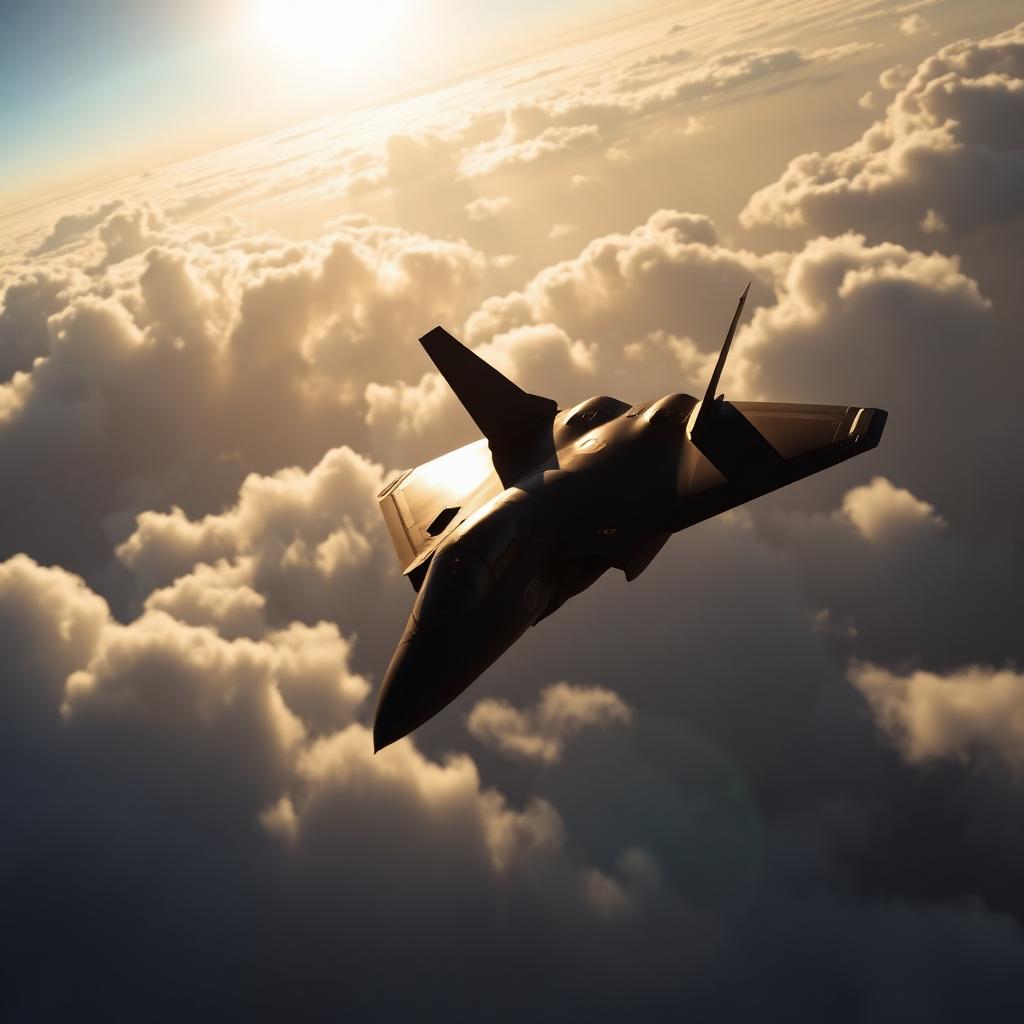
The Lockheed Martin / Boeing F-22 Raptor is widely regarded as the most capable air superiority fighter ever fielded because it combines four characteristics that no other in-service aircraft has all of at once: a very low radar cross-section (estimated by open sources at roughly 0.0001 square meters from the front quarter), the ability to cruise at supersonic speed (around Mach 1.8) without using afterburner, two-dimensional thrust vectoring exhaust nozzles that allow post-stall maneuvering, and a sensor fusion suite (AN/APG-77 AESA radar plus the AN/ALR-94 passive receiver) that allows it to detect and engage opposing fighters long before they see it.
Only 187 operational airframes were ever built (production ended in 2011), and the U.S. Air Force operates the entire fleet. It has never been exported.
The aircraft, in numbers
Per the U.S. Air Force fact sheet and Lockheed Martin’s public technical data:
- Length. 62 ft 1 in (18.92 m)
- Wingspan. 44 ft 6 in (13.56 m)
- Maximum takeoff weight. 83,500 lb (38,000 kg)
- Engines. Two Pratt and Whitney F119-PW-100 augmented turbofans, 35,000 lb thrust each with afterburner, with two-dimensional pitch-axis thrust vectoring nozzles (plus or minus 20 degrees)
- Maximum speed. Mach 2.25 (approximately 1,500 mph) at altitude
- Supercruise. Mach 1.82 sustained without afterburner
- Service ceiling. 65,000 ft (19,800 m)
- Combat radius. About 460 nautical miles on internal fuel
- Crew. 1
- Unit cost. Approximately 150 million dollars (flyaway, FY 2009)
Why it dominates: the four core advantages
1. Stealth (low radar cross-section)
The Raptor was designed from the outset around very low observability. Its planform aligns edges (wing leading edges, tail leading edges, gear doors) to a small number of angles, so reflected radar energy is returned in only a few narrow beams instead of a sphere. Its skin uses radar-absorbent materials over composite panels, and its weapons are carried internally so that the airframe never has the radar return of an external pylon.
Open source estimates put the F-22’s front-quarter radar cross-section at roughly 0.0001 square meters, which is approximately the radar return of a small marble. By comparison, an F-15 Eagle returns about 25 square meters and a typical fourth generation fighter (Su-27, MiG-29, F-16) returns somewhere between 3 and 12 square meters depending on aspect and loadout. The practical effect: the F-22 can detect and target an opposing fighter at long range while the opposing radar cannot yet see the F-22 at all.
2. Supercruise
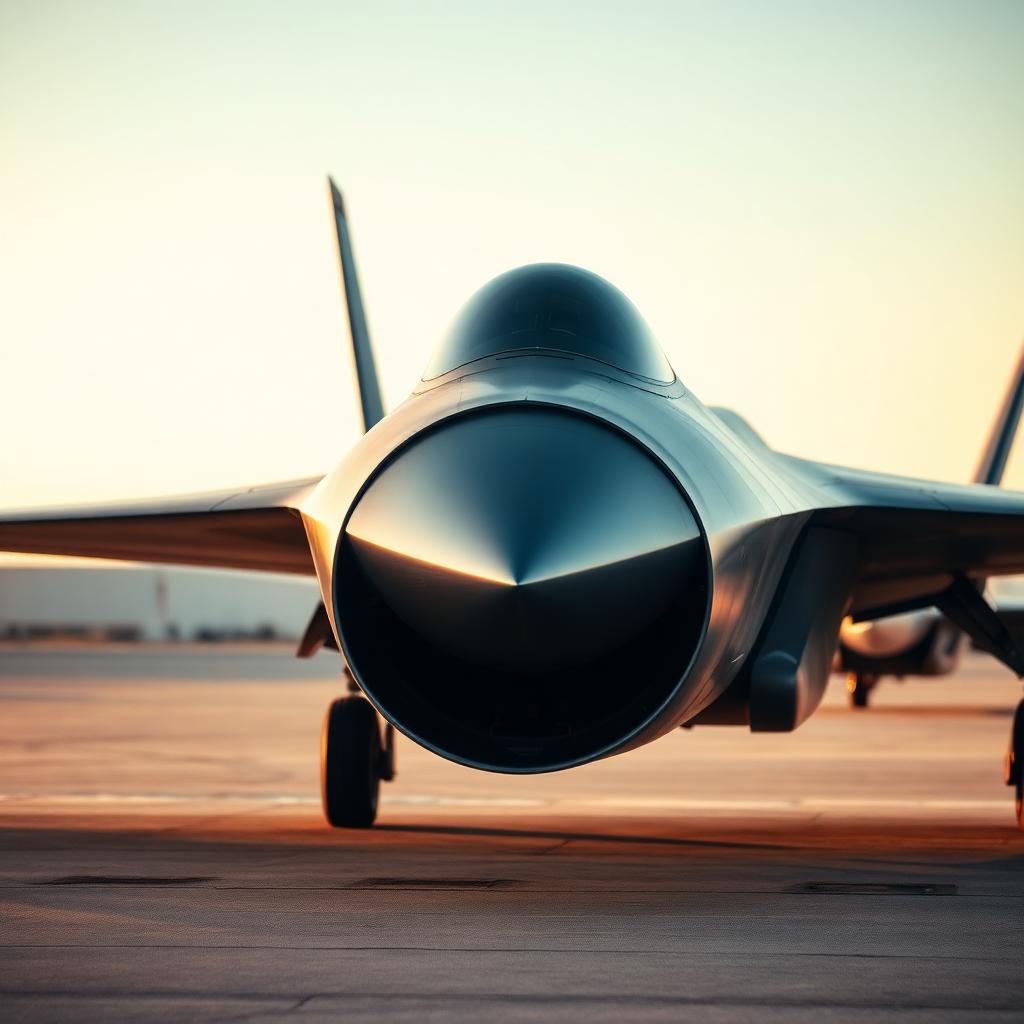
Most fighters can briefly exceed Mach 1 by lighting their afterburners, but afterburner burns fuel at a rate that drains the tanks in minutes and creates a massive infrared signature. The F-22’s Pratt and Whitney F119 engines are powerful enough that the aircraft can cruise at roughly Mach 1.8 indefinitely on military (dry) thrust alone.
The practical effect: the F-22 covers ground much faster than other aircraft, arrives at the merge with more energy in reserve, and its first-shot missile (the AIM-120D AMRAAM) has a much longer no-escape envelope because of the higher launch speed. Supercruise effectively multiplies the missile’s lethal range by 20 to 40 percent.
3. Two-dimensional thrust vectoring
The exhaust nozzles on the F-22’s F119 engines can pivot up and down by plus or minus 20 degrees. That allows the pilot to point the engines’ thrust independently of the rest of the airframe, which means the Raptor can change pitch attitude at speeds (and angles of attack) where the wing has stalled and the tail surfaces no longer have airflow.
In a close-range dogfight this is the difference between executing a tight turn and entering a flat spin. F-22 pilots have publicly described maneuvers (the Cobra, the J-turn, the cobra to immelmann) that no other fighter in service can match. In practice, modern air combat rarely reaches visual range; thrust vectoring is the insurance policy for the rare cases when it does.
4. Sensor fusion
The F-22 carries the Northrop Grumman AN/APG-77 active electronically scanned array (AESA) radar and the AN/ALR-94 passive radar warning and electronic surveillance system. The two systems share their data, and the cockpit displays a single fused tactical picture rather than two competing radar tracks.
The practical effect: the F-22 can detect, classify and track an enemy fighter using only its passive ALR-94 receiver, without ever radiating energy that would betray its own position. When the pilot is ready to engage, the active radar lights up for only a few seconds, the AIM-120D launches, and the radar goes silent again. By the time the opposing fighter knows it has been targeted, the missile is already in terminal homing.
Weapons and combat record
Internal weapons bay carries:
- 6 x AIM-120D AMRAAM (beyond visual range)
- 2 x AIM-9X Sidewinder (within visual range)
- 1 x M61A2 20 mm cannon (480 rounds)
The F-22 has never been beaten in a recorded air-to-air engagement, including in exercises against U.S. Navy F/A-18s, U.K. Typhoons, French Rafales and German Eurofighters at Red Flag and other major exercises. Its first publicly disclosed combat air-to-air kill was the February 4, 2023 shootdown of a Chinese surveillance balloon off the coast of South Carolina. The U.S. Air Force has used F-22s extensively in air-to-ground strike missions against ISIS in Syria.
Why production ended at 187 aircraft
The original program of record was 750 aircraft. Production was cut to 339, then 187, before being terminated in 2011 by Defense Secretary Robert Gates. Three reasons:
- The Cold War threat the F-22 was designed to counter (massed Soviet fighter regiments) had dissolved.
- The unit cost (over 150 million dollars per aircraft, flyaway) was unsustainable for a counterterrorism era.
- The F-35 program was already absorbing the Pentagon’s fighter budget, and the F-35 was being marketed as a lower cost stealth fighter that could partially overlap the air superiority role.
In hindsight, the cancellation is widely regarded as a strategic mistake. The F-35 is a strike fighter, not an air superiority fighter; it does not supercruise, does not have thrust vectoring and carries fewer air-to-air missiles internally. Restarting F-22 production has been studied repeatedly and rejected each time, because the original tooling, supplier base and trained workforce have all dispersed.
What replaces the F-22
The U.S. Air Force’s Next Generation Air Dominance (NGAD) program is intended to deliver a manned sixth generation fighter to replace the F-22 in the 2030s, paired with several Collaborative Combat Aircraft (CCA) drone wingmen. Boeing was selected as the prime contractor for the manned F-47 NGAD fighter in March 2025. The first F-47 deliveries are expected late this decade.
Until then, the F-22 fleet will continue to be modernized (open systems architecture upgrades, IRST sensor upgrades, AIM-260 integration) and is expected to remain in service well into the 2030s.
The takeaway
The F-22 Raptor combines four things no in-service rival has all at once: a marble-sized radar cross-section, Mach 1.8 supercruise on dry thrust, plus or minus 20 degree thrust-vectoring nozzles and a fused AESA plus passive radar suite that allows it to fight without ever radiating. Only 187 were ever built, none were exported, and even fifteen years after production ended, no other fighter in service has matched the package. The NGAD F-47 is the eventual replacement, but until it arrives the Raptor remains the world’s reigning air superiority fighter.