
Quick Answer
Remarkably Bright Creatures is Shelby Van Pelt's 2022 debut novel about Tova Sullivan, a 70-year-old widow who cleans a small Puget Sound aquarium at night, and Marcellus, a curmudgeonly Giant Pacific Octopus who narrates parts of the book in the first person.
It works because Van Pelt nails the hardest part: Marcellus's chapters are funny, sharp, and emotionally serious, and the mystery he quietly solves about Tova's long-missing son turns a gentle small-town novel into something that lands hard. The book hit the New York Times bestseller list, sold more than a million copies, and was adapted into a Netflix film released in 2026.
The book and the author
Published in May 2022 by Ecco (HarperCollins), Remarkably Bright Creatures is Shelby Van Pelt's first novel. It runs roughly 360 pages and is told in three rotating points of view: Tova, a drifter named Cameron Cassmore, and Marcellus the octopus. Van Pelt has said in interviews that Marcellus came first, that she sketched his voice as a writing exercise and then built the human plot around the question of what a brilliant, dying captive animal might actually be able to do for the people around him.
The book sold steadily on launch, climbed via book club and BookTok word of mouth through 2022 and 2023, and reached the New York Times bestseller list. By 2024 it had crossed a million copies in print across formats, with translation deals in more than 30 languages.
The setting
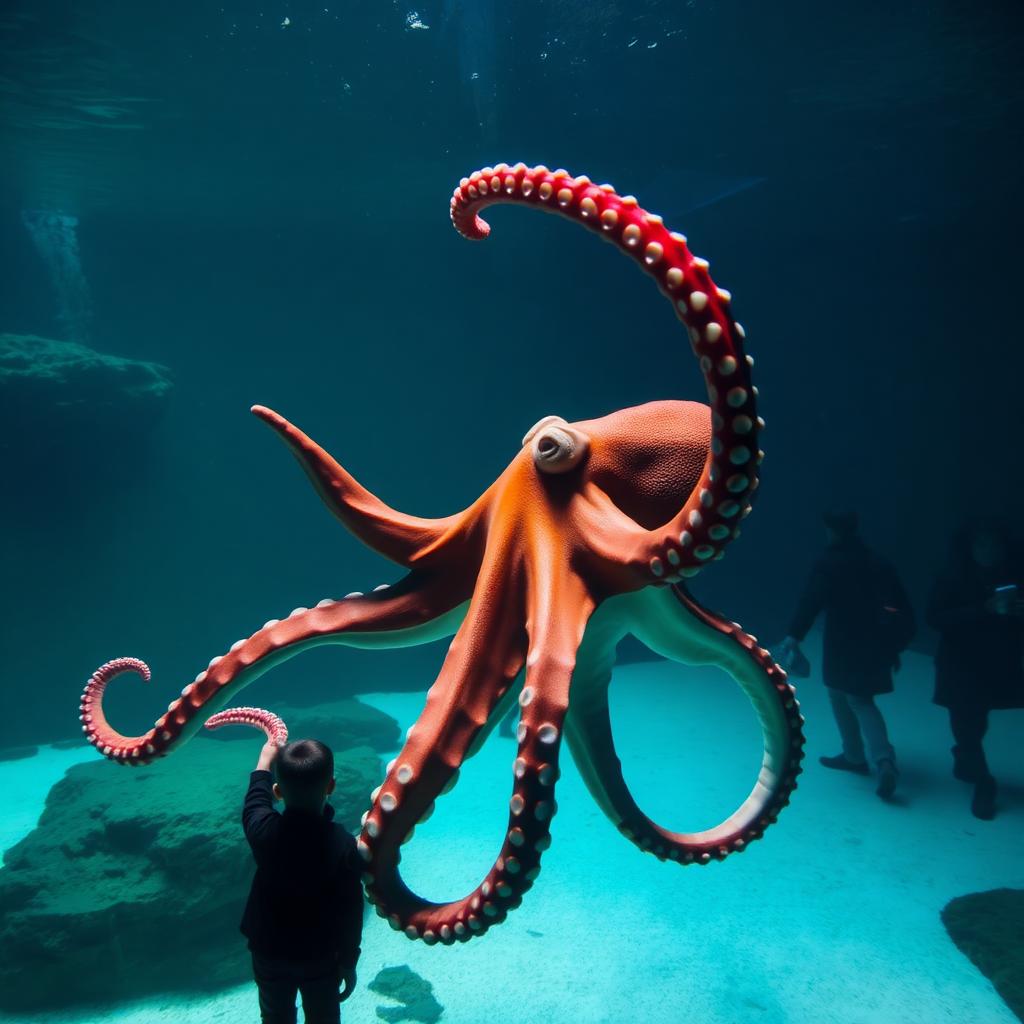
The novel unfolds in Sowell Bay, a fictional small town on Washington's Puget Sound. The aquarium where Tova works night shifts is intentionally modest: a single floor of tanks, a gift shop, one curmudgeonly day manager, and Marcellus in the largest enclosure. Van Pelt's choice to set the book in a small civic aquarium rather than a big-city institution matters. It keeps the cast tight, lets Tova and Marcellus form a real relationship across glass, and makes the eventual reveal land in a place that feels lived in.
Tova: grief as routine
Tova Sullivan is 70 years old, recently widowed, and quietly furious that the world expects her to be done with her life. Thirty years ago her teenage son Erik vanished one night on a boat in the Sound, presumed drowned, body never found. Tova has organised her existence around not falling apart: she cleans the aquarium five nights a week, swims at the senior centre, and runs her late husband's social calendar of neighbourhood Knit-Wits with iron discipline.
Van Pelt writes Tova without sentimentality. Her grief is not pretty or noble; it is a daily logistical exercise in keeping the floor under her feet. That refusal to soften Tova is one of the reasons readers in their 60s and 70s connected with the book so strongly. It treats an older woman's interior life as serious territory.
Marcellus: the trick the book pulls off
The anthropomorphic animal narrator is one of the most dangerous tools in fiction. Done badly it is twee. Done with a heavy hand it is allegory. Van Pelt's solution is to give Marcellus a voice that is dry, intellectually superior, slightly bored, and surprisingly tender about Tova specifically.
Marcellus tracks his own remaining lifespan in days. Giant Pacific Octopuses live around four years, and he knows roughly where he is on the clock. He pickpockets keys, lets himself out of his tank at night to raid the other displays, and observes the humans with the detached amusement of someone who has worked out that the door is unlocked and chosen not to leave.
His chapters are short, often only a page or two, and they perform the same job a good Greek chorus does: they comment, summarise, and quietly hand the reader information the human characters do not yet have. By the midpoint of the novel he has worked out the truth about Erik. The remaining tension is whether he can get that truth to Tova in time, given his species, his vocabulary, and his calendar.
Cameron and the mystery
The third point of view belongs to Cameron Cassmore, a thirty-year-old drifter from California who arrives in Sowell Bay chasing a lead about a father he has never met. His chapters are looser, funnier, and more chaotic than Tova's, and they keep the book from collapsing into a two-hander between an old woman and an octopus. The mystery that braids the three voices together is gentle by genre standards but cleanly constructed; by the time the pieces line up, the emotional payoff is much heavier than the plot machinery suggests.
Themes that earned it the word-of-mouth wave
- Older protagonists as full characters. Tova is sharp, sexual in memory, capable, and angry. The book treats her as a present-tense person, not a relic.
- Found family across species. The bond between Tova and Marcellus is the emotional spine; it does not patronise either of them.
- Grief without resolution as resolution. The reveal does not undo Tova's loss; it lets her stop bracing against it.
- Quiet moral seriousness about captive animals. Marcellus's awareness of his confinement is never the lecture, but it is always in the room.
Why it sells the way it sells
Remarkably Bright Creatures hits a specific sweet spot that has driven book club fiction for the last decade: emotionally generous, structurally tidy, low on graphic content, high on craft. It sits comfortably alongside books like A Man Called Ove, The Midnight Library, and Lessons in Chemistry on the same shelves of readers who want literary writing without a punishing read. The octopus narrator is the differentiator that makes it travel by word of mouth: it is the detail people repeat when they recommend the book, and the reason it became a BookTok perennial.
The takeaway
Remarkably Bright Creatures works because Shelby Van Pelt trusts her three voices completely and refuses to overplay any of them. Tova is allowed to be hard. Cameron is allowed to be a mess. Marcellus is allowed to be smarter than everyone around him, including the reader. The result is a debut that feels effortless on the page and very deliberate underneath, which is the combination almost every bestseller has in common.