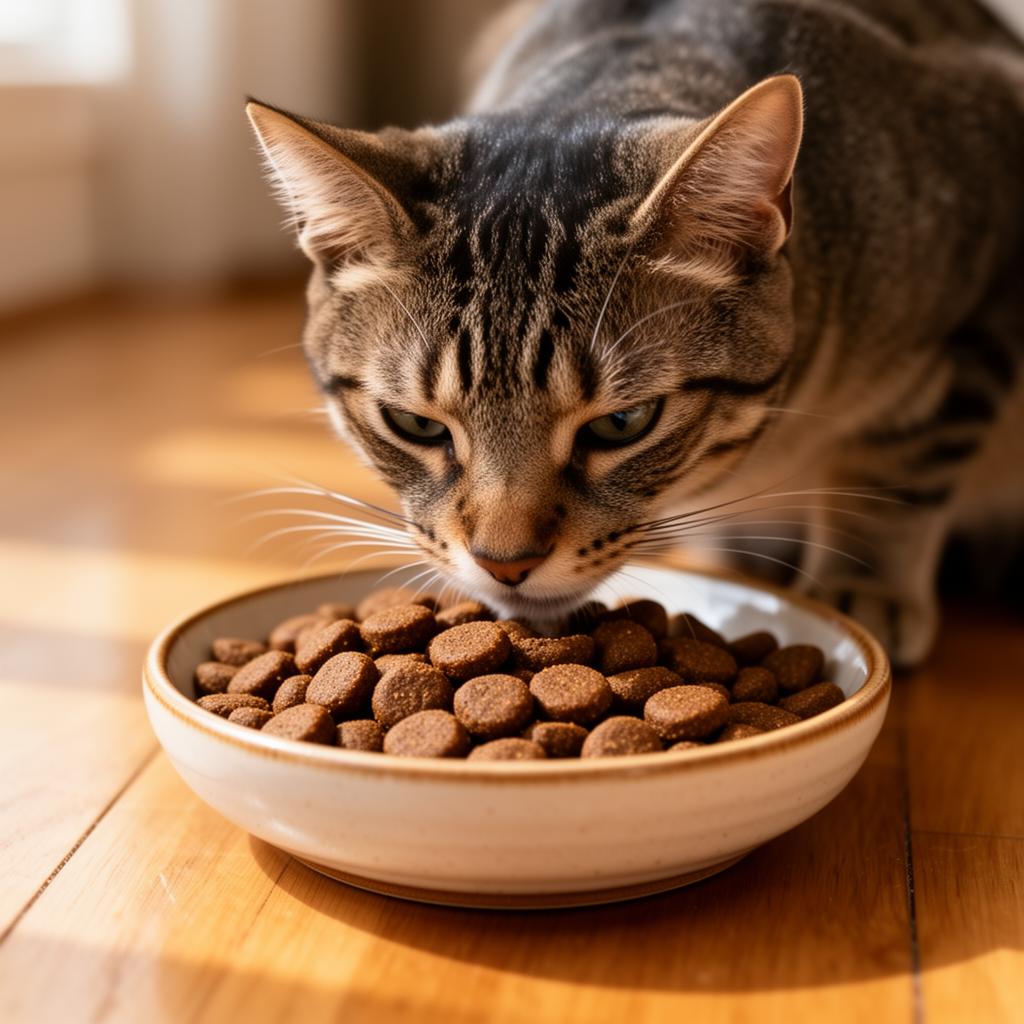
Quick Answer
Orijen dry cat food is built around a "WholePrey" philosophy. Instead of using grains or heavy carbohydrate fillers, it uses up to 90% animal ingredients, including muscle meat, organs and bone, to closely mimic what a feline's ancestors naturally hunted and ate in the wild.
If you spend any amount of time looking into premium pet food, you will inevitably run into Orijen. It carries a premium price tag and a massive cult following among pet nutrition circles. But what actually justifies the cost of this specific bag of kibble?
The biology of an obligate carnivore
To understand why Orijen formulates its food the way it does, you first have to understand feline digestion.
Dogs are opportunistic omnivores; they can pull nutrients from meats, grains and vegetables. Cats, however, are obligate carnivores. Their bodies are biologically hardwired to extract their energy and essential amino acids entirely from animal protein. They do not have the specific digestive enzymes required to process large amounts of plant matter or complex carbohydrates.
For example, cats require an amino acid called taurine to prevent heart failure and blindness. While dogs and humans can synthesize their own taurine from other building blocks, cats cannot. They must consume it directly from meat.
The WholePrey ratio explained
Most commercial cat foods hit their required protein levels by using heavily processed meat meals and supplementing them with synthetic vitamins.
Orijen approaches this differently through a concept they call "WholePrey." In the wild, a cat does not just eat the muscle meat of a mouse or a bird; they eat the liver, the heart, the cartilage and the bones. Orijen replicates this biological ratio in their kibble.
- Muscle meat: Provides the bulk of the raw protein and fats.
- Organs (liver, heart, gizzards): These are nature's multivitamins, packed with naturally occurring iron, zinc and vitamins A, D and B.
- Bone and cartilage: Provide a highly digestible, natural source of calcium and phosphorus for joint health.
By using the whole animal, the food relies far less on synthetic vitamin powders because the nutrients are already naturally present in the ingredients.
The grain free debate: the legume factor
Orijen is famously grain free, meaning you will not find corn, wheat or tapioca on the ingredient list. But to make a dry, crunchy kibble, you physically need a starch to bind the meat together during the cooking process.
To solve this, Orijen uses a small percentage of legumes, like whole red lentils, pinto beans and green peas.
This is where the science gets debated in veterinary circles. While legumes are a much better, lower glycemic binder than highly processed corn, some cats have extremely sensitive stomachs that struggle to digest the fiber in lentils. This is why some owners report digestive upset when switching to Orijen.
The takeaway
If you decide to transition your cat to a high protein, WholePrey diet, I highly recommend doing it very slowly over the course of two weeks to let their gut microbiome adjust to the rich ingredients. The premium price reflects a formulation built around feline biology rather than cheap fillers, and for many obligate carnivores it is a meaningful upgrade.
Pet care disclaimer
This article is for general educational purposes only and is not veterinary advice. Every pet has different nutritional needs based on age, breed, weight, activity, allergies and underlying health conditions.
Before changing your pet's diet, transitioning food brands or introducing new ingredients, speak to a qualified veterinarian, especially if your pet is a kitten, senior, pregnant, recovering from illness or living with a chronic condition.
See the full site-wide Disclaimer & Notice for the complete terms that apply across dmbio.
The Biologically Appropriate Philosophy
Orijen builds its recipes around what its founders call a biologically appropriate diet, meaning food that mirrors the ratios of fresh meat, organs, and bone a cat would consume in the wild. The result is formulas with significantly higher animal protein percentages than the category average.
Ingredient Sourcing
- Free run poultry from regional Canadian farms.
- Wild caught fish from cold North Atlantic waters.
- Fresh, raw, and dehydrated ingredients combined to preserve nutrients.
Orijen lists named animal proteins as the first five or more ingredients on most recipes, a transparency choice that helps shoppers evaluate the food at a glance.
Manufacturing in Owned Kitchens
Unlike many premium brands that contract production to third parties, Champion Petfoods makes Orijen in company owned kitchens in Alberta and Kentucky. That control allows tighter ingredient traceability and faster quality response when issues arise.
What Cats and Owners Notice
- Smaller stool volume because more of the food is digested.
- Glossy coat and reduced shedding after several weeks of consistent feeding.
- Strong palatability even for picky eaters who reject lower protein kibbles.
Considerations Before Switching
The higher protein density means smaller feeding portions, which can offset Orijen's premium price per bag. Transition slowly over seven to ten days to avoid digestive upset, and consult your veterinarian if your cat has specific health conditions such as chronic kidney disease that may require modified protein levels.
How It Compares to the Competition
Against other premium brands, Orijen tends to score highest on animal ingredient percentage and lowest on plant filler content. Some competitors offer broader life stage variety or more limited ingredient options for cats with allergies, so the right choice depends on your individual cat's needs.
For owners committed to feeding closer to a cat's evolutionary diet without moving to fully raw or fresh food, Orijen remains one of the most credible dry options on the shelf in 2026.