Quick Answer
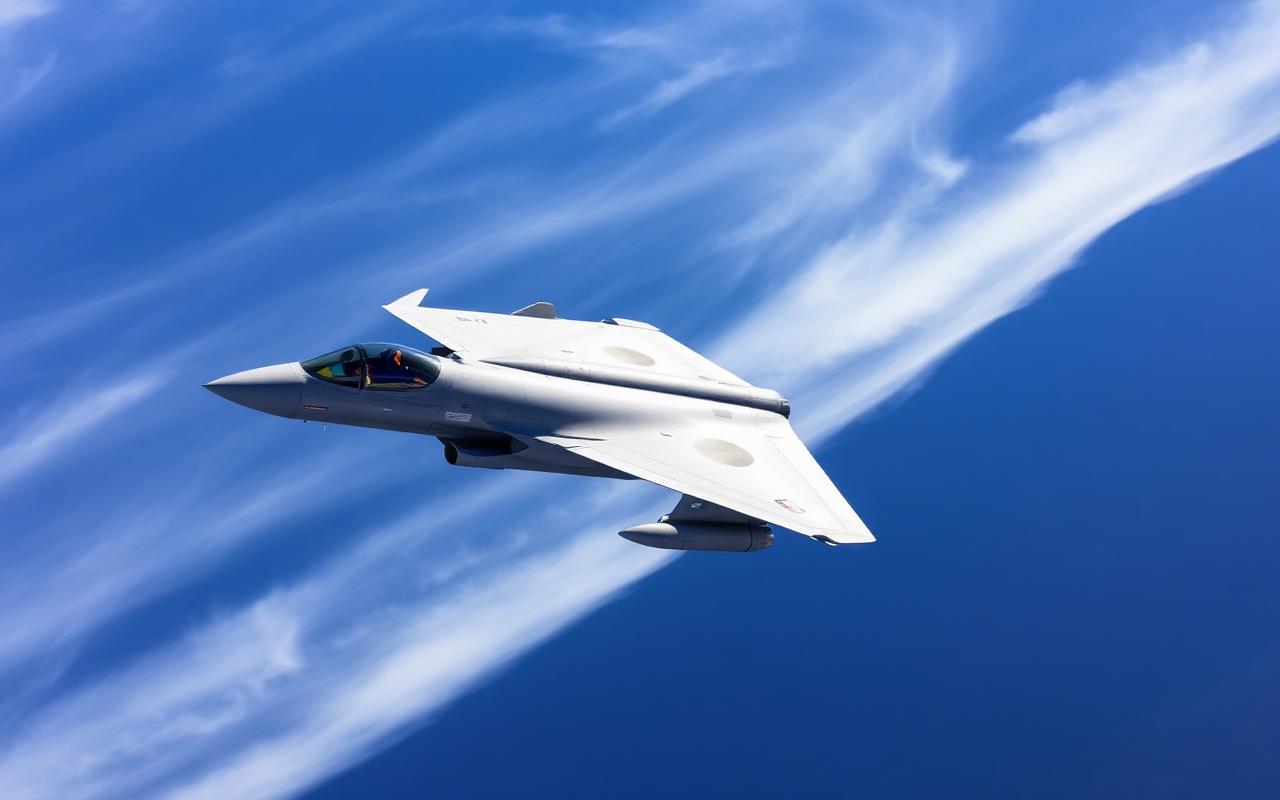
The Eurofighter Typhoon is a twin engine, canard delta wing multi role combat aircraft built by a consortium of the UK, Germany, Italy and Spain. It entered service in 2003 and remains one of the most agile and capable fourth generation fighters in the world.
It is the backbone of European air defence in 2026, serving with the air forces of all four consortium nations, plus Austria, Saudi Arabia, Oman, Kuwait, Qatar and (on order) several more operators.
It is not stealth like the F-35, but its raw kinematics, payload, AESA radar, and Meteor missile combination make it Europe most credible air superiority platform and a heavyweight strike aircraft.
Who Builds the Eurofighter Typhoon?
The Typhoon is produced by the Eurofighter Jagdflugzeug GmbH consortium, made up of:
- BAE Systems (UK)
- Airbus Defence and Space (Germany and Spain)
- Leonardo (Italy)
Engines come from Eurojet Turbo GmbH (Rolls Royce, MTU, Avio and ITP Aero). This shared industrial base is part of why the Typhoon is so politically important: every export order spreads work across four major European economies.
A Quick History of the Program
The Typhoon traces back to the Future European Fighter Aircraft studies of the early 1980s, designed to counter advanced Soviet fighters such as the Su-27 and MiG-29. France withdrew early and went on to build the Rafale alone. The remaining nations froze the design in the late 1980s, flew the first prototype in 1994, and reached squadron service in 2003.
Since then, the Typhoon has been upgraded in tranches (1, 2, 3A, 3B and the current Tranche 4 / Tranche 5), with each block adding new radar, weapons and software.
Aerodynamics: Why the Typhoon Turns So Well
The Typhoon uses a tailless delta wing with foreplane canards and is deliberately aerodynamically unstable. A quadruplex digital fly by wire system manages that instability and turns it into extreme agility:
- High instantaneous and sustained turn rates at subsonic and transonic speeds.
- Excellent high alpha (high angle of attack) handling.
- Carefree handling, the pilot can pull the stick fully without departing controlled flight.
This is what makes the Typhoon a genuine threat in within visual range dogfights, an arena where many stealth optimised fighters are less competitive.
Engines and Performance
Two Eurojet EJ200 afterburning turbofans give the Typhoon roughly a 1.15 thrust to weight ratio at combat weight. Headline numbers:
- Maximum speed: about Mach 2.0 at altitude.
- Supercruise: capable of sustained supersonic flight without afterburner with a light air to air load.
- Service ceiling: about 55,000 feet.
- Combat radius: roughly 1,389 km in air to air configuration.
Radar, Sensors and Avionics
Tranche 3 and Tranche 4 Typhoons are receiving the Captor-E (ECRS Mk1) AESA radar, with the UK pushing toward the ECRS Mk2 standard that adds wide bandwidth electronic warfare and electronic attack capability. Other key sensors:
- PIRATE infrared search and track for passive long range detection.
- Defensive Aids Sub System (DASS) for jamming, towed decoys and missile warning.
- Helmet mounted sight for off boresight missile cueing.
Weapons and Multi Role Capability
The Typhoon carries weapons across 13 hardpoints. The headline systems:
- Meteor: long range, ramjet powered beyond visual range air to air missile, currently the most capable BVR missile in NATO service.
- ASRAAM and IRIS-T: high off boresight short range air to air missiles.
- Storm Shadow / SCALP: long range stealthy cruise missile for deep strike.
- Paveway IV and Brimstone: precision guided bombs and anti armour missiles.
- 27 mm Mauser cannon for guns kills and strafing.
What started as a pure air superiority fighter is now a full multi role platform, including SEAD (suppression of enemy air defences) and maritime strike.
Eurofighter vs F-35
The most common question. The short version:
- F-35: stealth, sensor fusion, networked targeting. Built to see first and shoot first.
- Typhoon: speed, climb, agility, payload and raw kinematic performance. Built to dominate within visual range and carry heavy weapons fast and far.
Most European air forces are buying both, and using them as complements. The F-35 quietly penetrates and locates targets, the Typhoon arrives behind it with heavier weapons and longer range air to air missiles.
Operators in 2026
Current and on order Typhoon operators include the UK, Germany, Italy, Spain, Austria, Saudi Arabia, Oman, Kuwait, Qatar, with Turkey signing for new build aircraft and several other countries in active negotiation.
The Future: Tempest, FCAS and Long Service Life
The UK, Italy and Japan are jointly developing the sixth generation Global Combat Air Programme (GCAP, formerly Tempest). France, Germany and Spain are working on FCAS / SCAF. Both programmes target service entry in the mid 2030s.
Until then, and well into the 2040s, the Typhoon will remain the backbone of European air defence, with continuous radar, sensor and weapon upgrades keeping it competitive against the latest Russian and Chinese fighters.
The Takeaway
The Eurofighter Typhoon is what happens when four European nations spend 40 years building a fighter together: politically complicated, technologically impressive, and operationally indispensable. It is not stealth, but it is fast, agile, heavily armed and constantly upgraded. As long as Europe needs a credible, sovereign air superiority platform, the Typhoon stays at the centre of the picture.
Frequently Asked Questions
How fast is the Eurofighter Typhoon?
Its maximum speed is about Mach 2.0 at altitude, and it can supercruise above Mach 1 without afterburner in air to air configuration.
Is the Eurofighter Typhoon a stealth aircraft?
No. It has reduced frontal radar cross section thanks to composites and shaping, but it is not a low observable design like the F-35.
How much does a Eurofighter Typhoon cost?
Recent export contracts have priced new build Typhoons at roughly 100 to 130 million USD per aircraft, depending on weapons, support and training packages.