Quick Answer
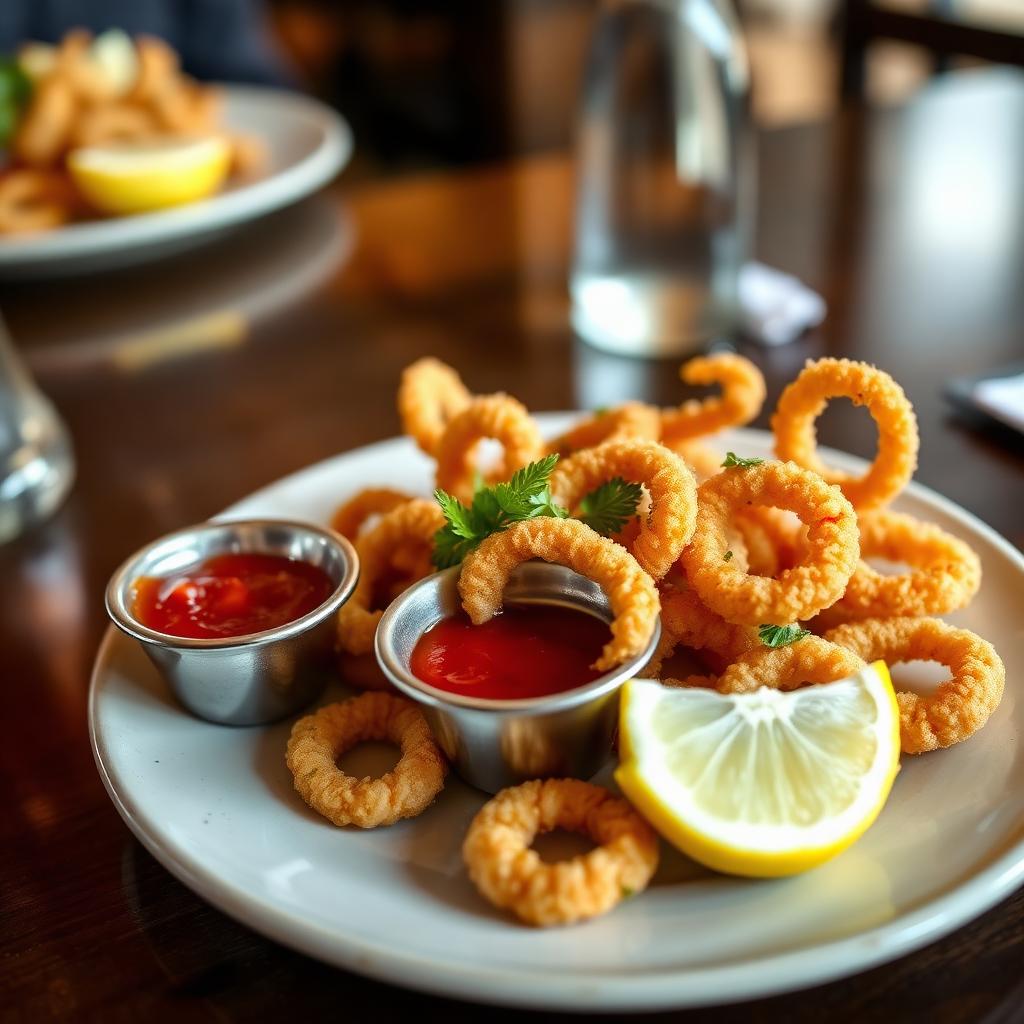
Calamari is the Italian word for squid, and on a menu it almost always refers to squid prepared for the table, most often as battered, deep-fried rings of the body (the mantle) served with lemon and a dipping sauce.
The meat is mild, faintly sweet, and naturally tender, but it is very unforgiving in the pan: a 30 second overshoot turns it rubbery. That is the entire secret behind why good calamari tastes so much better than bad calamari.
Where the word calamari comes from
Calamari is the plural of the Italian noun calamaro, meaning squid. The root reaches back to Latin calamarium, which described an ink pot or pen case. The connection is biological rather than poetic: a squid carries an internal, transparent, pen-shaped support structure called a gladius, and a sac of dark ink it can fire as a smokescreen when threatened. Italian fishermen lived with both features daily, and the name followed the catch onto the dinner table.
When Italian-American restaurants began listing fried squid as an antipasto in the 1970s, the word calamari travelled with the dish. Today it is the standard English menu term, sitting alongside the original word squid the way veal sits alongside calf.
What the animal actually is
The squid is a cephalopod mollusc, the same broad family as octopus, cuttlefish, and nautilus. It has a long, torpedo-shaped body called a mantle, two side fins for steering, eight short arms, and two long feeding tentacles. Most commercial calamari comes from short, fast-growing species like the European squid (Loligo vulgaris), the Argentine shortfin (Illex argentinus), and the Humboldt or jumbo squid (Dosidicus gigas) caught in the eastern Pacific.
Squid are wild-caught at scale, not farmed. Stocks are highly variable from year to year, which is why menu prices for calamari can swing more than for many other seafood items.
What it tastes like and why texture matters so much
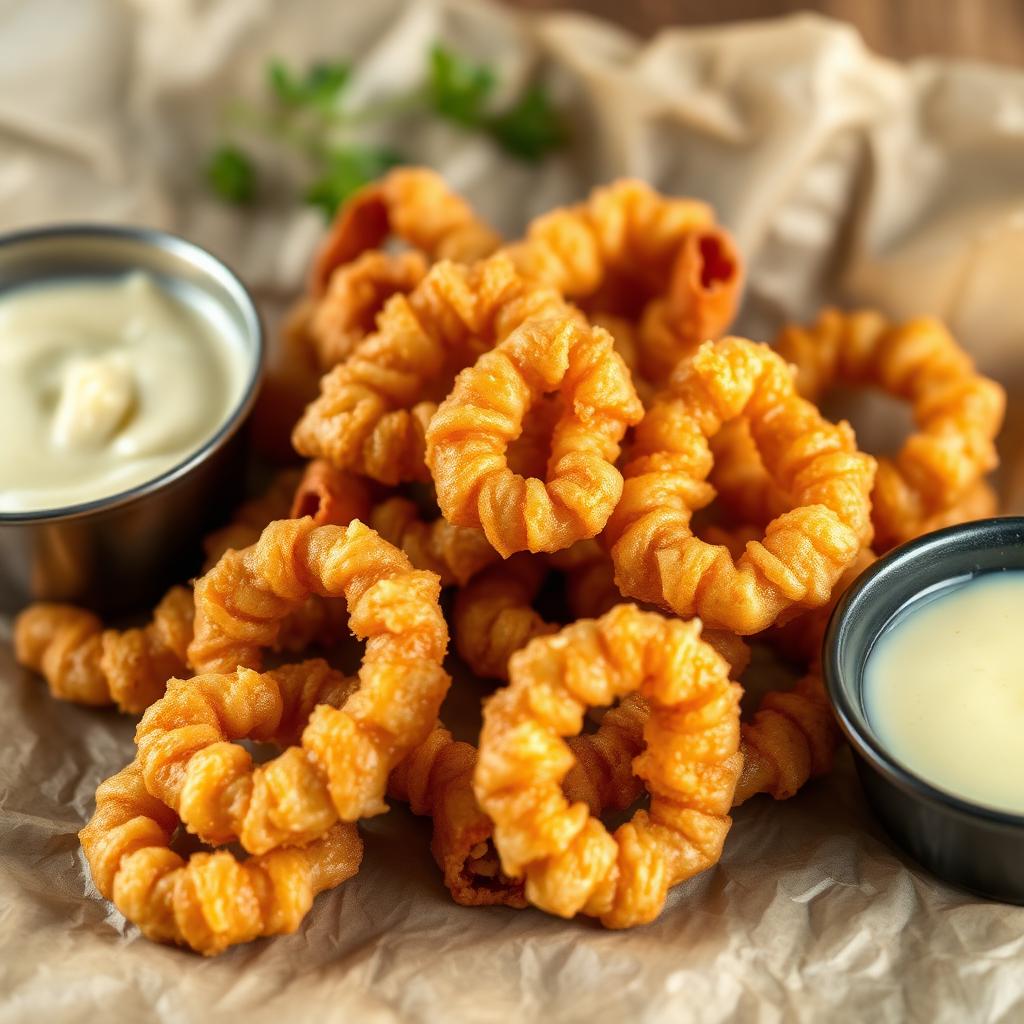
Cooked correctly, calamari is mild and clean, with a hint of sweetness and almost none of the strong fishy aroma associated with oily species like mackerel. That neutrality is exactly why it works so well as a vehicle for big flavours: garlic, chilli, salt, lemon, tomato, ink, paprika.
The real challenge is texture. Squid muscle is densely packed with collagen fibres laid down in two crossing layers. There are only two windows in which it stays tender: very fast cooking (under two minutes over high heat) or very slow cooking (forty minutes or more in a moist braise that breaks the collagen down into gelatin). Anything in between turns it into a chewy elastic band. That is the single rule that separates restaurant calamari from disappointing calamari.
How it is served around the world
- Italian American: rings and tentacles dredged in seasoned flour or semolina, deep-fried, and served with marinara, garlic aioli, or just lemon.
- Greek and Spanish: small whole squid stuffed with rice, herbs, feta or chorizo, then grilled over charcoal and finished with olive oil and lemon. Calamares a la plancha (pan-seared) is a tapas staple.
- Japanese: ika somen (raw squid noodles), grilled ika yaki on a skewer, or sliced sashimi-thin with soy and ginger.
- Korean: ojingeo bokkeum, a fast stir-fry with gochujang, onion and scallion.
- Italian coastal: nero di seppia or squid-ink pasta, dyed jet black and seasoned by the ink itself, which carries a savoury oceanic note closer to oyster than fish.
Is calamari healthy?
Per 100 g cooked, squid runs roughly 175 to 200 calories, 18 g protein, and 6 to 7 g fat depending on preparation. It is naturally low in saturated fat and a strong source of selenium, copper, vitamin B12, and phosphorus. The catch is that almost all of the calories on a typical fried calamari plate come from the batter and the frying oil, not the squid. Grilled, sauteed, or braised preparations are dramatically lighter.
Squid does contain cholesterol, around 230 mg per 100 g, which is high for seafood. People managing cholesterol levels closely usually treat it as an occasional dish rather than a weekly staple.
Buying and cooking it at home
Fresh squid should smell clean and faintly sweet, never sour or ammoniac. The skin should be smooth with a slight rainbow sheen, and the eyes (if still whole) should be clear, not cloudy. Frozen squid, properly thawed in the fridge overnight, is often better than tired fresh squid because squid freezes exceptionally well.
At home, the easiest reliable preparation is a hot-pan saute: pat the rings completely dry, season with salt, and sear them in olive oil with garlic and chilli for 60 to 90 seconds. Finish with lemon and parsley and serve immediately. If you miss the window and the squid turns rubbery, do not panic; switch tactics and simmer it in tomato sauce for another 40 minutes and it will come back to tender.
The takeaway
Calamari is squid by another name, a fast-cooking, mild-flavoured mollusc that punches well above its weight in flavour when you respect its narrow cooking window. Order it confidently, cook it quickly, and you will understand why it has held a spot on menus from Naples to Tokyo for centuries.