Quick Answer
The term "single grain" is highly misunderstood. It does not mean the whiskey was made from only one type of crop. By law, it means the whiskey was distilled at a single, specific distillery, using a recipe of grains that includes something other than just malted barley, most commonly a mixture of corn, wheat, or rye, distilled in a continuous column still.
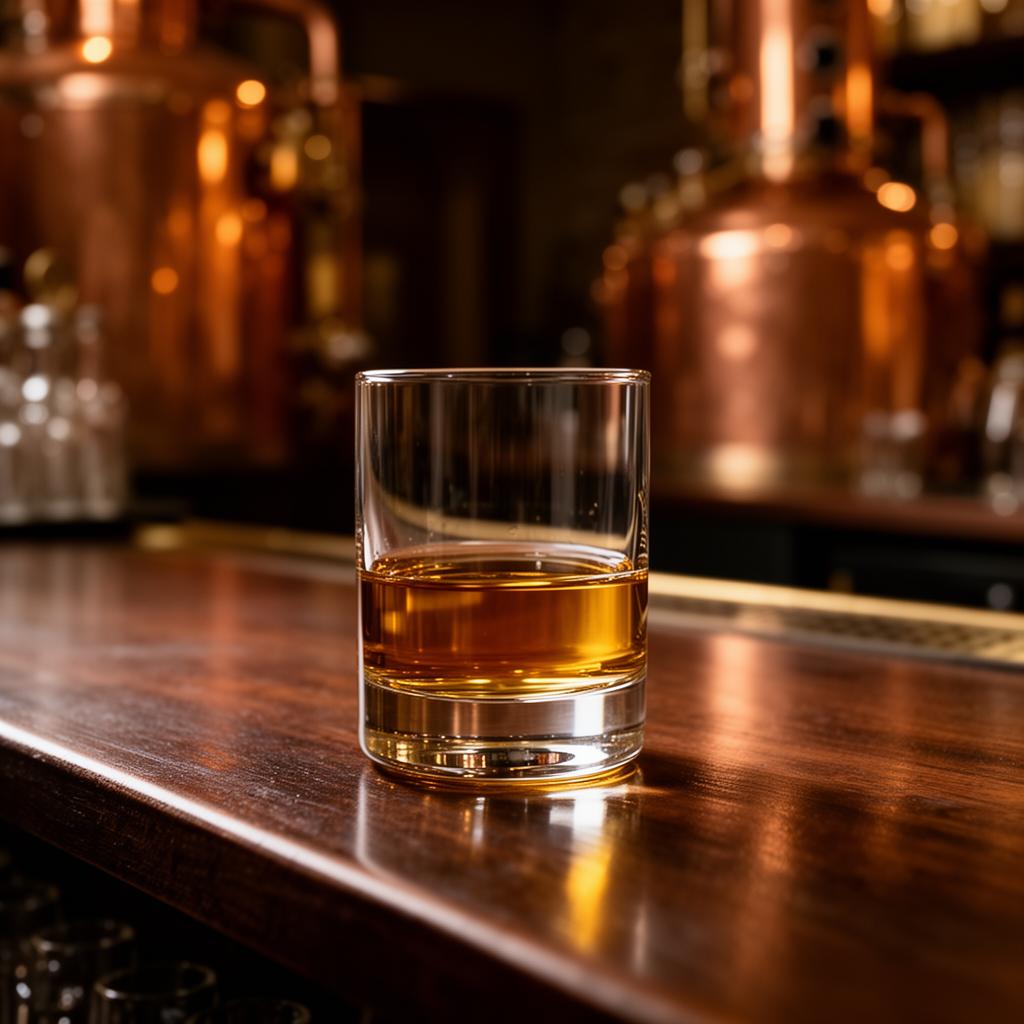
If you spend enough time browsing the shelves of a high-end liquor store or scanning the menu at a cocktail bar, you are bound to run into a wall of confusing terminology. The whiskey aisle is heavily regulated, and words that seem to mean one thing in plain English mean something entirely different in the eyes of the law. You see "Single Malt," you see "Blended," and occasionally, you spot the elusive "Single Grain" label.
Because language can be tricky, the vast majority of consumers assume that a "single grain" whiskey is a spirit made from 100% wheat, 100% corn, or 100% rye. This is entirely incorrect.
I love looking at the intersection of chemistry, physics, and historical legal definitions in the food and beverage world. Today, I am breaking down exactly what single grain whiskey actually is, the industrial machinery used to create it, and why the word "single" is the single most misunderstood term in the distilling industry.
Decoding the legal jargon
To truly understand the label on the bottle, we have to look at the historical laws of Scottish distilling, specifically the Scotch Whisky Regulations.
In the global whiskey lexicon, the word "single" always refers to the geographical location, not the recipe in the mash bill. It guarantees that every single drop of liquid inside that bottle was produced, distilled, and aged at one specific distillery facility.
- A Single Malt is a whiskey made entirely from 100% malted barley, produced at one single distillery.
- A Single Grain is a whiskey made from water, a small amount of malted barley, and at least one other whole cereal grain (like corn or wheat), produced at one single distillery.
If a company takes a barrel of single grain whiskey produced at Distillery A in the Highlands, and mixes it with a barrel of single grain whiskey produced at Distillery B in the Lowlands, it legally loses the "single" title. It becomes a "Blended Grain Whiskey." The word "grain" simply serves as the legal counterpoint to the word "malt." If it isn't 100% malted barley, it defaults to the grain category.
The history of the column still
The biggest difference between a single malt and a single grain whiskey isn't just the crop growing in the field; it is the massive physical machinery used to extract the alcohol. To understand single grain, you have to understand the invention of the continuous column still.
For centuries, all whiskey was made in traditional copper pot stills. These are the beautiful, onion-shaped copper kettles you see on distillery tours. Pot stills are romantic, but they are incredibly inefficient by modern industrial standards. They require the distiller to process the liquid in separate, slow, boiling batches. You fill the pot, boil it, empty it, clean it, and start over. Because the process is relatively inefficient at separating alcohol from water, the resulting spirit is heavy, rich, and loaded with complex, earthy flavor compounds (known as congeners).
In 1830, an Irishman named Aeneas Coffey patented a design that revolutionized the global alcohol industry: the Coffey Still, or the column still.
A column still is exactly what it sounds like. It is a towering, industrial cylinder, often several stories high, that runs constantly, 24 hours a day, without ever stopping.
The physics of continuous distillation
The physics inside a column still dictate the flavor profile of single grain whiskey. Inside the massive vertical column, there are dozens of perforated horizontal plates.
The distiller pumps fermented grain mash (which is essentially a low-alcohol beer made from wheat or corn) into the top of the column, while simultaneously blasting scalding hot steam into the bottom. As the mash falls down through the plates, the steam rises up to meet it. The intense heat of the steam strips the alcohol away from the water and the grain solids. The alcohol vaporizes and travels up the column, getting more and more purified every time it passes through a new plate.
This continuous distillation strips away almost all of the heavy, earthy, oily compounds found in the grain. As a result, the alcohol that comes out the top of the column is biologically lighter, much higher in proof, and significantly sweeter and smoother than the heavy, pungent liquid produced by a single malt pot still.
The ingredients: why malt is still required
Even though single grain whiskey is dominated by cheaper, high-yield grains like corn (maize) or wheat, the recipe almost always includes a small percentage of malted barley, usually around 10%.
This is not necessarily for flavor; it is a biological requirement. Grains like corn and wheat are packed with complex, tightly bound starches. Yeast, the microorganism that creates alcohol, cannot eat complex starches. It can only eat simple sugars. When barley is "malted" (partially sprouted and then dried), it naturally develops high levels of a specific enzyme called amylase.
When the distillers mix the crushed corn and the malted barley together in hot water, the amylase enzymes from the barley act like chemical scissors. They slice up the complex corn starches, converting them into the simple, fermentable sugars the yeast desperately needs to create the alcohol.
The maturation process
Because single grain whiskey comes off the column still so light and pure, it heavily relies on the aging process for its flavor. By law, if it is Scotch, it must age in oak barrels for a minimum of three years.
Because the liquid lacks the heavy, aggressive congeners of a single malt, it acts like a blank canvas for the wood. Over the years, the alcohol expands into the pores of the oak barrel during the hot summers and contracts during the cold winters. Through this physical interaction, the whiskey extracts vanillins, tannins, and caramelized wood sugars from the barrel. This is why well-aged single grain whiskeys are famous for their dominant notes of vanilla, butterscotch, toffee, and light floral honey.
The unsung hero of blended Scotch
If single grain whiskey is so smooth, sweet, and drinkable, why don't we see it everywhere? Why is it considered the elusive unicorn of the whiskey aisle?
Historically, single grain whiskey was never meant to be bottled and sold on its own to consumers. Because it is incredibly fast and relatively cheap to produce in massive volumes using towering column stills, it became the invisible, industrial backbone of the global whiskey industry.
The vast majority of the famous blended Scotch whiskeys you see at the store, brands like Johnnie Walker, Chivas Regal, or Dewar's, are created by master blenders. These blenders take roughly 60% to 70% light, sweet, and smooth single grain whiskey, and mix it with 30% to 40% heavy, intense, smoky single malt whiskey. The single grain acts as the smooth, accessible foundation that balances out the aggressive, peaty flavors of the malt, making the final product highly approachable for the average consumer.
In recent years, however, independent bottlers and large brands have realized that when single grain whiskey is left in a good oak barrel for 15, 20, or 30 years, it develops into a stunningly complex, elegant drink. Brands like Haig Club (famously backed by David Beckham) and Teeling in Ireland have pushed single grain into the spotlight.
The next time you are looking for a whiskey that is light, sweet, effortlessly smooth, and completely devoid of heavy campfire smoke, bypass the single malts and ask your bartender for a well-aged single grain.