Quick Answer
Calamari is squid. Always. The word is simply the Italian for squid and on a menu it never refers to octopus. The two animals are cousins in the cephalopod family but they are different species with different anatomy, different textures, and different cooking rules.
If a menu says calamari, you are getting squid (eight arms plus two long feeding tentacles, slim torpedo body, thin walls). If it says octopus or pulpo, you are getting an eight-armed, no-tentacle, dense-muscle creature that needs an hour of slow cooking before it gets near a hot grill.
How the confusion started
Most diners only meet squid in two forms: fried rings and tentacle clusters. Most diners only meet octopus as charred Mediterranean-style legs. Both are soft, both come from the sea, both have suckers, and both go well with lemon, so it is easy to assume they are interchangeable preparations of the same animal. They are not.
The Italian word calamaro covers squid only. The word for octopus is polpo (Italian) or pulpo (Spanish). No serious kitchen would label octopus as calamari. If you ever see fried calamari rings that look unusually thick and chewy, the issue is overcooking, not a species swap.
Anatomy: ten limbs vs eight
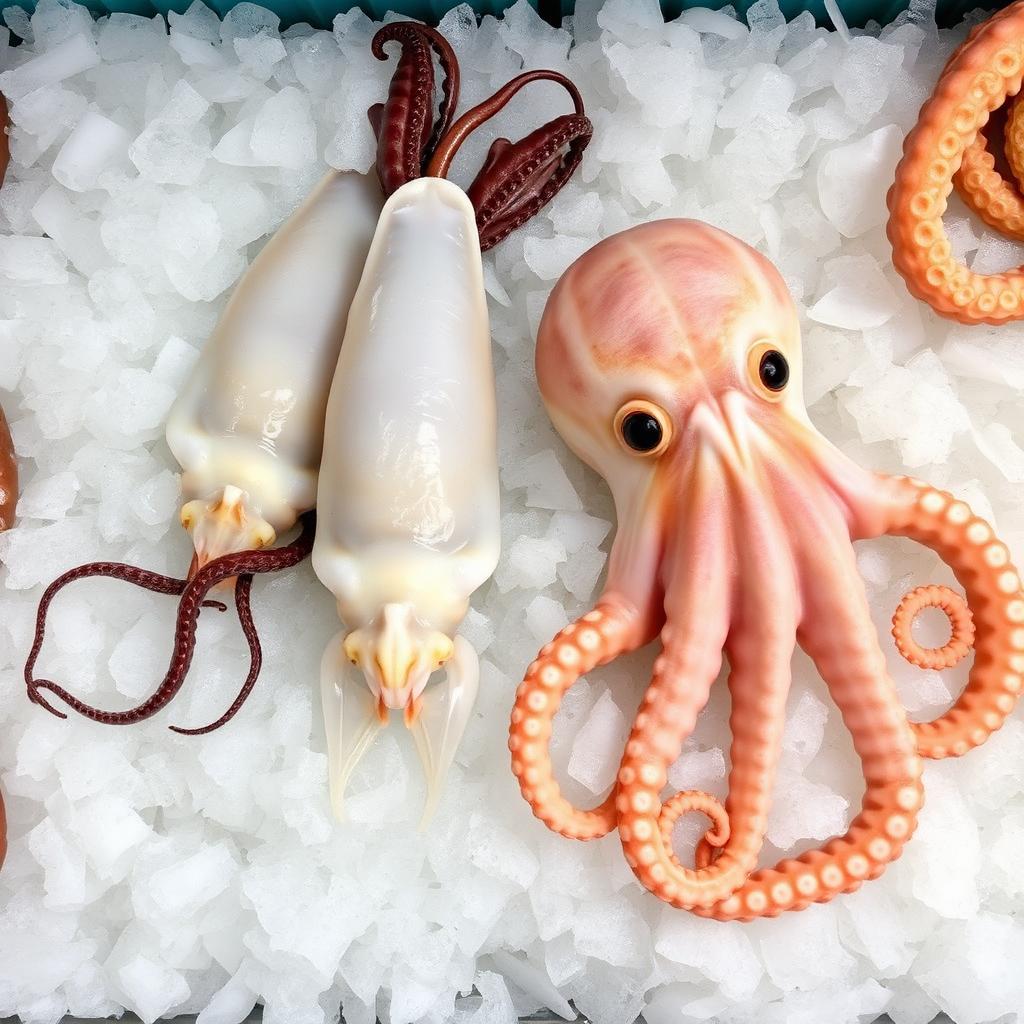
Squid and octopus are both cephalopods (class Cephalopoda) but sit in different orders. The relevant differences are simple:
- Squid (order Teuthida): long, streamlined, torpedo-shaped mantle with two side fins for fast open-water swimming. Ten limbs total, eight short arms plus two longer feeding tentacles tipped with sucker clubs. Internal pen (gladius) gives it structural support.
- Octopus (order Octopoda): round, sack-shaped head, no fins, no tentacles. Eight arms of similar length lined with suckers along the full length. No internal skeleton at all (just a hard beak), which is why it can squeeze through impossibly small gaps.
The hint is in the name: octopus means eight-footed. Squid keeps the eight arms and adds two specialist feeding tentacles for ambush hunting.
Texture and cooking: opposite ends of the heat scale
Because the two animals live differently, their muscle tissue is built differently. A squid is a fast-twitch open-water swimmer; its mantle wall is thin, uniform, and densely packed with collagen. An octopus is a slow, crawling, cave-dwelling predator; its arms are thick, with collagen fibres laid down in much heavier cross-bands.
That difference dictates everything in the pan:
- Squid (calamari): cook hard and fast (under two minutes over high heat) or slow and gentle (forty plus minutes in a braise). Anything in between turns to rubber. The classic fried ring takes about 60 to 90 seconds in 180 C oil.
- Octopus: requires sustained low-and-slow cooking to break down the collagen. The standard method is a 60 to 90 minute simmer or sous vide, followed by a quick grill or sear to crisp the skin. Skipping the pre-cook produces a tough, leathery result that no amount of grilling will save.
What it looks like on a plate
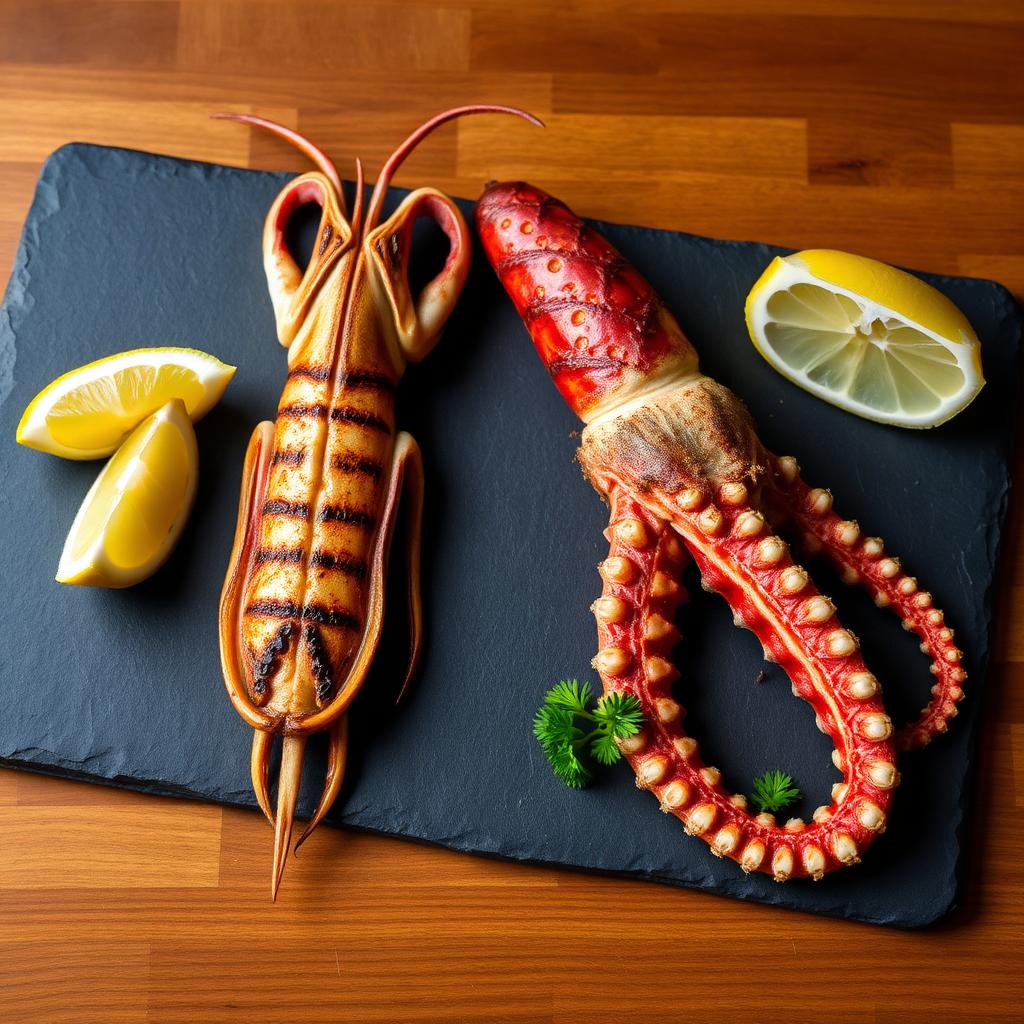
Fried calamari is unmistakable: pale golden rings of mantle (often with a small cluster of arms and tentacles tossed in), light batter, served loose on parchment with lemon and a red or white dipping sauce. Each ring is hollow because it is a cross-section of the squid's tubular body.
Grilled octopus is the opposite: charred outside, tender inside, plated as thick whole tentacle sections with visible suckers, usually dressed with olive oil, smoked paprika, lemon and sometimes a bed of warm potato (Spanish pulpo a la gallega).
Price and availability
Squid is fast-growing, abundant, and cheap to harvest at scale, which is why fried calamari is a casual appetizer everywhere from sports bars to chains. Octopus grows more slowly, is harder to catch, and increasingly faces sustainability concerns; that pushes octopus dishes up the price ladder and often onto specialist Mediterranean, Japanese or Korean menus rather than the everyday neighbourhood Italian place.
Sustainability note
Squid stocks are highly variable but most species are managed and not currently overfished according to Monterey Bay Aquarium Seafood Watch and Marine Conservation Society ratings. Octopus is a more mixed picture, with some fisheries rated as good alternatives and others (particularly imports from poorly managed fisheries) flagged as ones to avoid. If sourcing matters to you, the country-of-origin label is the place to look.
The takeaway
Calamari is squid, full stop. It is thin, mild, and built for fast heat. Octopus is its denser, slower-cooked, more dramatic cousin. Knowing which is which on a menu means you order with confidence, cook with the right method, and never accidentally compare a rubber-band fried ring to a properly braised octopus leg again.