Quick Answer
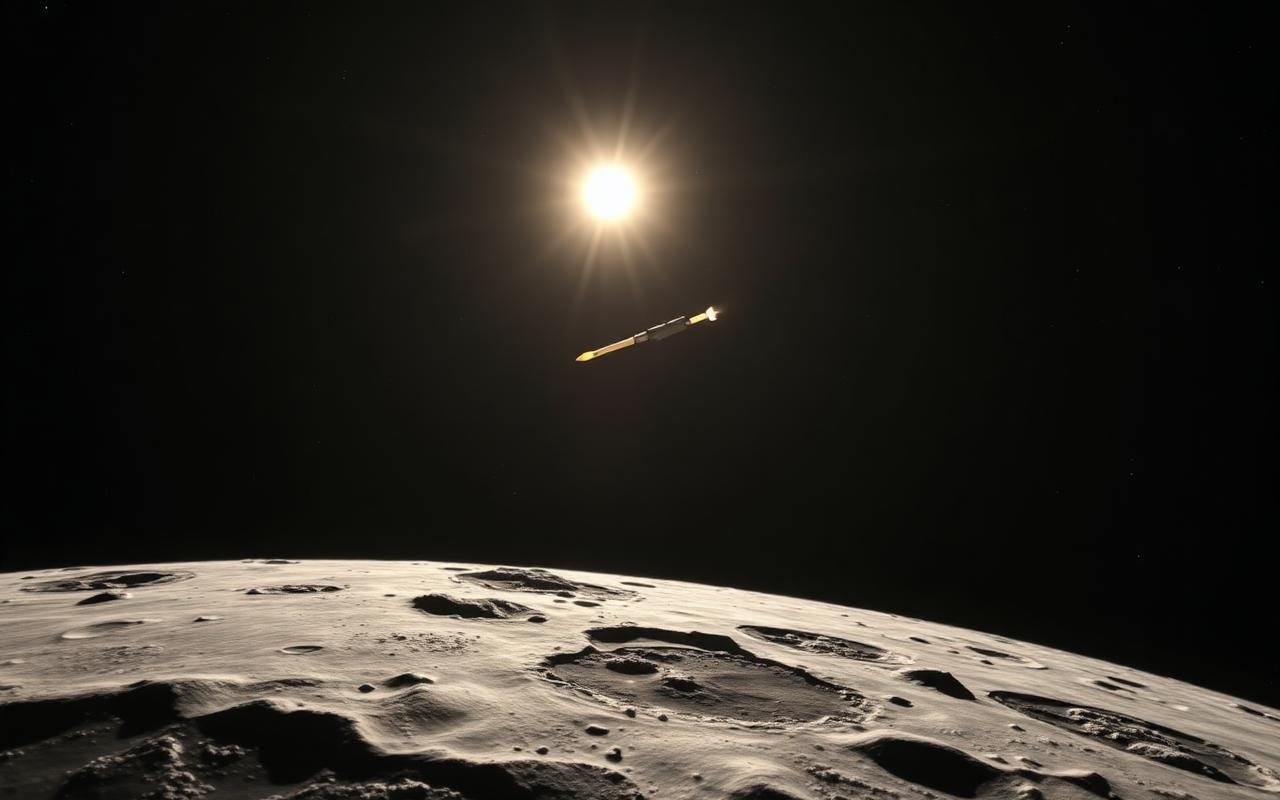
Yes. Astronomers have confirmed that a spent upper stage from a SpaceX Falcon 9 is on a direct collision course with the lunar surface.
The rocket stage is expected to impact the Moon on August 5, 2026, at roughly 2:44 a.m. EDT (06:44 UTC), near the Einstein crater on the western limb.
It will hit at about 5,400 mph (2.43 km/s). The crash poses zero danger to humans or any active lunar missions.
The August 2026 Impact
According to Bill Gray, the independent astronomer behind the widely used Project Pluto software for tracking near-Earth objects, the collision is now locked in.
- When: August 5, 2026, at about 2:44 a.m. EDT (06:44 UTC).
- Where: Near the Einstein crater on the Moon’s western limb, at the threshold between the near side and the far side.
- Speed: Roughly 5,400 mph (2.43 km/s). With no atmosphere to slow it down, the rocket will hit at full velocity.
Where Did the Rocket Come From?
This is not a fresh launch gone wrong. It is a piece of orbital history catching up with us.
The rocket, officially designated 2025-010D, is the upper stage of a Falcon 9 that launched from Florida in January 2025. Its original mission was a success: it carried two uncrewed lunar landers into space, Firefly Aerospace’s Blue Ghost vehicle and the Hakuto-R Mission 2.
The landers went on their way and the rocket’s lower booster safely returned to Earth. The second stage was left in a high orbit, tumbling uncontrollably until the Moon’s gravity finally reeled it in.
Can You See the Collision from Earth?
Unfortunately for amateur skywatchers, the impact will be very difficult, if not impossible, to spot with a backyard telescope. From Earth’s distance the flash will simply be too faint.
Scientists, on the other hand, are excited. NASA hopes to eventually use the Lunar Reconnaissance Orbiter (LRO) to photograph the fresh crater left behind, which will give researchers valuable new data on how impacts shape the lunar surface.
Frequently Asked Questions (FAQ)
Is a SpaceX rocket going to hit the Moon?
Yes. The spent upper stage of a Falcon 9 launched in 2025 is projected to crash into the Moon on August 5, 2026.
Will the Falcon 9 crash cause any damage to the Moon?
No. It will create a small crater roughly 100 feet wide, but it poses no danger to the Moon’s structural integrity or to any active scientific rovers.
Why was the SpaceX rocket left in space?
Once the upper stage of a rocket completes its boosting mission and deploys its payloads into deep space, it usually lacks the fuel to return to Earth. It becomes space junk, drifting in whatever orbit physics hands it.
The takeaway
A piece of human engineering is about to leave a permanent mark on another world. It is a small reminder that as we send more hardware beyond Earth, the math of what comes back, and what does not, matters more every year.
Where the Story Came From
The viral claim traces back to amateur tracking data and a few astronomy news sites that misidentified the object. The piece of hardware on a lunar collision course is not the SpaceX Falcon 9 second stage from the DSCOVR launch. That was the original misattribution back in 2022, later corrected to a Chinese Long March 3C upper stage from the Chang'e 5-T1 mission.
The latest round of headlines confuses an old story with a new tracking update, and SpaceX hardware is once again being blamed for an impact that has nothing to do with the company.
What Actually Happens to Falcon 9 Upper Stages
For most missions, the Falcon 9 second stage performs a deorbit burn after deployment, reentering over the southern Pacific. For high-energy missions where deorbit propellant is short, the stage is left in a heliocentric orbit around the Sun. That orbit can occasionally cross the Earth-Moon system years later, but a lunar impact is very rare.
SpaceX publishes a disposal plan for each mission as part of its FAA launch licence. Independent trackers usually verify those plans within days of launch.
Why the Confusion Keeps Happening
Tracking spent upper stages is genuinely hard. They are dim, they tumble unpredictably and their orbits are pushed around by sunlight pressure. Amateur observers and even some academics rely on orbit fits that can swap one object for another if the original launch data is sparse.
When something exciting is forecast, like an unintentional lunar impact, the story spreads faster than the corrections.
Should We Worry About Junk Hitting the Moon
- The Moon has no atmosphere, so impacts leave permanent craters.
- An upper stage impact creates a flash visible from Earth with modest telescopes if timing is known.
- NASA's Lunar Reconnaissance Orbiter has documented several previous human-made impacts.
- None of this poses a risk to people on Earth.
- It does, however, raise a policy question about cluttering the lunar surface as commercial lunar activity grows.
What the Tracking Community Is Actually Watching
The Project Pluto and Bill Gray tracking notes for this object now suggest the candidate impactor is, again, a Chinese upper stage. The estimated impact site is on the far side of the Moon, so any flash would not be observable from Earth in real time. Confirmation, if it comes, will rely on Lunar Reconnaissance Orbiter imagery weeks after the event.
How to Spot Fake Space News in Future
Three quick checks save a lot of time. First, look for a named object designation like 2015-007B rather than just a launch operator. Second, see whether the source links the Project Pluto pages or NASA's JPL Horizons system. Third, give the story 48 hours before sharing. Real space stories almost always survive that wait. Misattributions almost never do.
The Moon is not in danger from a SpaceX rocket. It is, however, an excellent reminder that we should track our hardware more carefully as more of it leaves Earth orbit each year.