Quick Answer
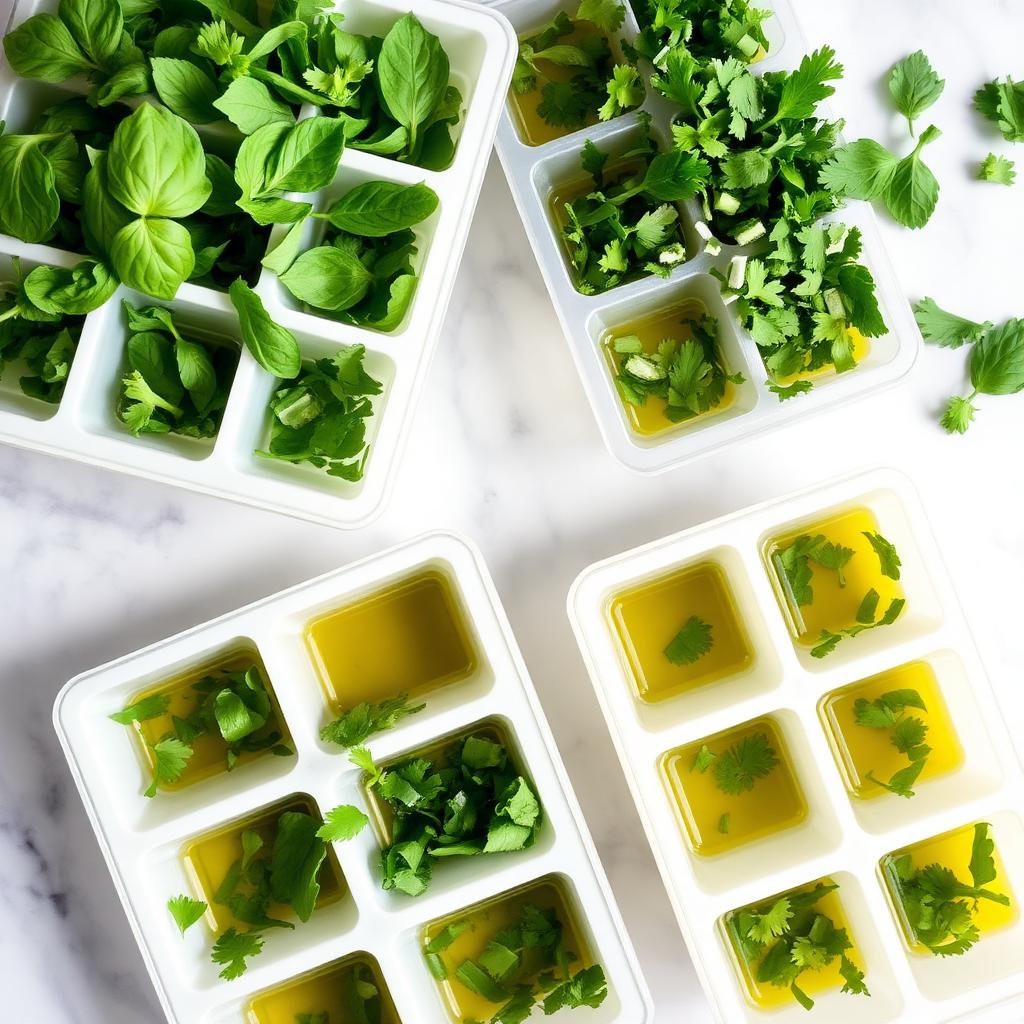
Chop fresh herbs finely, pack them tightly into an ice cube tray, cover with olive oil or water, and freeze overnight. Pop the cubes out, transfer to a labeled freezer bag, and use within six months for the best flavor.
Each standard cube holds about 1 tablespoon of chopped herbs, which is the amount most recipes call for.
Why Freeze Rather Than Dry
Drying preserves hard, low-moisture herbs (rosemary, thyme, oregano) well. It destroys delicate soft herbs (basil, cilantro, parsley, dill). Freezing keeps soft herbs much closer to fresh because the cell walls rupture in a way that releases flavor when the cube melts in your pan, while the cold prevents the volatile oils from evaporating.
What You Need
- Silicone or rigid ice cube trays
- Sharp chef's knife or food processor
- Olive oil (for cooking applications) or water (for soups, broths and infusions)
- Heavy duty zip top freezer bags
- Permanent marker for labels
Step by Step
1. Wash and dry. Rinse herbs under cool water and dry them thoroughly in a salad spinner or on paper towel. Any surface water turns into ice crystals that damage texture.
2. Chop. Strip leaves from hard herb stems first. Soft herb stems can usually stay in. Chop finely by hand or pulse in a small food processor.
3. Fill. Pack chopped herbs into ice cube trays, filling each well about three quarters full. Press lightly with a finger.
4. Top off. Pour olive oil or cool water over the herbs until each well is full. Tap the tray on the counter to release air bubbles.
5. Freeze. Lay flat in the freezer until solid, usually 4 to 6 hours or overnight.
6. Transfer. Pop cubes out and store in a freezer bag, squeezing out as much air as possible. Label the bag with the herb and the date.
Oil or Water? When to Use Which
- Olive oil cubes: sautéing vegetables, finishing pasta, dropping straight into a hot pan. The oil prevents freezer burn and infuses with the herb.
- Water cubes: soups, stews, slow cookers, rice, polenta, anything wet-cooked.
- Butter cubes: mix softened butter with chopped herbs, fill mini-muffin liners, freeze for instant compound butter for steak and corn.
Which Herbs Freeze Best
- Basil (only when frozen with oil, otherwise it blackens)
- Parsley, both flat-leaf and curly
- Cilantro
- Chives
- Dill
- Mint (for tea and cocktails)
- Tarragon
- Sage, rosemary, thyme (also dry well)
Mistakes to Avoid
- Skipping the oil for basil. Plain basil turns black within minutes of thawing.
- Overfilling cubes so they refuse to pop out. Use silicone or fill only three quarters.
- Leaving cubes in the open tray for weeks. They absorb freezer odors.
- Forgetting to label. Frozen herbs look identical once chopped.
How Long They Keep
USDA FSIS says frozen foods remain safe indefinitely if held at 0 F or below. Flavor and color start to fade at six months for herbs. Use the oldest cubes first and replace each summer when fresh bunches are cheap.
Bottom Line
Chop, fill, top, freeze. Twenty minutes of prep gives you a year of fresh herb flavor that drops straight into a pan. Cheaper than supermarket "fresh" herb tubs in plastic and miles ahead in taste.
Common Questions About Freezing Herbs
Do frozen herbs taste as good as fresh?
For cooked applications (soups, stews, pasta sauce), they are nearly indistinguishable. For raw uses (salads, garnishes), fresh always wins.
Can I freeze herb stems?
Yes. Parsley and cilantro stems carry as much flavor as the leaves. Save them for stocks, soups and sauces.
What about freeze drying?
Freeze dried herbs retain more flavor and color than frozen cubes but require special equipment.
Can I use frozen herbs in cold dishes?
Not really. They release water as they thaw and end up limp. Save frozen for hot cooking.
Building a Year-Round Herb Garden in Your Freezer
In peak summer when herbs are cheap and abundant, batch freeze in large quantities. A typical week of basil from a $3 farmers market bunch yields 12 to 15 cubes, enough for several months of pasta sauces and soups. Set aside one Sunday afternoon to process every herb in season: rinse, dry, chop, fill trays, freeze, transfer. A few hours of work produces a freezer drawer full of fresh herb cubes that easily lasts until next year's harvest. The labor cost beats the supermarket's chronically expired herb tubs from the produce aisle.
Picking the Right Tray for Cube Storage
Silicone trays release frozen cubes much more easily than rigid plastic and are dishwasher safe. Look for trays with a lid so cubes can freeze cleanly without absorbing freezer odors. Mini ice cube trays (about 1 teaspoon per well) are useful for small portions of strong herbs like rosemary and thyme. Standard cube trays (about 1 tablespoon per well) suit milder herbs and pesto-style oil mixes. A single afternoon of batch freezing can yield enough cubes for an entire winter of cooking from one summer market haul.