Quick Answer
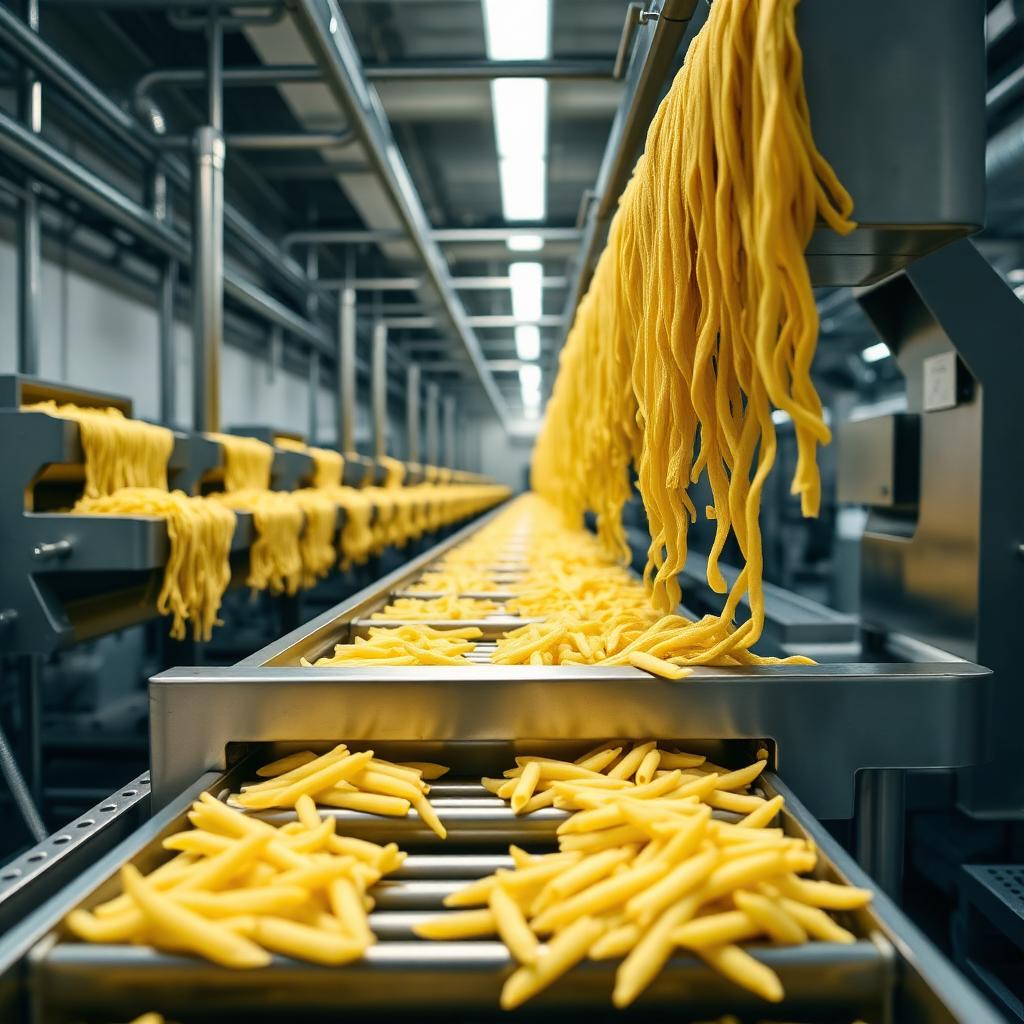
Factory pasta is made by mixing semolina flour and water, extruding the dough through metal dies, cutting it, slow drying it for hours, then packaging.
It is essentially the same process as traditional Italian pasta making, scaled up into a continuous, automated, temperature controlled industrial line that produces hundreds of tonnes of dry pasta a day.
Step 1: Mixing
Quality dry pasta starts with semolina, the coarse golden flour milled from durum wheat. The semolina is conveyed into industrial vacuum mixers and combined with warm water in carefully measured ratios, usually around 30 percent water to 70 percent flour. Vacuum mixing pulls air out of the dough so the finished pasta is dense and golden instead of pale and brittle. Egg pastas add fresh pasteurised egg at this stage too.
Step 2: Extrusion Through Bronze or Teflon Dies
The dough is forced through metal dies under high pressure by a long hydraulic screw, much like a meat grinder. The shape of the die determines the shape of the pasta. Each shape, from spaghetti to fusilli to rigatoni, has its own custom die.
Most premium Italian pasta uses bronze dies. Bronze creates a rougher microscopic surface texture that holds sauce far better than the smooth surface created by Teflon coated dies. That rough texture is one of the easiest tells of a higher quality dry pasta.
Step 3: Cutting
As the pasta emerges from the die, automated rotating blades cut it to precise lengths. Long shapes like spaghetti and bucatini are hung over drying rods, while short shapes like penne and macaroni drop directly onto conveyors. Specialty shapes like cavatappi and farfalle pass through stamping and twisting stations.
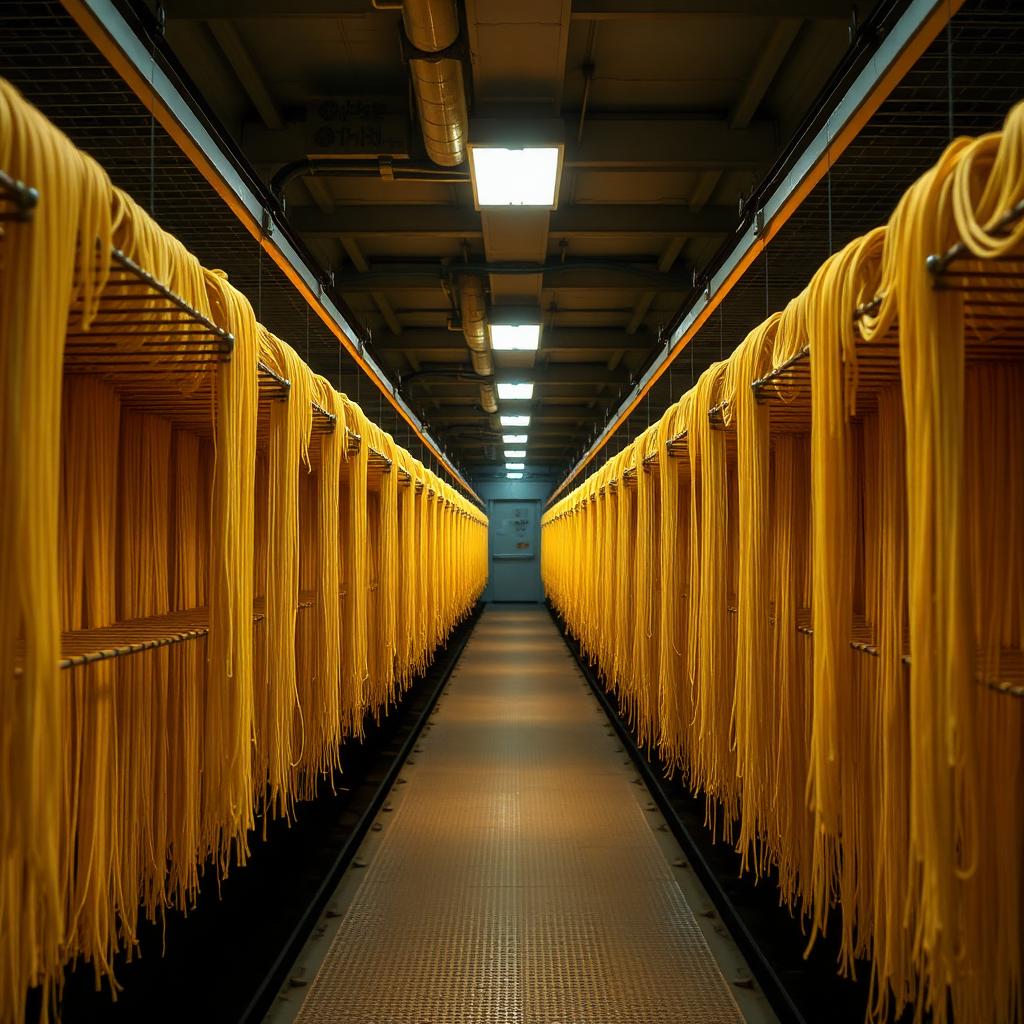
Step 4: Drying (the Most Critical Step)
Fresh extruded pasta moves into long multi tier drying tunnels for anywhere from 6 to 24 hours. The temperature and humidity are precisely controlled to slowly reduce the moisture content from around 30 percent down to roughly 12 percent.
Drying matters because:
- Too fast at too high a heat and the outer surface dries before the centre, causing cracks during cooking.
- Too slow at the wrong humidity and the pasta develops mould before it can be stored.
- Premium producers use lower temperature, longer dryers (so called slow dry) that preserve flavour and protein quality.
Mass market brands often use high temperature short drying to speed throughput, while premium Italian pasta brands prefer slow drying at 40 to 50 C for up to 24 hours.
Step 5: Cooling, Quality Check, Packaging
After drying, the pasta enters a cooling tunnel that brings it gently down to room temperature so it does not sweat inside the packet. Optical sensors and human inspectors check for broken pieces, deformities or colour defects.
Automated packers measure out 500g or 1kg portions and seal them in plastic bags or rigid boxes. From there pasta moves to palletising, warehousing and distribution.
How Long Does the Whole Pasta Factory Process Take?
Mixing to packed packet usually takes 8 to 26 hours depending on the drying speed. The drying tunnel alone accounts for most of that time. A modern industrial pasta line typically produces between 2,000 and 8,000 kilograms of finished pasta per hour.
Why Factory Pasta Can Still Be Excellent
The key quality markers are the same in a small artisan workshop and a modern industrial plant:
- 100 percent durum wheat semolina with high protein content
- Bronze die extrusion for surface texture
- Low temperature, long drying for flavour and bite
If a packet of pasta hits all three on the label, it will perform like premium Italian pasta even if it was made on a high speed line.
Bottom Line
Factory pasta runs through five repeatable steps: vacuum mixing of semolina and water, high pressure extrusion through bronze or Teflon dies, automated cutting, slow controlled drying for up to 24 hours, then optical inspection and packaging. The technology has scaled the volume to thousands of kilograms an hour without fundamentally changing the craft logic behind a good plate of pasta.
How Pasta Is Made in a Factory: Reader Questions
How is pasta made in a factory differently from artisan pasta?
The core steps are identical: mix, extrude, cut, dry, package. The difference is scale, automation and drying speed. Premium artisan producers and premium factories both use bronze dies and low temperature long drying.
How is gluten free pasta made in a factory?
Same five step flow, but with rice, corn or legume flours instead of durum wheat semolina, plus binders such as xanthan gum. Drying tunnels run at slightly different humidity profiles to prevent cracking.
How is fresh pasta made in a factory?
Fresh pasta skips the long drying stage and goes through a short partial drying or pasteurisation step. It is then chilled, packed in modified atmosphere packaging and shipped under refrigeration.
Is bronze die pasta always better?
For tomato, cream and oil based sauces, bronze die pasta holds noticeably more sauce per bite, which is why most cooks prefer it. For very smooth or clinging Asian style noodle dishes, Teflon die pasta can be the better fit.
Why is some factory pasta yellower than others?
Colour depends on the durum wheat quality, the protein content and how gently the pasta is dried. Low temperature, long drying preserves the natural golden tone, while very high temperature drying can leave pasta pale.