Quick Answer
Whole grain mustard gets its signature pungent, sinus-clearing heat not from the dry seeds themselves, but from a specific biological enzymatic reaction. When crushed raw mustard seeds are soaked in a cold liquid, an enzyme called myrosinase is activated, creating a volatile, spicy compound. The subsequent addition of an acid, like vinegar, halts the reaction and locks the flavor in place.
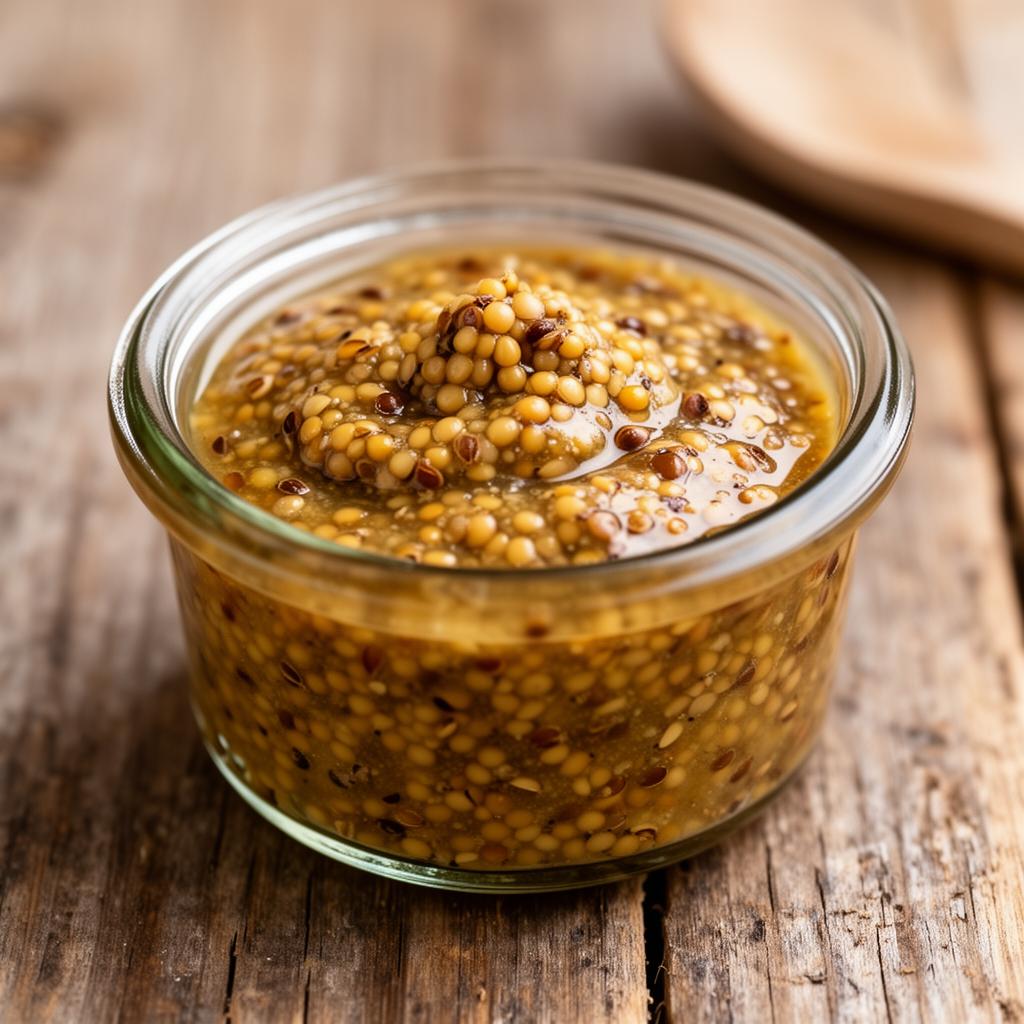
If you have ever accidentally bitten into a raw, dry mustard seed while eating pickles or a curry, you know that it doesn't taste like much. It is hard, slightly bitter, and completely lacks that sharp, sinus-clearing heat we associate with the yellow condiment sitting in our refrigerators. Yet, when you buy a jar of premium whole grain mustard, where those exact same seeds are visibly intact and floating in liquid, it packs an incredible, spicy punch.
I look deeply into the chemical reactions that happen right on our kitchen counters. Today, I am explaining the incredible chemical defense mechanism of the mustard plant, the enzymatic biology that creates its heat, and how you can manipulate that exact biology to ferment and create the perfect, artisanal whole grain mustard at home.
The botany of the seed
To understand the condiment, we have to look at the plant. Mustard belongs to the Brassica family, putting it in the exact same botanical lineage as broccoli, cabbage, and Brussels sprouts.
For culinary purposes, we primarily deal with three types of mustard seeds, each possessing a different level of volatile oil:
- White/yellow mustard seeds (Sinapis alba): These are the largest seeds but possess the mildest flavor. They are the primary ingredient in standard, bright yellow American hot dog mustard.
- Brown mustard seeds (Brassica juncea): These are smaller, significantly spicier, and form the backbone of hearty European mustards, including Dijon and classic whole grain varieties.
- Black mustard seeds (Brassica nigra): These are the smallest and by far the most pungent. They are incredibly difficult to harvest mechanically, so they are rarely used in commercial condiments today, but are highly prized in traditional Indian cooking.
The chemical defense mechanism
The heat found in mustard is entirely different from the heat found in a chili pepper. A chili pepper burns your tongue because of a heavy, oil-based chemical called capsaicin. Mustard clears your sinuses because of a highly volatile, vaporizing oil reaction.
Inside a dry, sleeping mustard seed, two specific chemicals sit completely separate from each other, housed in different cellular compartments. One is an enzyme called myrosinase, and the other is a compound called glucosinolate.
As long as the seed remains dry and whole, absolutely nothing happens. This is the plant's natural, evolutionary defense mechanism. In the wild, the plant doesn't want its seeds eaten by insects. If a bug comes along and bites into the seed, it physically ruptures the cell walls. The myrosinase and the glucosinolates are suddenly forced to mix together. When they meet, they instantly create allyl isothiocyanate, a volatile, highly toxic, and aggressively pungent chemical that repels the insect.
When you eat mustard, that sinus-clearing rush you feel is that exact same defensive chemical vaporizing up into your nasal passages.
The catalyst: crushing and cold liquid
When you make whole grain mustard at home, you are not actually "cooking" anything. You are acting as a chemist, orchestrating a controlled soak to trigger this exact defense mechanism.
To create the heat, you have to break the cell walls and introduce a catalyst. Water is the catalyst that allows the myrosinase enzyme to wake up and attack the glucosinolates. However, you have to be incredibly careful with temperature.
The temperature rule: Myrosinase is a highly sensitive biological enzyme. If you take your crushed mustard seeds and soak them in boiling hot water, the extreme heat will instantly denature (destroy) the enzyme. The chemical reaction will never occur, no volatile oils will be produced, and your final mustard will be completely flat, dull, and intensely bitter. You must always use cold or room-temperature liquid to activate the maximum amount of heat.
The role of acid in preservation
Once you introduce the cold water and crack the seeds, the enzymatic reaction begins. Your kitchen will start to smell incredibly sharp and spicy. But there is a major problem: allyl isothiocyanate is highly volatile. If you leave the wet mustard seeds sitting in a bowl of water on the counter, the heat will literally evaporate into the air. Within a day or two, all the spiciness will vanish.
To trap the heat and make it permanent, you have to introduce a strong acid. This is usually in the form of apple cider vinegar, white wine, or unpasteurized beer.
The acid rule: Acid drops the pH of the mixture dramatically. This sudden, harsh acidic environment forcefully halts the enzymatic breakdown process. It traps the volatile oils exactly where they are, preserving the sharp, spicy flavor for months or even years inside your refrigerator.
Because acid stops the heat-building process, the timing of when you add the vinegar dictates how spicy your mustard will be. If you add the water and the vinegar at the exact same time, you get a mild mustard. If you let the seeds soak in pure water for 20 minutes to build up maximum heat, and then add the vinegar to lock it in, you will create a brutally hot, nose-clearing mustard.
The master whole grain recipe
Creating a batch of beautiful, popping whole grain mustard requires a few simple ingredients and about 48 hours of patience.
The ingredients:
- 1/4 cup yellow mustard seeds
- 1/4 cup brown mustard seeds
- 1/2 cup apple cider vinegar (or white wine)
- 1/2 cup cold water
- 1 teaspoon kosher salt
- Optional: 1 tablespoon of honey or brown sugar to cut the bitterness
The step-by-step process:
- The crack: Place the yellow and brown mustard seeds into a mortar and pestle, or give them two quick pulses in a spice grinder. You do not want a powder. You just want to lightly crack about half of the seeds open to expose the interior enzymes, leaving the rest whole for that signature popping texture.
- The soak: Transfer the seeds to a clean glass jar. Pour in the cold water, the apple cider vinegar, and the salt. Stir vigorously.
- The wait: Seal the jar tightly with a lid. Leave the jar sitting on your kitchen counter at room temperature for a minimum of 48 hours. Do not put it in the fridge yet; the cold will slow down the liquid absorption.
- The hydration: Over the course of two days, the dry seeds will aggressively absorb the water and the vinegar. They will swell up to almost double their size, creating a thick, gelatinous, and highly aromatic paste.
- The blend (optional): After 48 hours, check the consistency. If it is too loose, you can use an immersion blender to quickly blitz a quarter of the mixture, releasing more starches to thicken the final condiment.
Aging and maturation
If you taste your mustard the moment the 48-hour soak is finished, you might be disappointed. It will likely taste incredibly harsh, aggressively pungent, and slightly bitter.
Do not throw it away. Mustard requires an aging period to mellow. Place the sealed jar into the back of your refrigerator and ignore it for at least two weeks. The cold environment allows the harsh chemical compounds to stabilize and the flavors to marry. After a fortnight, the bitterness will fade, the vinegar will mellow, and you will be left with a complex, perfectly balanced whole grain mustard that vastly outperforms anything you can buy in a grocery store.