Quick Answer
Sourdough discard is the portion of starter you would otherwise throw away when feeding your culture. It is still flour and water with mild lactic acid flavor, so it works in pancakes, waffles, crackers, biscuits, banana bread, pizza dough, English muffins and quick breads.
The substitution rule is simple: each cup of discard counts as half a cup of flour and half a cup of liquid in a recipe.
What Discard Actually Is
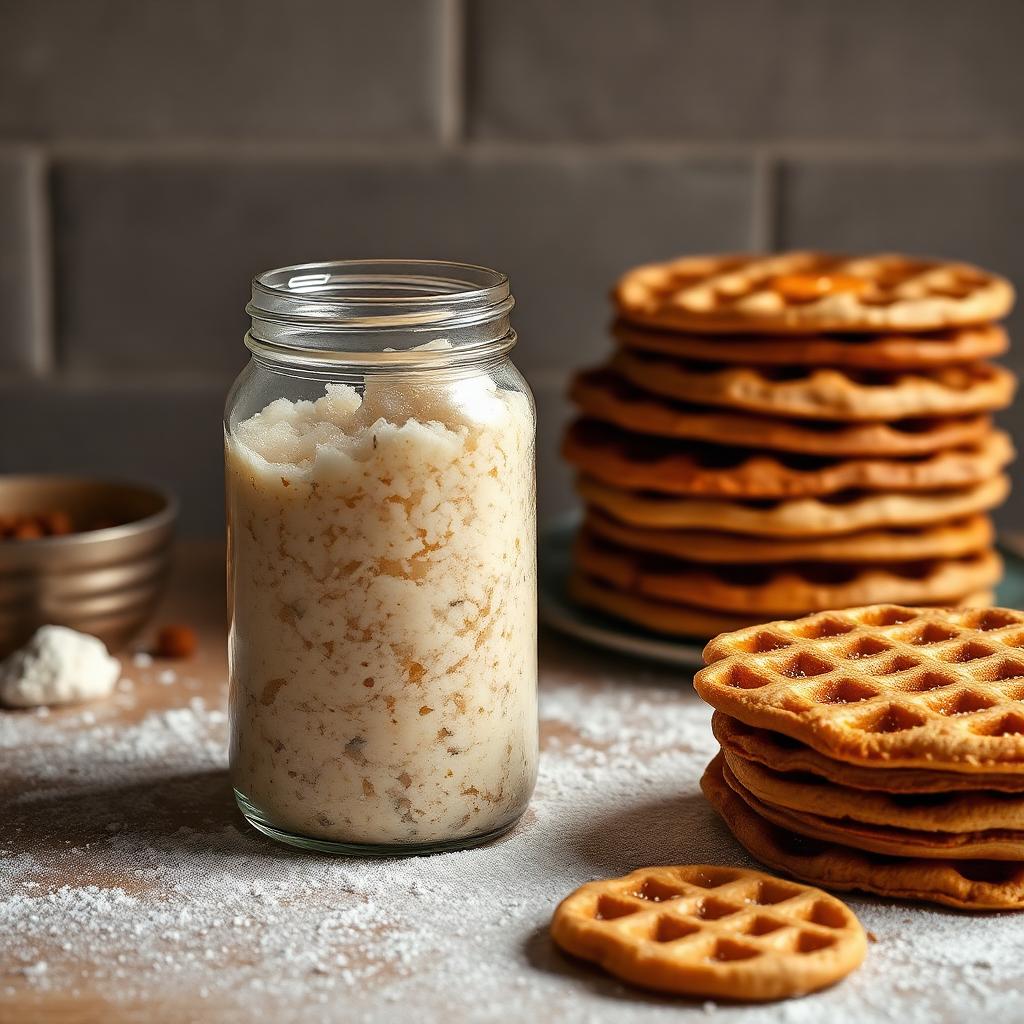
When you feed a sourdough starter, you typically remove and discard a portion to keep the population manageable. That portion is unfed starter: roughly equal parts flour and water that have already fermented. It still carries beneficial bacteria and a mild tangy flavor, but it has lost the active leavening power needed for bread loaves.
Why Not Just Throw It Out
A standard 1:1:1 daily feeding produces about half a cup of discard per day, which is over 180 cups per year per home baker. That is real food waste, real flour cost and a missed opportunity for tangy flavor in everyday baking.
Best Uses for Sourdough Discard
- Pancakes and waffles: Swap half the flour and milk in your usual recipe for an equal weight of discard.
- Crackers: Mix 1 cup discard, 1/2 cup flour, 2 tablespoons oil, 1/2 teaspoon salt. Roll thin, score, bake at 350 F until crisp.
- Banana bread or zucchini bread: Add 1/2 cup discard and reduce flour and liquid by 1/4 cup each.
- Biscuits and scones: Replace 1/4 cup of buttermilk with 1/4 cup discard.
- Pizza dough: 1 cup discard replaces 1/2 cup flour and 1/2 cup water, plus a small amount of commercial yeast for lift.
- English muffins: Stir 1 cup discard into a basic muffin dough overnight for added tang.
- Pretzels and bagels: Add 1/2 cup discard to a standard recipe for chewier texture.
The Substitution Math
A jar of discard is by weight roughly 50 percent flour and 50 percent water. So 100 grams (about 1/2 cup) of discard replaces:
- 50 grams flour (about 1/3 cup)
- 50 grams water (about 3 tablespoons + 1 teaspoon)
Adjust the recipe accordingly. If a pancake recipe asks for 1 cup flour and 1 cup milk, you can substitute 1 cup discard plus 1/2 cup flour and 1/2 cup milk for a tangier result.
How Long Discard Lasts
Stored in a sealed jar in the fridge, discard keeps for two weeks. The longer it sits, the tangier it gets and the darker the liquid (called hooch) on top will be. Stir the hooch back in or pour it off depending on how strong a flavor you want. After two weeks, the flavor turns harsh and the discard goes in the compost.
Can You Freeze It?
Yes. Portion discard into half-cup quantities in freezer bags or silicone molds. Freeze for up to three months. Thaw overnight in the fridge and use as normal. Freezing does kill some of the microbes, but the flavor and binding qualities stay intact.
Discard vs Active Starter
Active fed starter rises and falls predictably and leavens bread. Discard does not rise reliably. Recipes that depend on the starter for lift (like a basic sourdough loaf) need active starter. Recipes that use baking powder, baking soda or commercial yeast for lift can use discard freely for flavor and texture.
Common Mistakes
- Using discard as the only leavening in cakes or cookies. The bake will be flat.
- Forgetting to adjust flour and liquid. Wet, dense pancakes are the most common result.
- Adding too much. Past 25 percent of total flour weight, the tang takes over.
- Storing in plastic. Acid can pit some plastic over time. Glass is safer.
Bottom Line
Discard is a free baking ingredient hiding in your fridge. Use it in anything that already has baking powder or soda for lift, treat each cup as half a cup of flour and half a cup of liquid, and you waste nothing. The tangy edge it adds to pancakes and crackers turns a chore into the best part of keeping a starter alive.
Common Questions About Sourdough Discard
Is discard healthier than regular flour?
The fermentation does break down some phytic acid and may improve digestibility, but the nutritional difference in a finished recipe is small. The real benefit is flavor and waste reduction.
Can I use rye or whole wheat discard?
Yes. Substitute the same way. Expect a stronger flavor in the finished dish.
What about gluten-free discard?
Gluten-free starters work the same way, and the discard subs into gluten-free pancake and cracker recipes.
Why does my discard smell like alcohol?
That is hooch, the alcohol byproduct of fermentation. Stir it back in for stronger flavor or pour it off for milder taste.
A Weekly Discard Routine That Wastes Nothing
Most home bakers feed their starter every day or every other day, generating discard at a predictable rate. Build a rotation: pancakes on Monday, crackers on Tuesday, banana bread on Wednesday, pizza dough on Friday. Each recipe uses 1/2 to 1 cup of discard, which clears the jar between feedings without forcing you into a single repetitive bake. Keep the discard jar at the front of the fridge so you see it daily. Out of sight is the only reason discard goes to waste in a home that bakes weekly.