Quick Answer
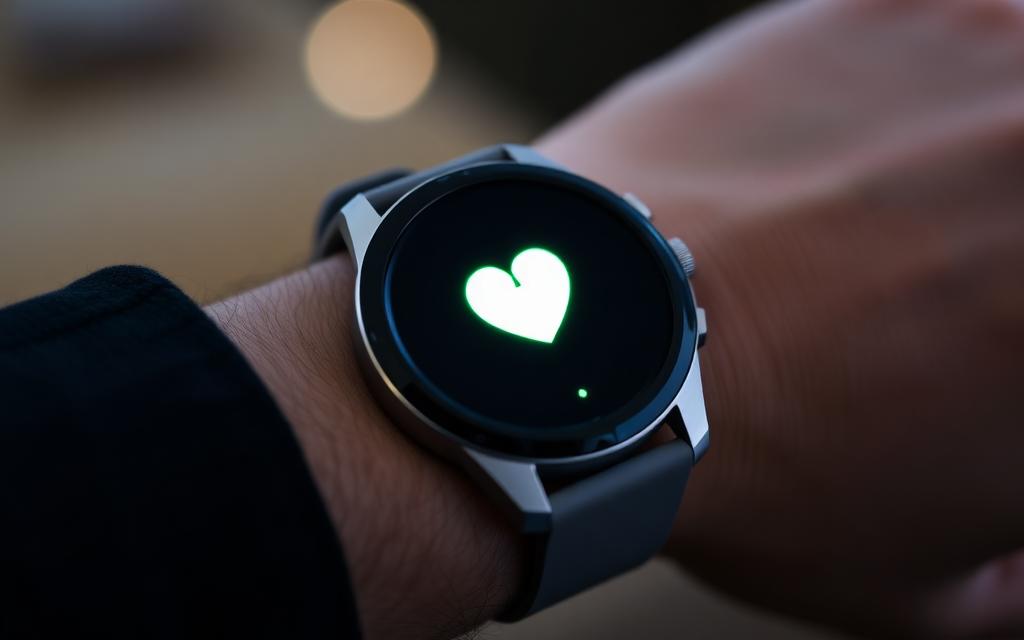
Smartwatches measure heart rate using a technique called photoplethysmography, or PPG. Tiny green LEDs on the back of the watch shine light into your wrist, and a sensor measures how much of that light bounces back as blood pulses through your capillaries.
The watch counts those pulses and reports them as beats per minute. It is a clever bit of optical engineering packed into a casing the size of a postage stamp.
The short answer
Smartwatches measure heart rate using a technique called photoplethysmography, or PPG. Tiny green LEDs on the back of the watch shine light into your wrist, and a sensor measures how much of that light bounces back as blood pulses through your capillaries. The watch counts those pulses and reports them as beats per minute.
It is a clever bit of optical engineering packed into a casing the size of a postage stamp. The basic principle has been used in hospitals for decades in the form of fingertip pulse oximeters.
Why green light?
Hemoglobin, the protein in red blood cells, absorbs green light very efficiently. When more blood is in your wrist, less green light is reflected back. When less blood is there, more green light is reflected. The watch reads that fluctuating signal hundreds of times per second and turns it into a clean waveform that mirrors your pulse.
Earlier devices used red and infrared light, which is what fingertip oximeters in hospitals still use to measure both heart rate and blood oxygen. Green light is better suited to the wrist because skin tissue scatters it less, giving a stronger and more stable signal at that location.
Turning light into beats per minute
- The LEDs flash continuously while the watch is worn.
- A photodiode captures the reflected light and converts it into an electrical signal.
- An algorithm filters out motion noise, ambient light and the slow background drift.
- The peaks in the cleaned signal are counted as heartbeats.
- The result is averaged over a short window (usually five to ten seconds) and displayed.
Why accuracy varies?
PPG is reliable for resting and steady state heart rate, but it can drift during high intensity exercise. Sweat, tattoos, dark skin tones, loose fit and rapid wrist motion all reduce the quality of the reflected signal. That is why most fitness watches recommend a snug fit one finger above the wrist bone.
Tattoos in particular can throw the sensor off because the ink absorbs the green light before it ever reaches a blood vessel. Dark inks are the most disruptive. Many watch makers acknowledge this in their support documentation.
Skin tone affects accuracy too. Studies have shown that PPG readings can be slightly less reliable on darker skin because melanin absorbs some of the green light. Newer watches address this by using brighter LEDs, multiple wavelengths and adaptive algorithms, but the gap has not fully closed.
What about ECG?
Premium smartwatches add an electrocardiogram feature, which measures the electrical signals of the heart between two points (the back of the watch and a finger on the crown). ECG is more accurate for detecting rhythm issues like atrial fibrillation, but it requires you to stand still and complete a 30 second reading.
An ECG taken on a watch is a single lead trace, which is much less detailed than the 12 lead ECG used in a clinical setting. It is good enough to spot certain arrhythmias and to flag concerning patterns for follow up, but cardiologists still rely on a full clinical ECG for diagnosis.
What other things the same sensor can do?
- Blood oxygen estimation (SpO2): by adding red and infrared LEDs and comparing absorption.
- Heart rate variability: measuring the small differences between beats, which correlates with stress and recovery.
- Sleep stage estimation: combining heart rate, motion and skin temperature.
- Respiration rate: derived from the slow oscillation in the PPG signal caused by breathing.
- Stress estimation: calculated from heart rate variability over time.
How to get the most accurate reading?
Wear the watch above the wrist bone with a snug strap. Make sure the back of the watch sits flush against clean, dry skin. Rinse off sweat and lotion before a workout if you want a cleaner signal. For ECG readings, sit still with your forearm resting on a table and take the reading after a few calm breaths.
What it cannot tell you?
A smartwatch is not a medical device. It cannot diagnose heart conditions, measure blood pressure with clinical accuracy, or replace a 12 lead ECG. It is a screening and tracking tool. If your watch alerts you to an unusual rhythm or a sudden spike at rest, treat that as a prompt to see a doctor, not as a diagnosis.
The history behind the technology
Photoplethysmography is not new. The basic technique was first described in the 1930s and refined into clinical pulse oximetry in the 1970s. What is new is the combination of low power LEDs, miniaturized photodiodes and processors small enough to live on your wrist, plus the algorithms needed to clean a noisy signal in real time.
The first wearable PPG heart rate monitors arrived in fitness watches around 2013. Accuracy at the time was poor outside of resting conditions. A decade of sensor and algorithm refinement later, modern smartwatches sit within a few beats per minute of a chest strap during steady state activity, and within a wider margin during sprint efforts and contact sports.
How chest straps still beat watches?
Chest strap monitors use electrical signals from the heart, not optical signals from blood flow. They sample faster, suffer less from motion noise and remain the gold standard for serious training data. Many athletes pair a watch for convenience with a chest strap for the workouts that matter most.
Privacy considerations
Heart rate, sleep and activity data are sensitive. Most major smartwatch makers store this data either on the device or in encrypted form on their cloud servers, but the privacy policies vary. Read the settings carefully, and consider which third party apps you grant access to your fitness data. The information that seems mundane on its own can reveal a lot about routines, locations and health when combined.
The takeaway
Your smartwatch is essentially a tiny optical instrument bouncing light off your blood vessels and doing fast math on the result. It is impressive, useful and often quite accurate, especially for tracking trends over time. Just remember it is a fitness companion, not a substitute for medical grade equipment when something feels off.
Medical disclaimer
This article is for general educational purposes only. Smartwatches and fitness wearables are consumer screening and tracking tools, not medical devices, and they cannot diagnose heart conditions, measure blood pressure with clinical accuracy or replace a 12-lead ECG.
If your watch flags an unusual rhythm, a sudden resting spike, or any symptom that worries you (chest pain, breathlessness, fainting), treat it as a prompt to see a doctor, not as a diagnosis. Do not change any prescribed medication or treatment based on wearable data.
See the full site-wide Disclaimer & Notice for the complete terms that apply across dmbio.