Quick Answer
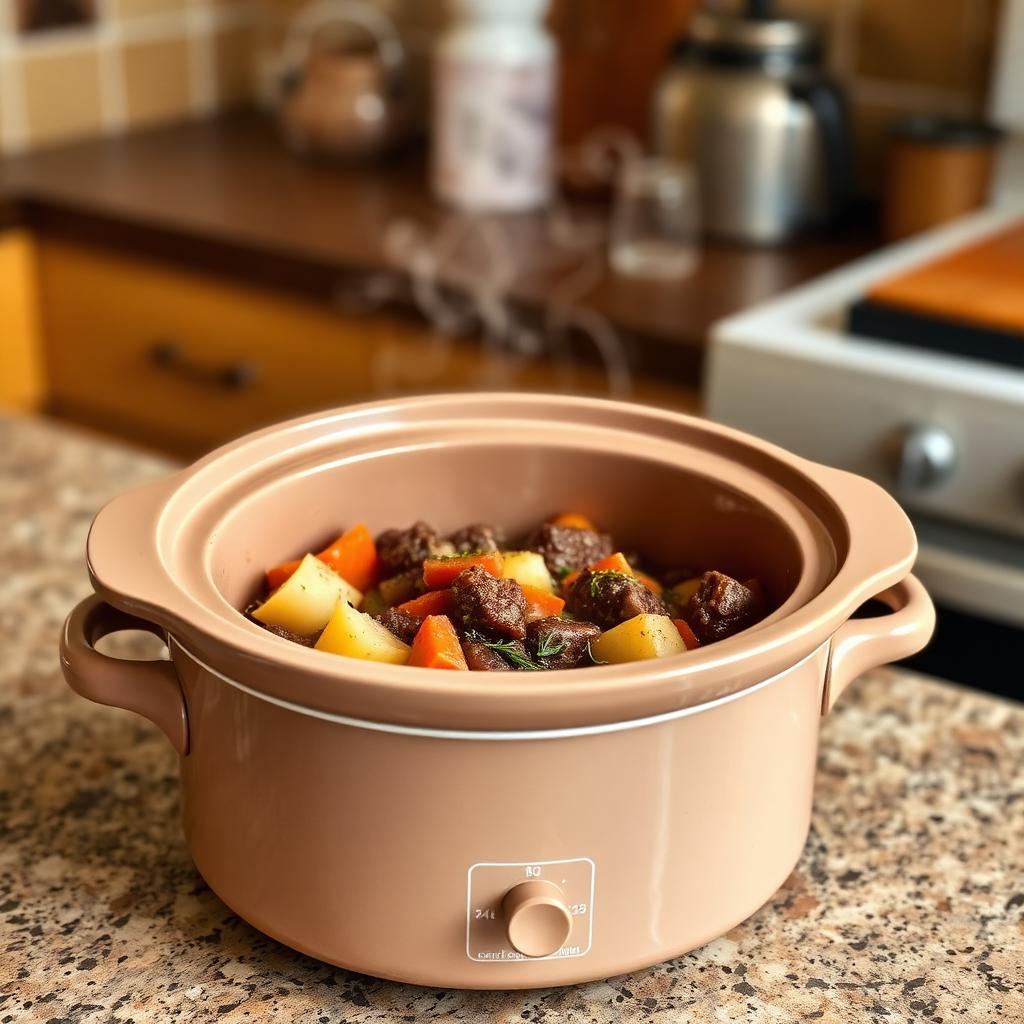
Put dense root vegetables (carrots, potatoes, onions) on the bottom of the pot because they cook slowest. Lay your seasoned meat on top of that bed, add about half the liquid you would use on the stove, set the lid firmly and pick LOW for 7 to 10 hours or HIGH for 4 to 6 hours.
Keep the lid shut. Every peek drops the internal temperature and adds 20 to 30 minutes to the cook. Add fragile ingredients like cream, fresh herbs, peas, or seafood only in the final 30 minutes.
How a slow cooker actually heats food
Modern slow cookers use a low-wattage heating element wrapped around the lower side wall of the metal housing. Heat travels through the ceramic insert by direct contact, gradually warming the food. LOW holds the contents at roughly 77 to 88°C (170 to 190°F) and HIGH at about 93 to 100°C (200 to 212°F). Both eventually reach the same simmering point; HIGH just gets there faster.
That gentle, even heat is what melts the collagen in tough cuts like chuck, brisket, pork shoulder, and lamb shank into silky gelatin. It is also why slow cookers struggle with lean cuts: there is no fat or connective tissue to break down, so they just go dry.
Best cuts and ingredients to use
- Beef: chuck roast, brisket, short ribs, oxtail, shin
- Pork: shoulder (Boston butt), country-style ribs, ham hock
- Lamb: shoulder, shank, neck
- Poultry: bone-in thighs and drumsticks beat boneless breasts for flavour and forgiveness
- Vegetables: dried beans, lentils, root veg, tomatoes, peppers, onions, garlic
Skip delicate fish, leafy greens, pasta, and most dairy until the last half hour. Those ingredients overcook quickly or split.
Step one: layer correctly
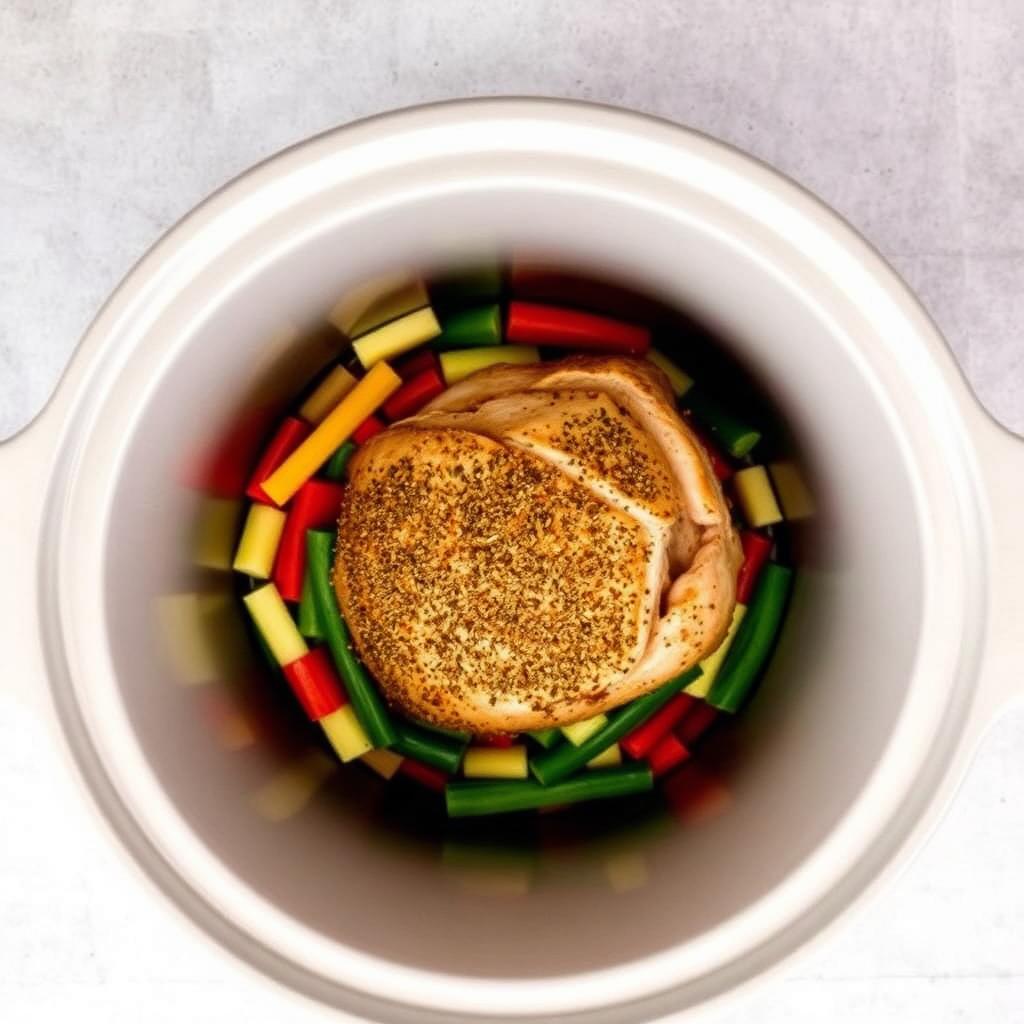
The bottom of the pot is the hottest zone. Root vegetables cook slowly anyway, so they go first. Cut them into uniform 2-inch chunks so they cook evenly. Place your seasoned meat or poultry on top of the vegetable bed. As it cooks, juices drip down and flavour the vegetables.
For extra colour and depth of flavour, sear the meat in a hot skillet for two minutes per side before adding it to the pot. The Maillard browning that creates is what separates restaurant pot roast from a pale, boiled version.
Step two: use far less liquid than a stove recipe
This is the mistake nearly every newcomer makes. A slow cooker is a sealed system. Steam rises, condenses on the lid, and falls straight back into the pot. Meat and vegetables release their own juices on top of that. By the end of a long cook the pot has more liquid than it started with.
For a stew that would take 3 cups of stock on the stove, use 1 to 1.5 cups in the slow cooker. For braises, just enough liquid to come halfway up the meat is plenty. If you find the sauce too thin at the end, scoop a ladle into a small pan and reduce it on the hob, or stir in a cornstarch slurry (1 tablespoon cornstarch + 2 tablespoons cold water) and cook on HIGH for 15 more minutes.
Step three: pick LOW or HIGH and leave it alone
LOW is the better setting for tough meat. The slow rise in temperature gives collagen time to break down. HIGH is fine when you are short on time or cooking faster ingredients like chicken thighs, chilli, or vegetable soups.
Whatever setting you choose, keep the lid on. Lifting it for "just a peek" releases the trapped steam and drops the internal air temperature by about 10°C. The pot then needs 20 to 30 minutes to recover. Three peeks across a workday adds an hour to the cook.
Add delicate ingredients at the end
Cream, milk, sour cream, and yoghurt can split if simmered for hours. Stir them in during the last 15 to 30 minutes. The same goes for frozen peas (which only need 10 minutes to warm through), fresh herbs (parsley, basil, coriander), cooked pasta, and any cooked seafood like prawns.
Food safety: the 2 hour rule
For safe slow cooking, food needs to pass through the bacterial "danger zone" of 4 to 60°C (40 to 140°F) within 2 hours. That means starting with thawed ingredients, not frozen meat. Fill the pot no more than two-thirds full so heat circulates properly. And do not use the slow cooker to reheat leftovers, it warms too slowly. Use the microwave or stove for reheating, then transfer to the slow cooker on WARM to hold.
Frequently asked questions
Can I leave a slow cooker on while I am out?
Yes, that is what they are designed for. UL-listed appliances are tested for 24-hour unattended operation. Set it on a heatproof surface away from anything flammable, plug it directly into a wall outlet (not an extension lead), and let it run.
Why is my food coming out watery?
Too much liquid added at the start, or vegetables released more than expected. Next time, halve the liquid and skip pre-watery ingredients like fresh tomatoes if the recipe already has stock. To rescue a current batch, ladle out a cup of liquid and reduce it on the hob, or stir in a cornstarch slurry on HIGH for 15 minutes.
Can I cook frozen meat?
Food safety bodies including the USDA advise against it. The meat sits in the bacterial danger zone for too long before reaching a safe temperature. Defrost in the fridge overnight, then start.
Does it use a lot of electricity?
A slow cooker draws between 150 and 250 watts, less than a single light bulb. Running it for 8 hours uses roughly the same power as an electric oven for 30 minutes.
The takeaway
A slow cooker rewards three habits: layer dense vegetables on the bottom and protein on top, use about half the liquid of a stove recipe, and keep the lid shut. Pair that with tough, fatty cuts of meat and you get fork-tender meals that essentially cook themselves.