Quick Answer
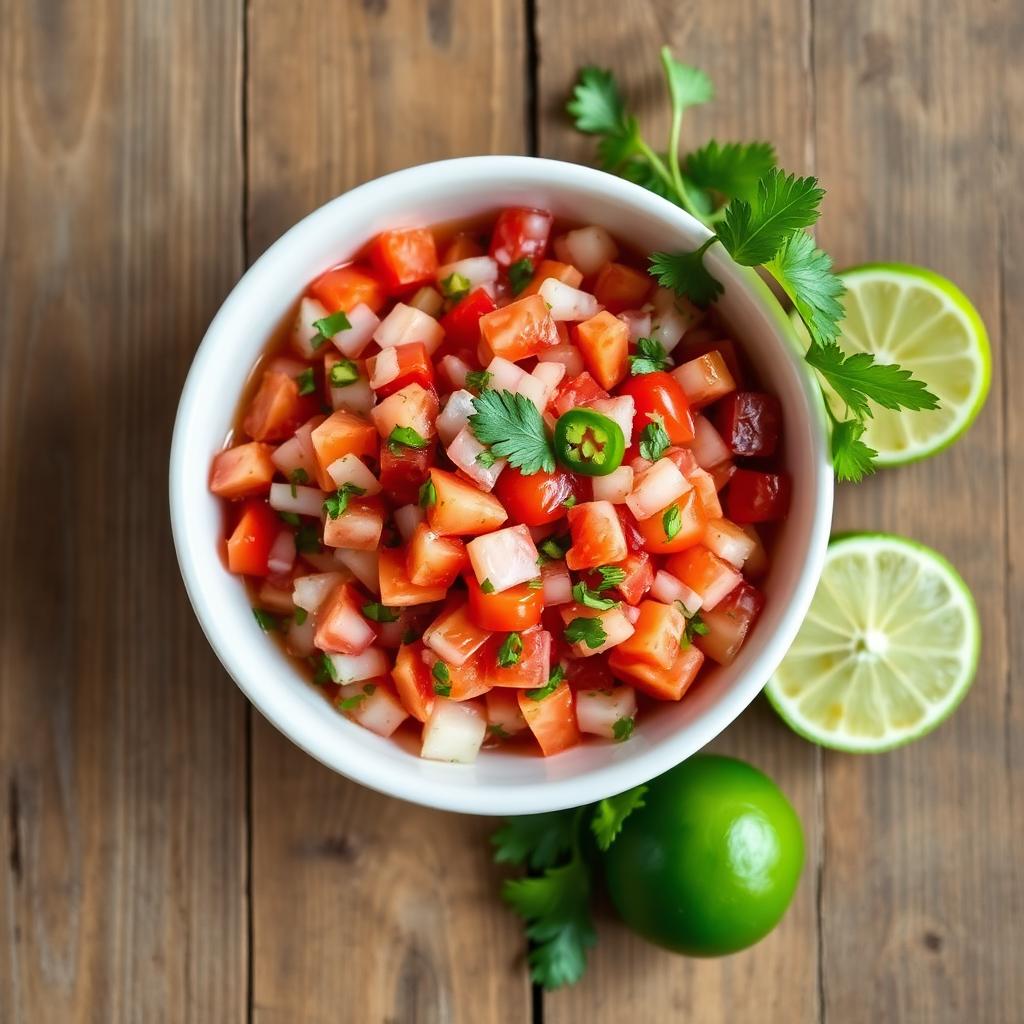
Real pico de gallo is just chopped tomato, white onion, jalapeno, cilantro and lime. The secret is to dice the tomatoes, salt them inside a colander for 20 minutes and let the water drain away before mixing.
Skip that step and you get a watery dip that floods the bottom of the bowl. Do it and the salsa stays bright, crisp and able to sit on a tortilla chip without making it soggy.
The ingredients I use
- 3 cups (about 6) firm Roma tomatoes, cores removed, finely diced
- 1 cup white onion, finely diced (yellow onion works in a pinch but is sweeter)
- 1 to 2 fresh jalapenos, seeds and ribs removed for milder, included for hot
- 1/2 cup chopped fresh cilantro, leaves and tender stems
- Juice of 2 limes
- 1 teaspoon kosher salt, plus more to taste
Why Roma tomatoes and not slicers
Slicing tomatoes and beefsteaks are bred for sandwiches. They are juicy, full of gel and have huge seed pockets that bleed liquid the second you cut them. Roma (also sold as plum) tomatoes are firm, have small seed cavities and almost solid walls, which is exactly what you want for a chunky salsa that holds its shape.
If Romas are unavailable, the next best swap is on-the-vine cocktail tomatoes. Avoid heirlooms and beefsteaks for pico unless you enjoy soup.
Step 1: dice everything to the same size
Cut the tomatoes in half lengthwise, scrape out the seed pockets with a teaspoon, then dice the firm flesh into 6 mm (1/4 inch) cubes. Dice the onion and jalapeno to the same size. Uniform cuts look clean and give every bite the same balance.
Step 2: salt and drain the tomatoes
This is the one step most home cooks miss.
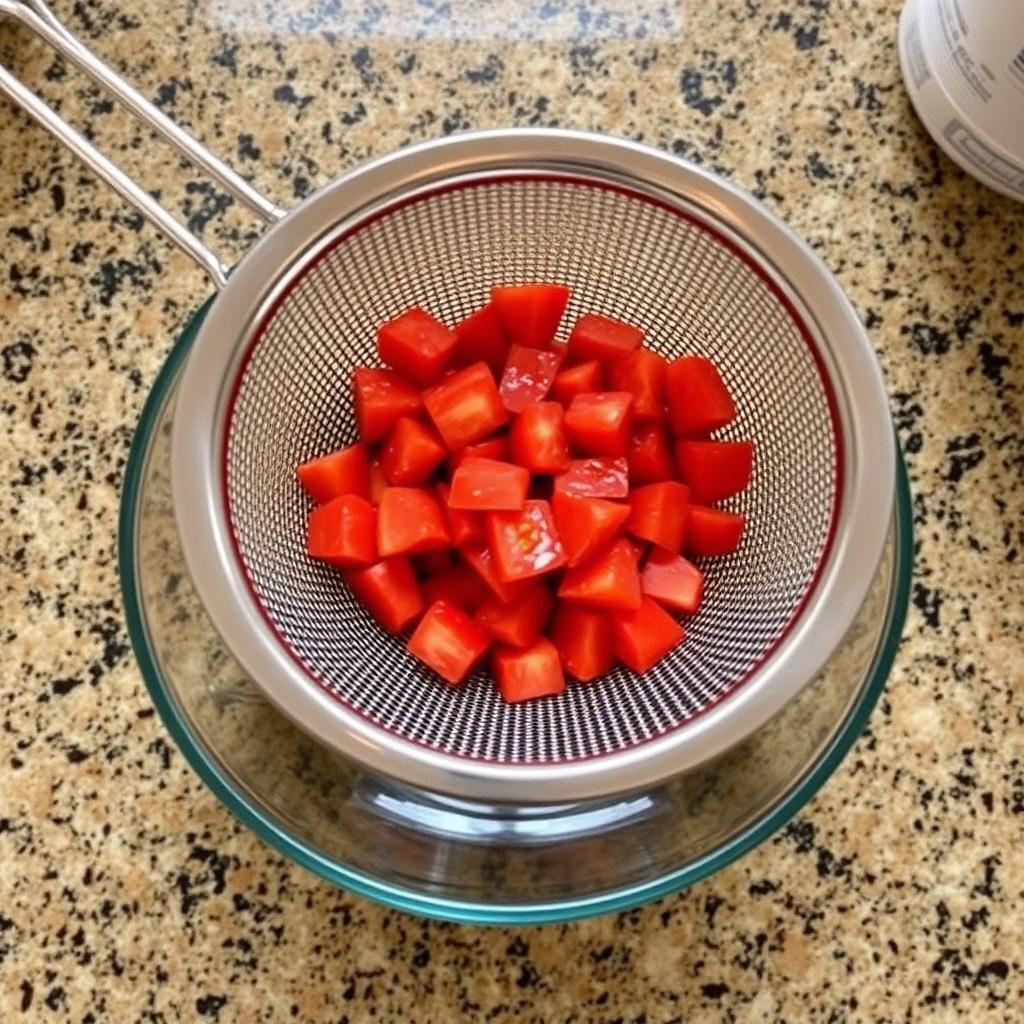
Put the diced tomatoes into a sieve or colander set over a bowl. Sprinkle with 1 teaspoon of kosher salt, toss gently and leave for 20 minutes. Osmosis pulls a startling amount of liquid out. Shake the sieve once or twice during the wait to encourage drainage.
Step 3: assemble in a dry bowl
Tip the drained tomatoes into a clean serving bowl. Discard the liquid in the catch bowl, or save it to splash into a Bloody Mary. Add the onion, jalapeno, cilantro and lime juice. Toss with a spoon until everything is evenly mixed.
Step 4: rest, then taste
Cover and let the salsa sit for 15 minutes at room temperature. The lime acid takes the raw sulphurous edge off the onion and the salt redistributes through the whole mix. Taste and adjust with more salt or lime as needed.
Heat control
Most of the capsaicin in a jalapeno is in the white inner ribs, not the seeds. If you want medium heat, scrape out the ribs and seeds and use both peppers. For mild, use one pepper without ribs. For hot, leave everything in or swap to serrano peppers, which are roughly five times hotter than jalapenos.
Cilantro tricks
Chop the tender stems along with the leaves. They have at least as much flavour as the leaves and stop the salsa from looking patchy. If you are one of the people for whom cilantro tastes soapy, substitute flat leaf parsley plus a pinch of ground cumin.
How long does pico last?
Pico is best the day it is made. It will keep in the fridge for two days but the tomatoes soften and the onion becomes stronger. After day three it slumps into salsa territory, which is still fine for cooking into eggs or quesadillas.
What to do with it (beyond chips)
Spoon over grilled fish, fold through scrambled eggs at the last second, pile onto carne asada tacos, or stir a few spoonfuls into plain rice for an instant side. A drained version (let it sit in a sieve again for 10 minutes) is perfect on top of a brothy black bean soup.
What pico is not
Pico de gallo is uncooked and chunky. If the salsa in front of you is smooth and red, that is salsa roja. If it is green, that is salsa verde. If the tomatoes have been charred first, that is salsa asada. All delicious, all different recipes.
The takeaway
Three rules turn average pico into restaurant quality. Use firm Roma tomatoes, salt them in a colander before mixing, and rest the finished salsa for 15 minutes so the flavours come together. Skip those and you have a wet pile of vegetables. Do them and you have something worth charging for.