Quick Answer
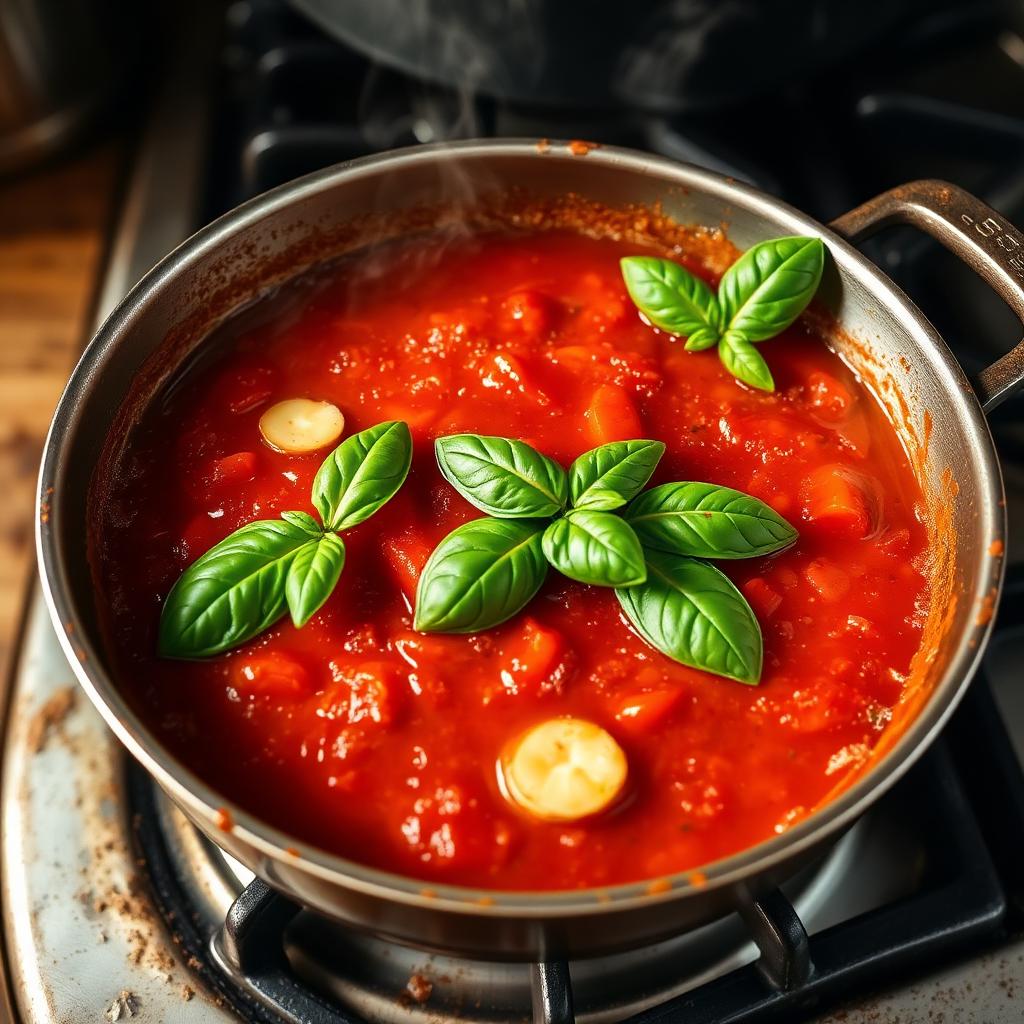
Real marinara is fast. Crush a 28 ounce can of whole peeled San Marzano tomatoes by hand, warm 1/3 cup of olive oil with 5 sliced garlic cloves in a cold pan over low heat until fragrant, add the tomatoes and a whole bunch of basil on the stem, simmer uncovered for 20 to 25 minutes, season with salt, fish out the basil stems, and serve. Total time: about 30 minutes.
The most common mistake is treating marinara like a long simmered ragu. It is the opposite, a bright, fresh, flash cooked sauce that loses its character the longer you cook it.
What separates marinara from other tomato sauces
Marinara is a quick sauce of tomato, olive oil, garlic, and herbs. It was developed by Neapolitan sailors who needed something that would not spoil on long voyages, hence the name (marinara, from marinaio, meaning sailor). It has no meat, no cream, no carrots, no onion, and no long cooking time. The flavour comes from quality ingredients and the clean emulsion of olive oil into the tomato.
Bolognese, ragu, sugo, and pomodoro are all different sauces with their own techniques. Marinara is the simplest of all of them, and that simplicity is exactly why every ingredient matters.
Use whole peeled San Marzano tomatoes
Skip the pre crushed, pre diced, or pureed cans. Pre diced tomatoes are treated with calcium chloride to keep their cubes intact through the cannery, which means they refuse to melt down into a sauce no matter how long you cook them. Crushed cans tend to be thinner tomatoes blended with skins and seeds.
Buy a 28 ounce can of whole peeled tomatoes, ideally certified San Marzano DOP from the Sarno river valley of southern Italy. San Marzanos are a plum variety with lower acidity, fewer seeds, and natural sweetness. If you cannot find them, any whole peeled plum tomato will work better than crushed.
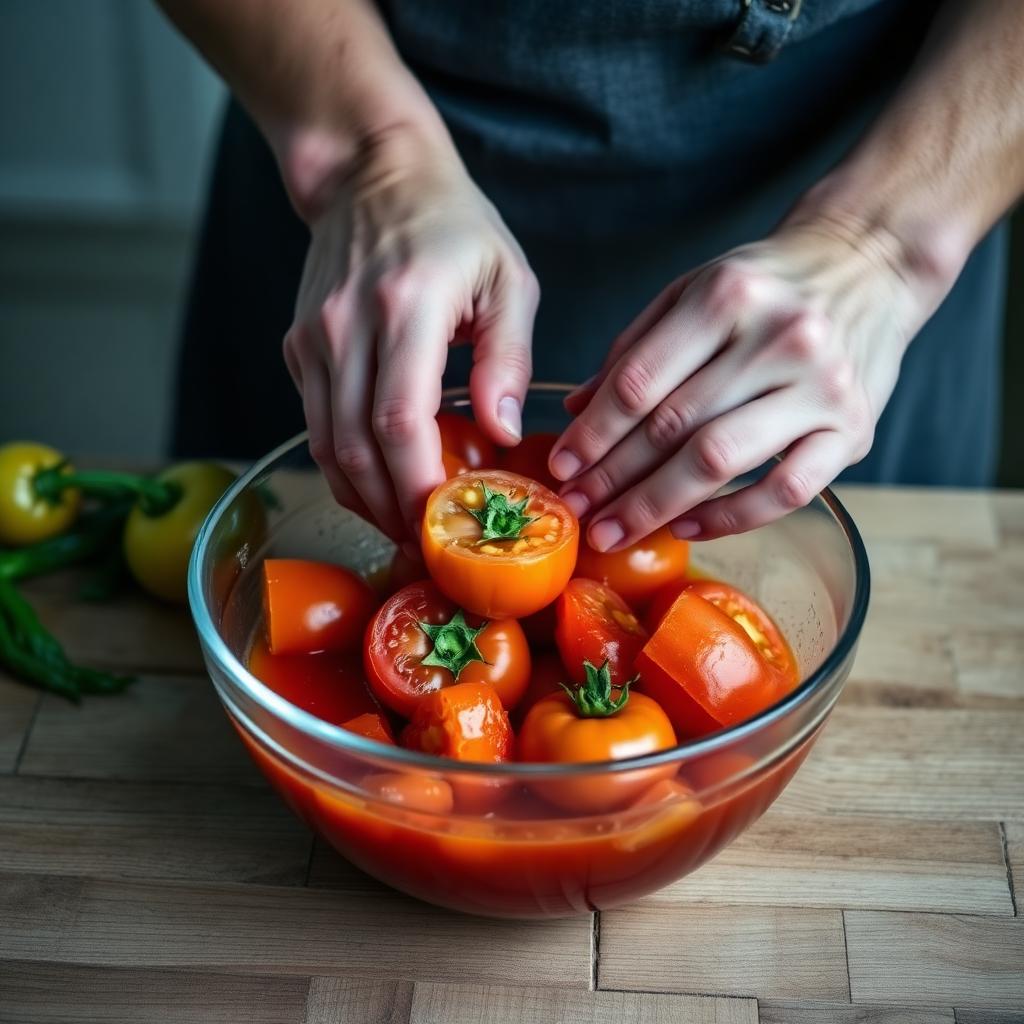
Empty the can into a wide bowl. With clean hands, squeeze each tomato gently through your fingers to break it into rough chunks. Keep the juice. The texture should be rustic, not pureed.
Build a cold garlic infusion
Never drop garlic into a hot pan. The first slice will scorch on contact and turn bitter, and the entire sauce will inherit that bitterness. The Italian technique is the opposite: start cold.
Pour 1/3 cup of good extra virgin olive oil into a wide cold skillet or saucier (do not use a tall narrow pot, you need surface area for evaporation). Add 5 thinly sliced garlic cloves and a generous pinch of red pepper flakes if you like a little heat. Turn the burner to low and let everything warm up together. As the oil slowly heats from room temperature, the garlic releases its sweet allicin oils into the fat without browning. After 3 to 4 minutes the kitchen smells unmistakably of garlic and the slices look pale gold around the edges. That is your cue.
Add the tomatoes and the basil stem
Pour the crushed tomatoes and all their juice straight into the pan. The temperature drops, the sizzle quiets, and the sauce comes to a gentle bubble. Toss in a whole bunch of basil, stems and all (the stems carry intense aromatic oil that the leaves do not have), and 1 teaspoon of kosher salt. Stir once.
Raise the heat to medium so the sauce bubbles steadily but does not splatter. Let it cook uncovered for 20 to 25 minutes, stirring every 5 minutes with a wooden spoon and scraping the bottom corners. The wide surface area lets water evaporate quickly, the sauce reduces and thickens, and the bubbling agitation forces the olive oil to emulsify into the tomato. You will see the colour deepen from bright orange red to a glossy brick red. That gloss is the emulsion forming. It is also why marinara does not need cream to taste rich.
Final seasoning and serving
After 25 minutes, taste a small spoonful. Add salt in small pinches until the tomato flavour pops. Most sauces need 1 to 1 1/2 teaspoons of salt total, but it depends on the saltiness of the tomatoes themselves. A tiny pinch of sugar (1/4 teaspoon) is allowed only if the tomatoes are aggressively acidic; San Marzanos almost never need it.
Fish out the bare basil stems. The leaves will have largely dissolved into the sauce. Some cooks tear in a small handful of fresh basil leaves at the very end for a green herbal lift.
How to serve it
Marinara is the most versatile sauce in an Italian kitchen. Toss it with 1 pound of al dente spaghetti or bucatini and finish with grated parmigiano. Use it as the base for chicken parmigiana or eggplant rollatini. Spread it on pizza dough. Spoon it over poached eggs for shakshuka. Refrigerate leftovers up to 5 days or freeze in 1 cup portions for up to 3 months.
The takeaway
Authentic Italian marinara is a fast sauce, not a slow one. Hand crush the best tomatoes you can find, infuse the olive oil with garlic from a cold start, and let the sauce bubble uncovered for under half an hour. Three ingredients, one wide pan, and 30 minutes is all it takes to make a sauce better than nearly anything that comes out of a jar.