Quick Answer
Real caramelized onions take 45 to 60 minutes over medium-low heat in a wide heavy pan. They are not the same thing as the 10 minute browned onions in most recipes.
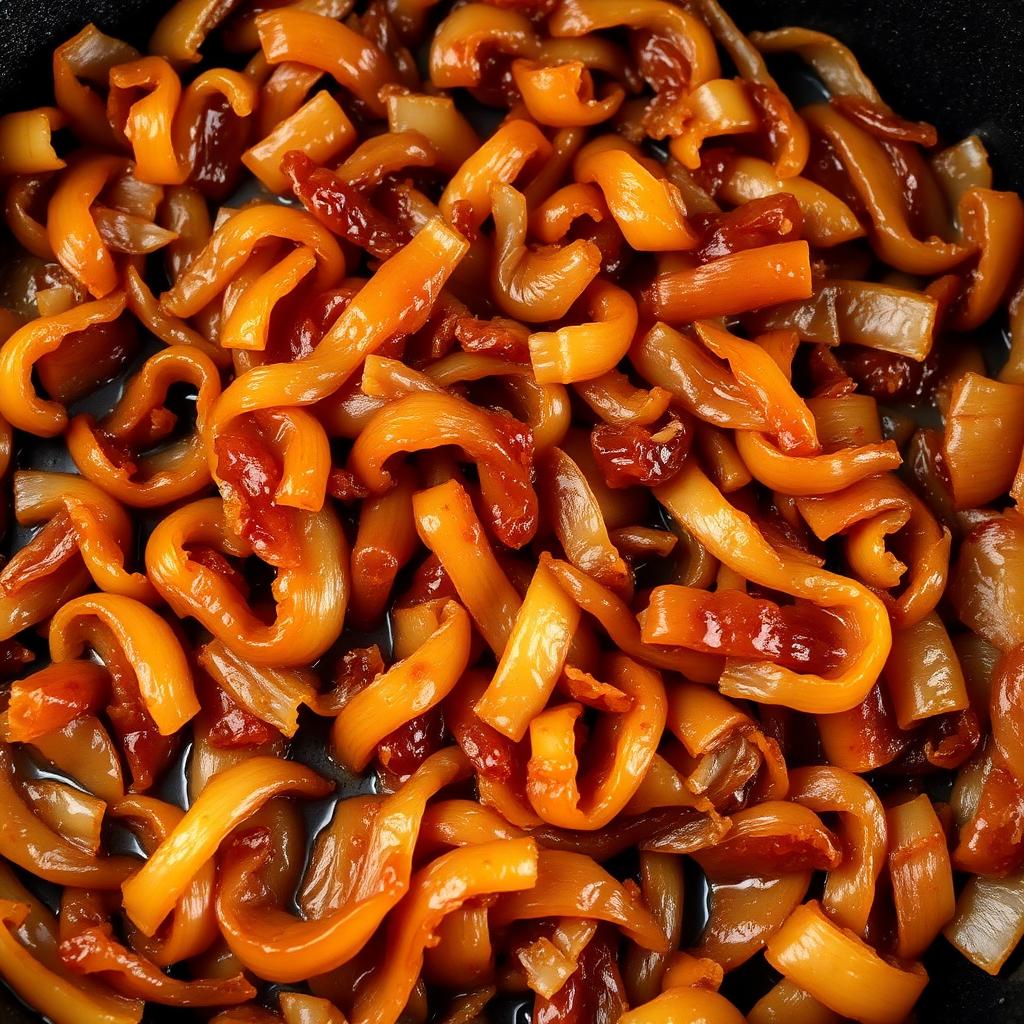
You slice the onions pole to pole, cook them gently in butter and oil with a pinch of salt, stir every few minutes and deglaze the brown stuck-on bits with a splash of water whenever they start to burn. The finished result is dark mahogany, jammy and noticeably sweet.
The ingredients you need
- 1 kg (about 4 large) yellow or sweet onions
- 2 tablespoons unsalted butter
- 1 tablespoon neutral oil (rapeseed, sunflower or light olive)
- 1/2 teaspoon kosher salt
- Water, dry white wine or stock for deglazing
Avoid red onions for true caramelization. They have less sugar and turn an unappetising grey-brown long before they go jammy.
Step 1: slice pole to pole, not in rings
Cut each onion in half from the root tip to the stem tip, peel, then lay the cut side down and slice 6 mm thick following the same direction. Slicing this way means you are cutting parallel to the fibres, which keeps the onion strands intact as they cook down.
Slicing into rings (across the fibres) is fine for burger toppings but during a long, slow cook the strands fall apart into a slushy mess.
Step 2: use a wide heavy pan
A stainless steel or enamelled cast iron pan that is at least 30 cm wide is ideal. The width matters because the onions need surface contact with the pan to brown, not steam in a tall pile. Avoid non stick. You actually want the brown stuck-on bits (the fond) because they are where the deep flavour comes from.
Step 3: start hot, then drop the heat
Melt the butter and oil over medium heat. Add the onions all at once. They will heap up to the rim of the pan and look like far too much, then collapse within ten minutes.
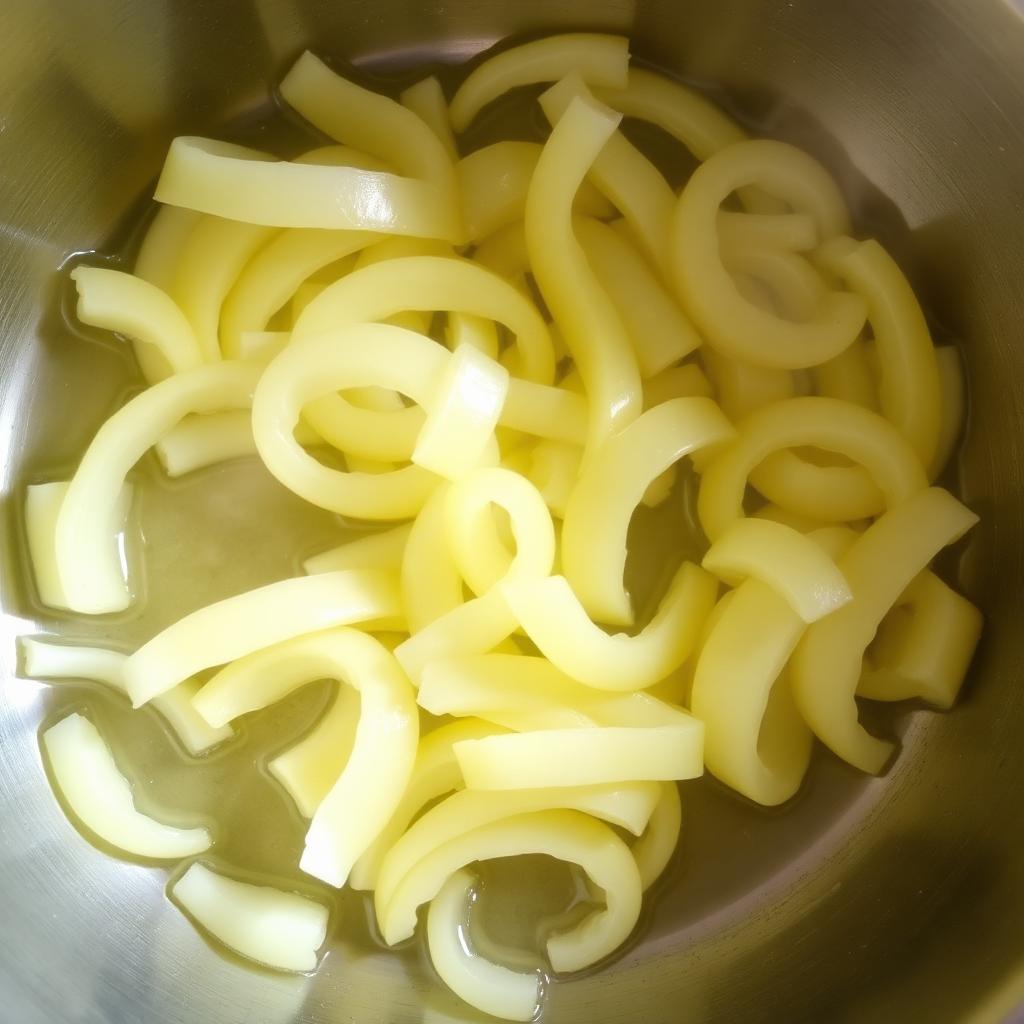
Add the salt, stir to coat, and after the onions have softened and started releasing water (about 8 to 10 minutes), turn the heat down to medium-low.
Step 4: stir, deglaze, repeat
Stir the onions every 3 to 4 minutes. Whenever you see brown stuck-on fond developing on the base of the pan and starting to look like it might burn, splash in 2 tablespoons of water and use a wooden spoon to scrape the fond back up into the onions. Each deglaze concentrates flavour and pushes the colour deeper.
Repeat for 35 to 45 minutes. The onions go through clear stages: translucent, then pale gold, then amber, then deep brown. They should never smell acrid. If they do, the heat is too high.
What about adding sugar or baking soda?
Some recipes add a teaspoon of sugar to speed things up. It does shave a few minutes but the result tastes sweeter and slightly artificial. I skip it.
Adding a pinch of baking soda raises the pH and speeds the Maillard browning dramatically, but you risk a slimy texture and a soapy aftertaste if you overdo it. Use 1/8 teaspoon for 1 kg of onions, no more, and only if you are short on time.
How to tell when they are done
Truly caramelized onions are a uniform dark mahogany, soft enough to spread with a spoon, and noticeably sweet when you taste a strand. The volume should be roughly a quarter of what you started with. 1 kg of raw onions produces about one cup of finished caramelized onions, which is why every batch feels like the wrong ratio at the start.
Storing and freezing
Refrigerated in a sealed jar, caramelized onions keep for a week. They freeze beautifully too. Spread them flat in a freezer bag, freeze, then break off chunks as needed. They keep their flavour for at least three months.
What to do with a batch
French onion soup is the obvious one but they are also incredible folded into mashed potato, piled on a grilled cheese, layered onto a pizza, stirred through risotto in the last two minutes, or simply spooned onto buttered toast with a slice of sharp cheddar.
Common mistakes
Cooking the onions too hot. They brown on the outside but the centres stay raw and the result tastes harsh.
Not enough fat. You need at least a tablespoon of fat per large onion to stop them sticking and burning.
Stirring constantly. Stirring every 30 seconds prevents fond from forming, which is exactly where the flavour comes from. Walk away for 3 minutes at a time.
The takeaway
Real caramelized onions need a wide pan, medium-low heat and 45 minutes of mostly hands off cooking, with occasional deglazes. Slice pole to pole, salt them early, stir gently, and trust the colour. They are one of the highest reward, lowest effort things you can keep in the fridge.