Quick Answer
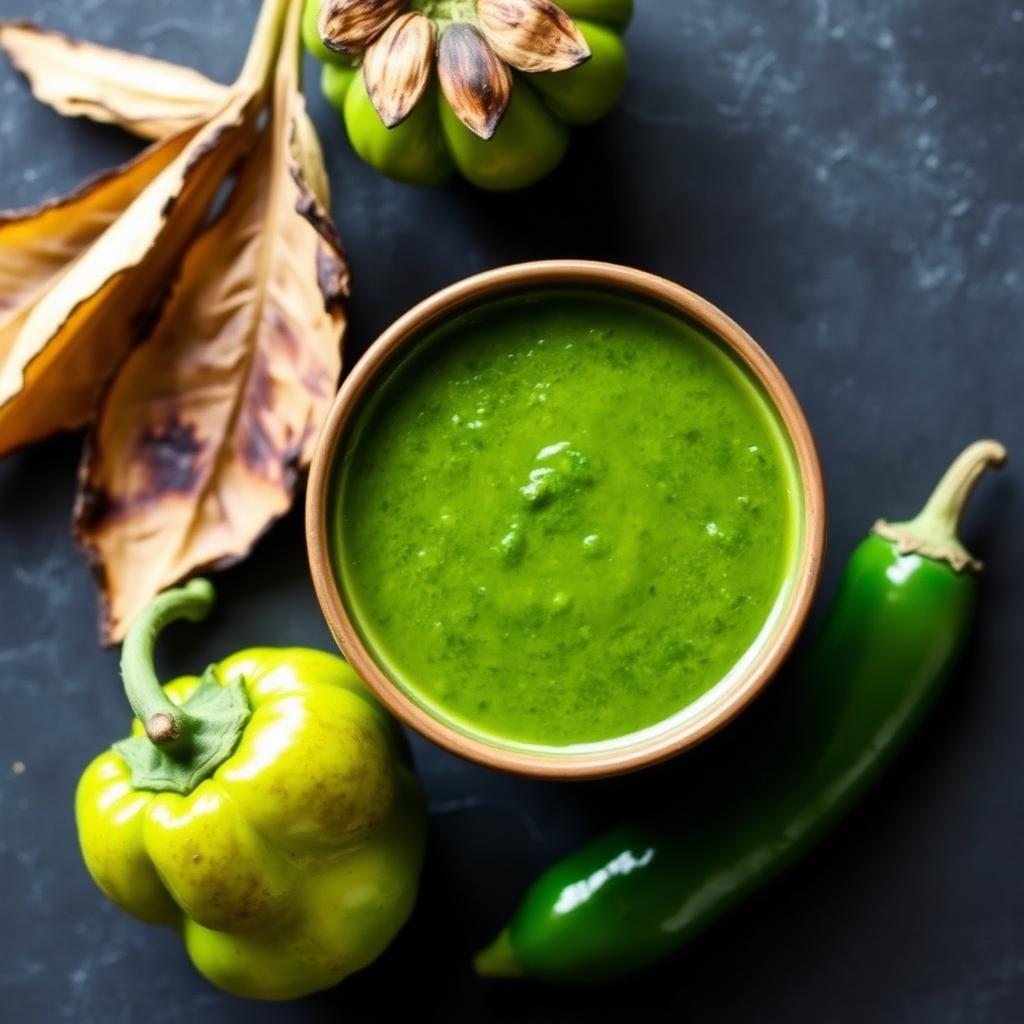
Mexican salsa verde is made from tomatillos, not from unripe green tomatoes. You peel the papery husks, wash off the sticky coating, char the tomatillos under a broiler with jalapenos, onion and garlic, then blend with cilantro, salt and lime.
That is the whole recipe. Italian salsa verde, which is parsley based and a completely different sauce, is unrelated despite the shared name.
The ingredients
- 500 g (about 1 pound) fresh tomatillos
- 1 large white onion, cut into quarters
- 2 jalapenos (or 1 to 2 serranos for more heat)
- 4 cloves garlic, skins left on
- 1 cup loosely packed fresh cilantro, leaves and stems
- 1 teaspoon kosher salt
- Juice of 1 lime
Tomatillos are not green tomatoes
This is the most common mistake. Tomatillos (Physalis philadelphica) are a different species, related to the cape gooseberry. They grow inside a dry papery husk, have a firm, slightly tart flesh, and contain natural pectin that gives the finished sauce its body. A green tomato is just an unripe regular tomato. Sub one for the other and your salsa will be bitter and watery.
Look for tomatillos with husks that are still bright green and tight to the fruit. Brown or shrivelled husks mean the tomatillo is past its prime.
Step 1: husk and wash
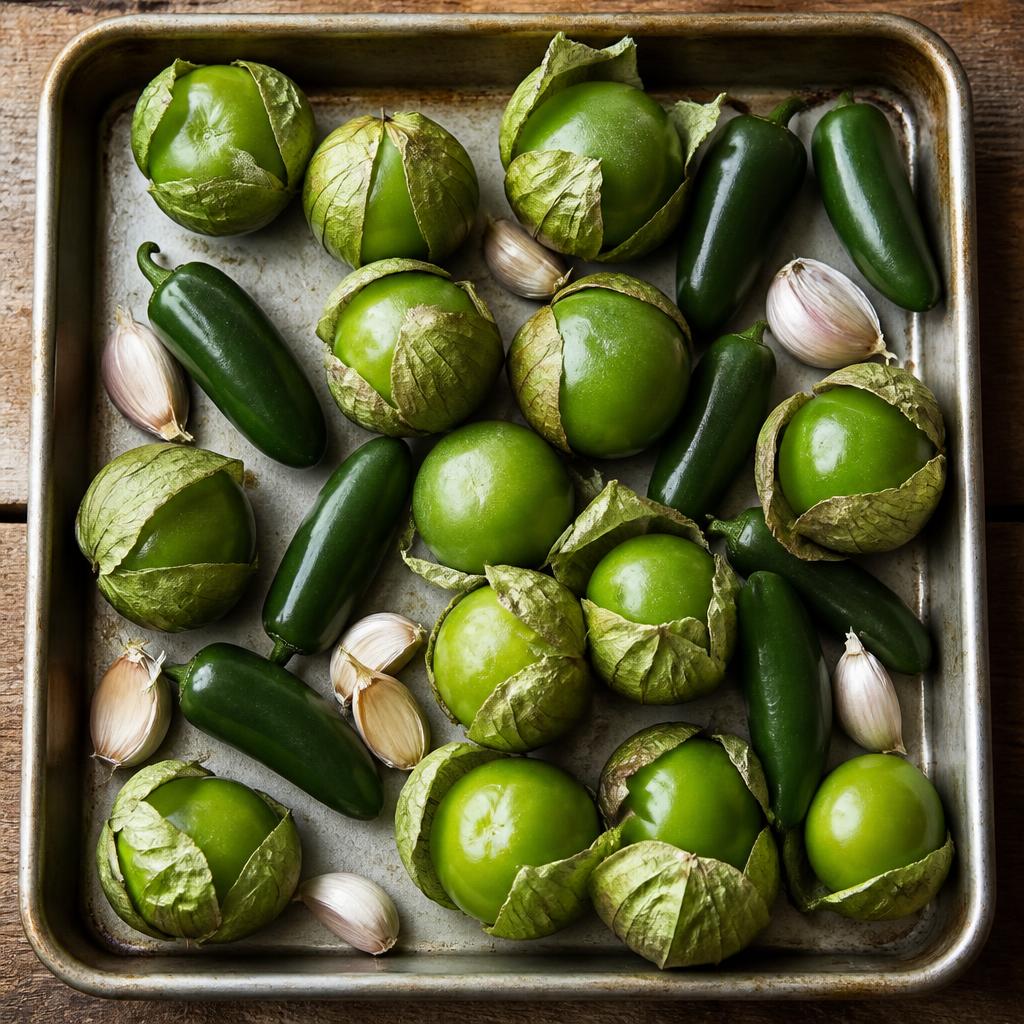
Peel off and discard the husks. The bare tomatillos feel sticky to the touch. That stickiness is a natural waxy coating containing saponins. Scrub it off under warm running water until the fruit feels smooth and squeaky clean. Skipping this step is what makes some home salsas taste slightly soapy.
Step 2: char everything under the broiler
Set your oven broiler (grill in the UK) to high. Arrange the tomatillos, onion quarters, jalapenos and garlic cloves (skins still on) on a foil-lined baking sheet. Slide the tray onto the top shelf, about 10 cm below the element.
Broil for 5 to 7 minutes until the tomatillo skins blister and blacken in patches. Flip everything with tongs and broil for another 4 to 5 minutes on the second side. The tomatillos will deflate and release sticky juices: keep those juices, they are pure flavour.
Leaving the garlic in its skin protects the clove from burning while still letting it roast through. Squeeze the soft flesh out once it cools.
Step 3: blend, do not puree
Tip everything from the tray, including the juices, into a blender or food processor. Add the cilantro, salt and lime juice. Pulse in short bursts for about 15 seconds. You want a textured sauce with small visible flecks, not a smooth puree.
If your blender pulls the sauce too thin, add a tablespoon of water at a time until it pours but still coats a spoon.
Step 4: taste and balance
Taste straight from the blender jug. It usually needs another good pinch of salt and sometimes a second squeeze of lime to wake it up. If it is too sharp, a small drizzle of olive oil rounds it out. If it is too mild, blend in another half jalapeno.
Raw versus roasted
You can blend the tomatillos, onion, garlic and jalapenos raw for a brighter, sharper salsa verde cruda. The roasted version is sweeter, deeper and slightly smoky. Both are authentic. I use cruda on tacos al pastor and the roasted version on enchiladas verdes and chilaquiles, where the cooked sauce holds up better under cheese.
How to use it
Spoon over carnitas tacos, drizzle on grilled chicken, fold through scrambled eggs for a green huevos, simmer with shredded chicken for the filling of chilaquiles or enchiladas, or thin with a little stock and use as a marinade for pork shoulder.
Storage
Salsa verde keeps for 4 to 5 days in a sealed jar in the fridge. It also freezes well in small portions. Defrost overnight in the fridge and stir before serving. The texture loosens a little but the flavour holds up.
Common mistakes
Using unripe green tomatoes. The result is bitter, never sweet.
Skipping the saponin wash. Leaves the salsa with a metallic edge.
Charring too lightly. A few black spots are what give the roasted version its smoky depth. Pale tomatillos make a pale, flat sauce.
Over blending. A smooth puree feels institutional. The flecks of cilantro and char belong in the finished sauce.
The takeaway
Real Mexican salsa verde starts with husked, scrubbed tomatillos charred hot under a broiler with onion, garlic and jalapeno, then briefly blended with cilantro, salt and lime. That is it. Once you make a batch from scratch the jarred version goes back on the shelf for good.