Quick Answer
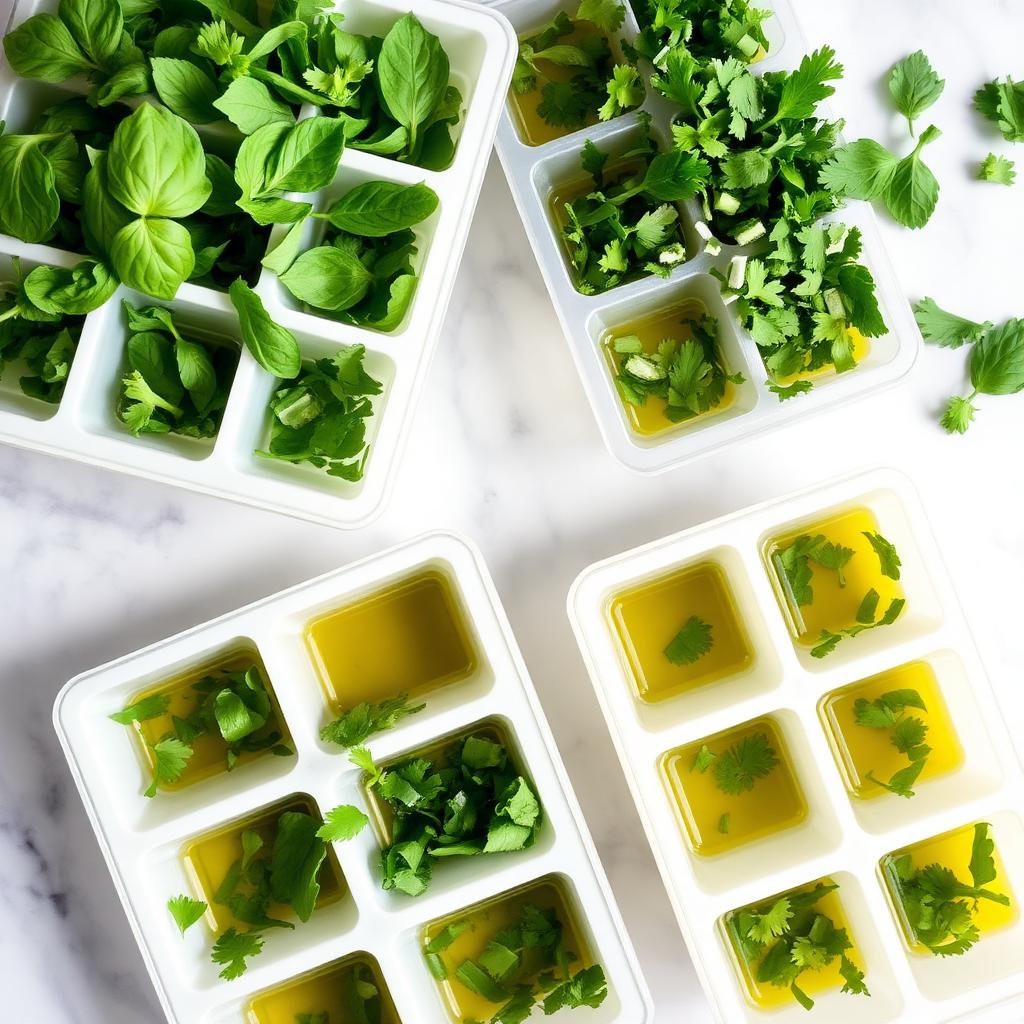
Freeze soft herbs (basil, parsley, cilantro, mint, chives, dill) chopped in olive oil inside ice cube trays. Freeze woody herbs (rosemary, thyme, sage, oregano) whole on a tray, then bag them.
Done that way, soft herbs keep their colour and flavour for about six months and woody herbs for up to a year. Skip the step where you flash freeze on a tray first and they will turn into a single solid clump that is useless in the kitchen.
Why a plain bag in the freezer ruins them
Fresh herbs are mostly water trapped inside fragile cell walls. When that water freezes slowly inside a plain ziplock, the ice crystals grow large and puncture the cell walls. As soon as they thaw, the cells leak and the leaves go limp, brown and slimy.
The two methods below get around that by either coating the leaves in fat (which protects soft herbs from oxidation and freezer burn) or freezing them so fast that the ice crystals stay tiny (which works for tougher woody herbs).
Method 1: oil cubes for soft herbs
Basil, parsley, cilantro, mint, dill and chives all have thin leaves that oxidise the second they hit cold air. The oil cube method seals them away from oxygen.
- Wash the herbs in cold water and spin them dry. Wet leaves form ice patches that freeze unevenly.
- Strip the leaves off the tough stems and chop them roughly, or pulse in a small food processor.
- Pack the chopped herbs into an ice cube tray, filling each well about three quarters full.
- Top each well with extra virgin olive oil (or melted butter for chive cubes you plan to use in baked potatoes and pasta).
- Freeze overnight, pop the cubes out and store them in a labelled freezer bag.
To use, drop a cube straight into a hot pan at the start of cooking. The oil melts, the herbs release their flavour and you skip the chopping step entirely.
Method 2: tray freeze for woody herbs
Rosemary, thyme, sage and oregano have tough waxy leaves that survive freezing on their own without an oil shield.
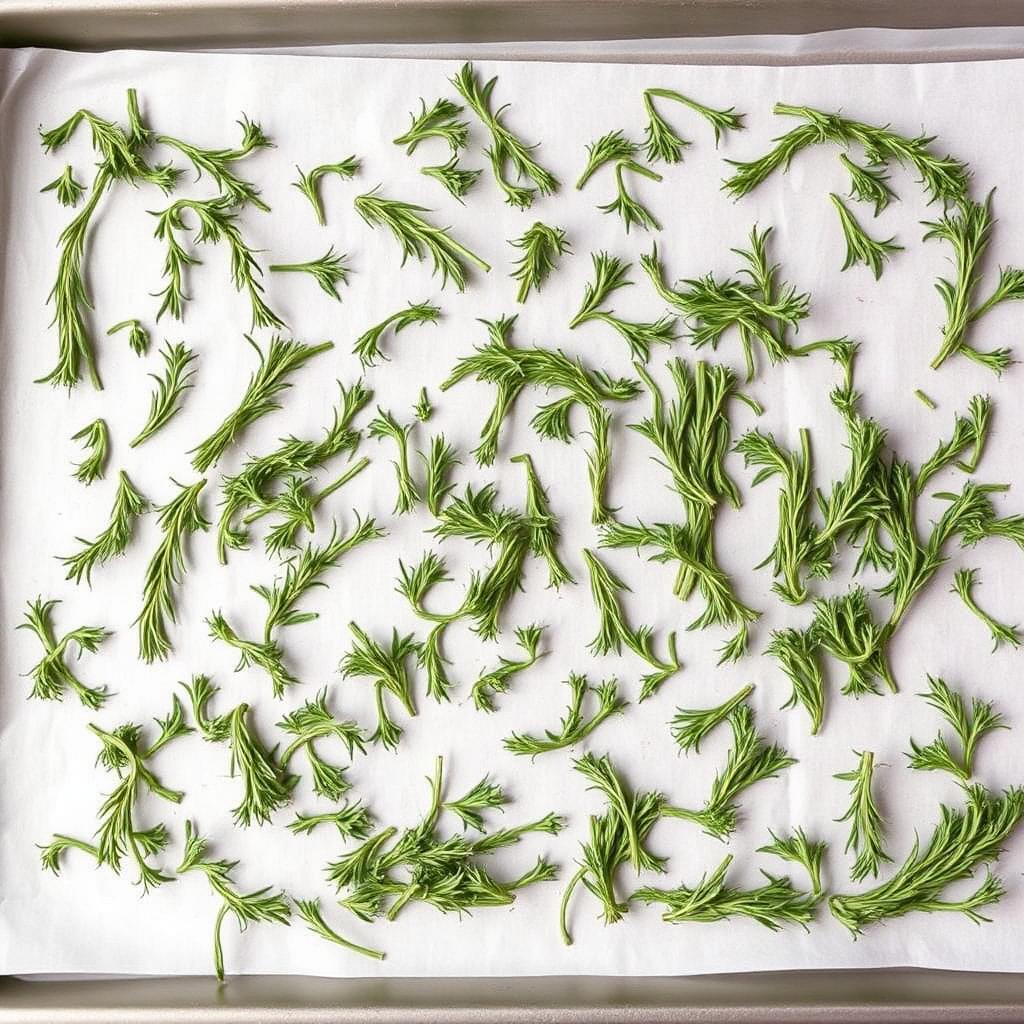
- Rinse and pat the sprigs completely dry.
- Line a baking sheet with parchment and lay the sprigs in a single layer, not touching.
- Freeze uncovered for at least two hours, until the sprigs are hard.
- Transfer to a freezer bag or airtight container and squeeze out as much air as possible.
Frozen this way, the leaves snap off the stems with a flick of your thumb. You can crumble them straight into stews, roasts and marinades.
Method 3: blanch and freeze for hand pesto
If you grow basil and want a pure green colour for winter pesto, blanch the leaves first. Drop them into boiling water for three seconds, transfer straight to an ice bath, squeeze dry, then pack into a freezer bag flat. The brief heat shock kills the enzyme that turns basil brown without cooking the leaves.
Things that go wrong (and how to avoid them)
Wet leaves freeze into ice patches. Always dry herbs in a salad spinner or between tea towels before you start.
Cheap silicone trays absorb smells. If your freezer has fish or onion smell, your basil cubes will too. A small lidded container or an ice cube tray with a snap lid keeps that out.
Soft herbs in plastic bags without oil go black within a week. The oil is not optional for basil, parsley or cilantro.
How long do frozen herbs actually last?
Soft herbs in oil cubes: about six months at peak flavour, still usable for nine.
Woody herbs tray frozen: up to twelve months. The flavour fades a little after that but they are still safe to use.
Blanched basil sheets: about six months.
Always label bags with the herb name and the month. You will not remember in February.
What to skip the freezer for
A few herbs simply do not freeze well. Chervil, tarragon and lemon balm lose most of their character in the freezer. For those, drying in a low oven or making a flavoured vinegar gives a better result.
The takeaway
Match the method to the herb. Soft leaves go in oil cubes, woody sprigs go on a tray, basil for pesto gets a quick blanch first. Do that and the August harvest will still flavour a January risotto without a hint of slime.