Quick Answer
Bring 4 cups (about 1 litre) of liquid (half stock, half water) to a hard boil. Add 1 teaspoon of salt. Whisk the boiling liquid into a fast whirlpool and rain in 1 cup (about 170 g) of coarse cornmeal in a slow steady stream. Drop the heat to its lowest setting and stir often for 35 to 45 minutes. Finish with butter and grated Parmigiano-Reggiano.
That 1 to 4 ratio, the slow rain and the long low cook are the whole game. Skip any of them and you get lumps or grit.
What polenta actually is
Polenta is coarsely ground yellow cornmeal cooked slowly in water or stock until the starches gelatinise and the dish turns creamy. It is a staple of northern Italian cooking, where it shows up under braised short ribs, alongside sausages, with mushroom ragu or just with a generous knob of butter and a fistful of cheese.
Watch the bag at the shop. Real polenta is labelled simply polenta or stone-ground coarse cornmeal. Anything labelled instant polenta or one-minute polenta has been pre-cooked and dried; you can use it in a hurry but the texture is never as silky.
The ratio that never fails
Use 1 part dry cornmeal to 4 parts liquid by volume. So 1 cup of cornmeal to 4 cups of liquid serves four people generously as a side, or two as a main with something on top.
For the liquid, half chicken or vegetable stock and half water gives the cleanest savoury base. All stock is too rich and competes with whatever you put on top. All water is bland and lets the cornmeal taste raw.
Step 1: bring the liquid to a hard boil
Pour the liquid into a heavy-bottomed saucepan (a sauteuse or Dutch oven works well; a thin pan scorches the polenta on the bottom). Add 1 teaspoon of fine sea salt or kosher salt. Bring it to a rolling boil over high heat.
Always salt the liquid at this stage, not at the end. Cornmeal needs to absorb salt during the cook to taste seasoned; salt sprinkled in at the end sits on the surface and tastes harsh.
Step 2: the slow rain and the whirlpool
This is the only tricky part. Hold a balloon whisk in one hand and the cup of cornmeal in the other. Start whisking the boiling liquid hard in one direction so it forms a clear whirlpool in the centre of the pan. Now pour the cornmeal into the whirlpool in a thin steady stream, the way you would pour sand from a measuring cup. The pour should take about 30 seconds.
If you tip the whole cup in at once, the outer grains hydrate instantly and form a gel jacket around dry flour in the middle. You end up with golf-ball lumps that no amount of whisking later will undo. The slow rain coats every single grain in boiling water individually, which is what guarantees a smooth porridge.
Step 3: the long low cook
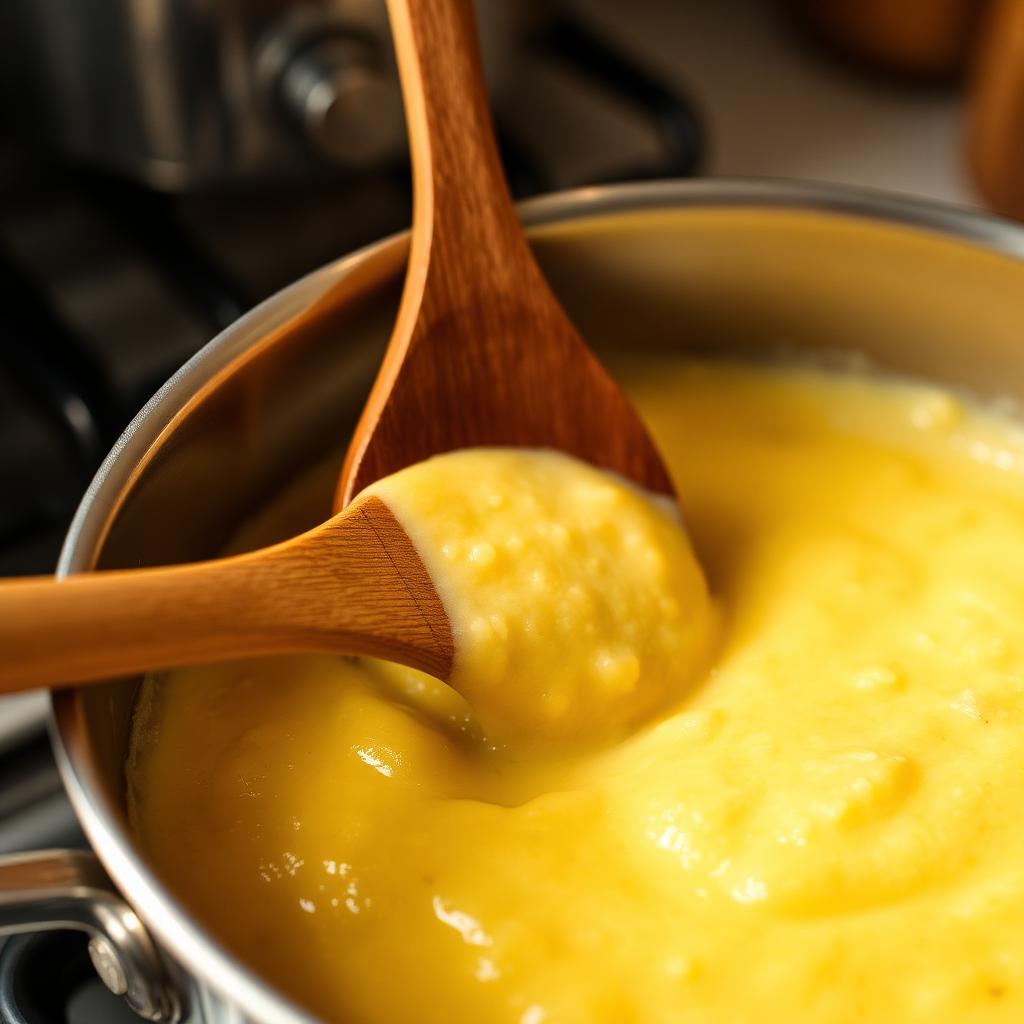
As soon as all the cornmeal is in and the mixture thickens to the consistency of light pancake batter (a minute or two), drop the heat to its absolute lowest setting. The polenta should burp slowly, not bubble actively. Cover the pan loosely with a lid so it does not splatter, but leave a small gap for steam to escape.
Stir with a wooden spoon every 4 to 5 minutes, scraping the bottom and the corners well. The total cook time for coarse cornmeal is 35 to 45 minutes. For fine cornmeal it is 25 to 30 minutes. You will know it is ready when the grit is gone from the texture (taste a tiny spoonful; it should feel velvety on the tongue) and the polenta pulls away from the sides of the pan as you stir.
Step 4: the finish (mantecatura)
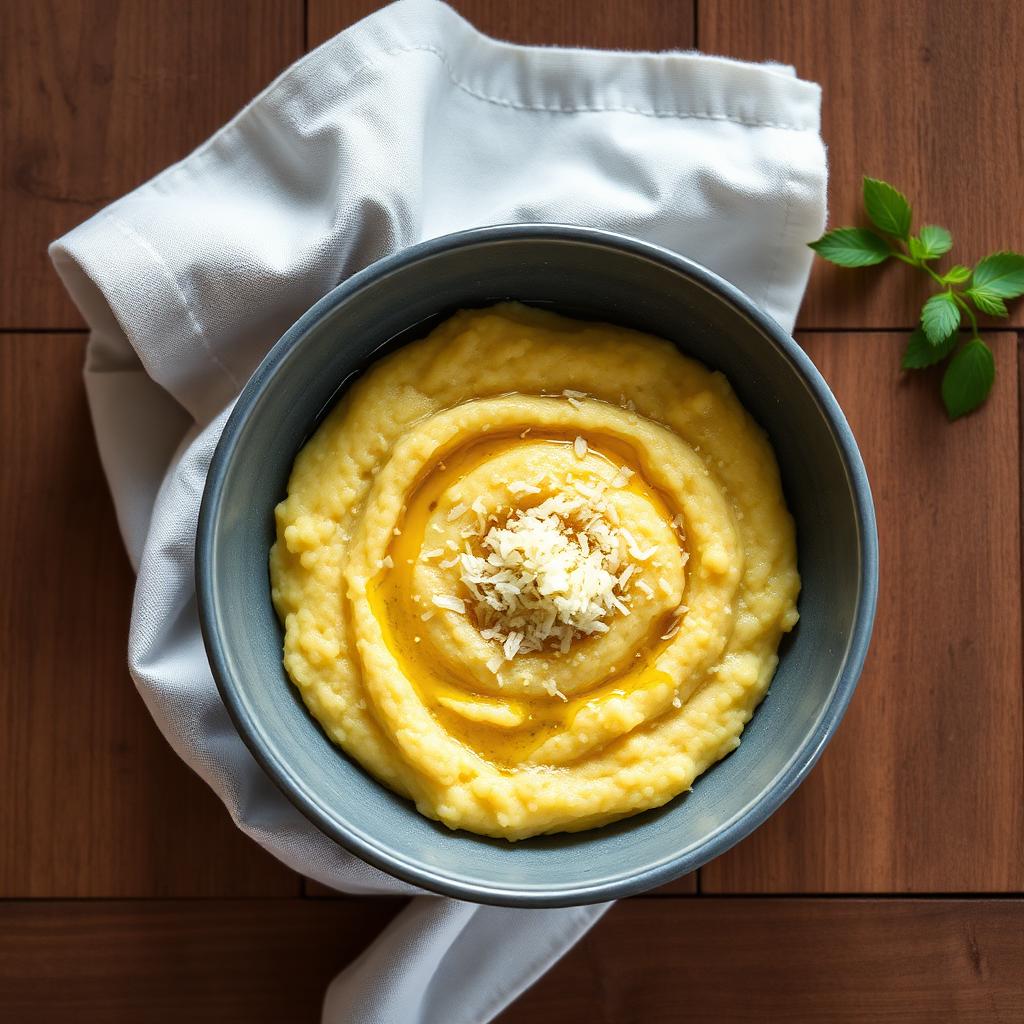
Take the pan off the heat. Beat in 3 tablespoons of cold unsalted butter, cut into small cubes, plus half a cup of freshly grated Parmigiano-Reggiano. Stir hard for 30 seconds. This step, called mantecatura in Italian, is what turns the polenta glossy and rich. The cold butter emulsifies into the hot starch and gives the dish its luxurious finish.
Taste and adjust salt. Pour onto a warmed serving plate or directly into shallow bowls. Top with whatever you are serving (braised meat, sauteed mushrooms, a runny fried egg, a drizzle of good olive oil, a grind of black pepper) and serve straight away. Polenta firms up fast as it cools.
What to do with leftovers
Pour leftover polenta into an oiled loaf tin and refrigerate. The next day it will be firm enough to slice. Cut into thick slabs and pan fry in butter or grill until the outside crisps; serve with a fried egg on top for breakfast or with a tomato sauce for a quick supper.
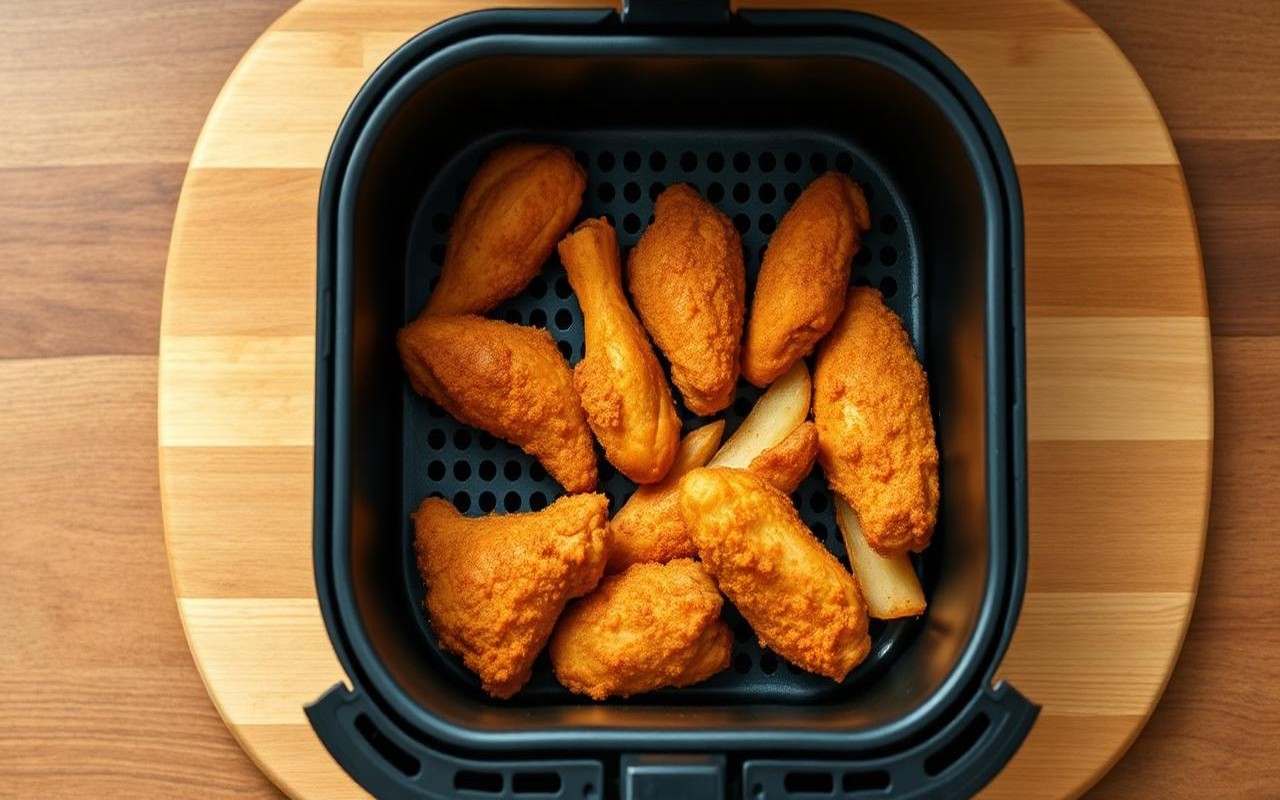
Sliced polenta also takes brilliantly to the air fryer at 200 Celsius for about 8 minutes, turned once.
Common mistakes
Using boiling water instead of boiling stock. The dish tastes one-dimensional. Half stock fixes it.
Whisking the cornmeal in cold liquid then heating up. The starches gelatinise unevenly and you get a gluey texture. Always rain into actively boiling liquid.
Cooking too fast on medium heat. The bottom scorches and the inside stays gritty. Low and slow is the rule.
Forgetting to taste. Polenta is finished when it tastes done, not when a timer beeps. Coarse, fine and old cornmeal all behave differently.
The takeaway
Polenta is a four-ingredient dish that depends entirely on two techniques: a slow rain of cornmeal into a whirlpool of boiling salted liquid, then a long low cook with regular stirring. Finish with cold butter and Parmigiano, serve immediately, and it will be the best comfort food on your table this winter.