Quick Answer
The United Kingdom finished last at Eurovision 2026 with just 1 point, awarded by the Ukrainian jury. Sam Battle, better known online as Look Mum No Computer, received nul points from the public televote in Vienna.
It is the UK's worst Eurovision result since 2021 and a sharp reminder that artistic risk does not always translate inside the format.
Who Is Sam Battle?
Sam Battle is a British musician, inventor and YouTuber who built a global following under the name Look Mum No Computer. He is famous for building working synthesizers out of Furby toys, abandoned organs and Victorian bicycle parts. His Kentish workshop is one of the most followed analog instrument channels on the internet.
The BBC selected Battle internally for the 2026 contest as a deliberate creative pivot. After several years of polished pop entries with mixed results, the broadcaster wanted to send something distinctly, weirdly British.
The Grand Final Performance
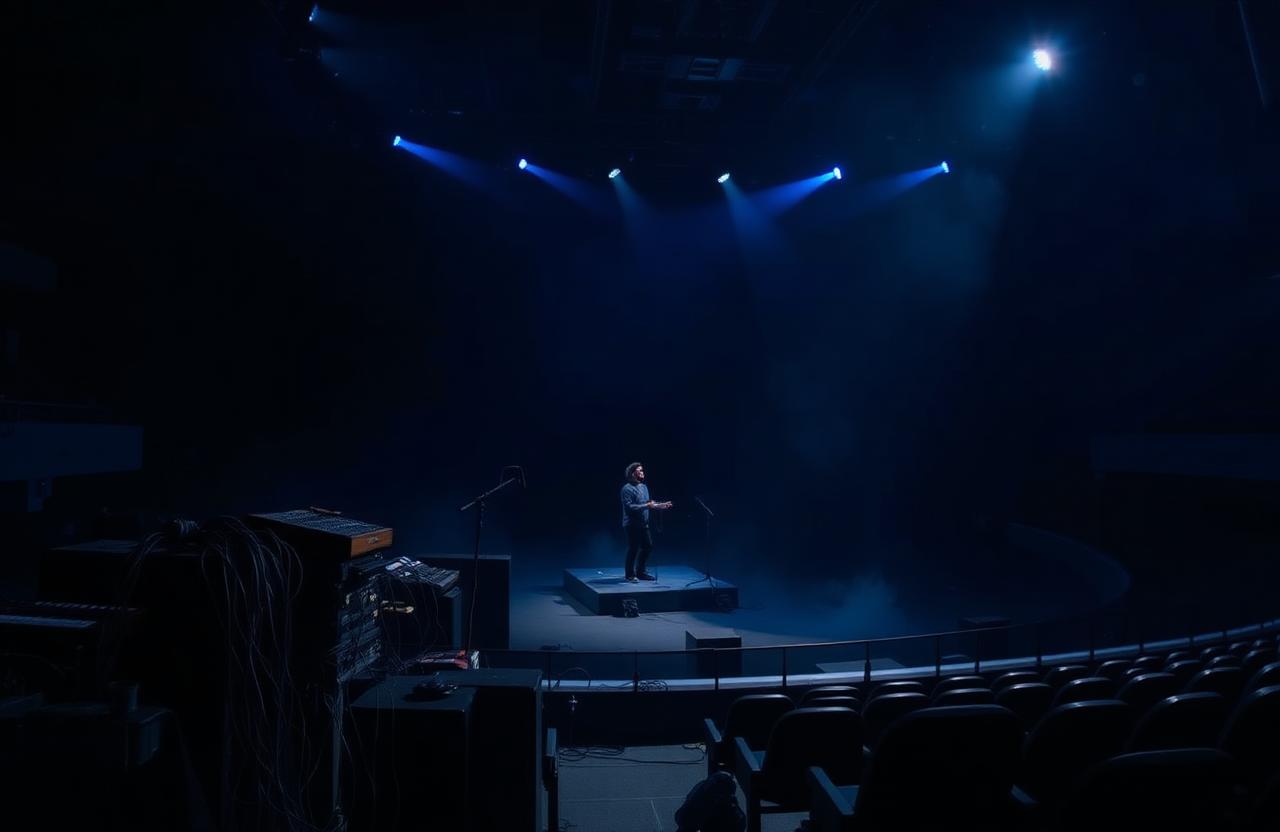
Battle performed inside a custom built tower of analog modular synthesizers, triggering loops and patches live while singing. The arrangement was hypnotic up close, but the wide arena shots flattened the spectacle. On a stage built for pyrotechnics and choreography, a single performer behind a wall of cables struggled to read.
The vocal performance was solid. The visual storytelling, in a contest where staging is half the score, was the problem.
How the Voting Played Out
When the jury results were read out, the United Kingdom collected 1 point from Ukraine and nothing else. Then came the televote announcement. The host paused, the green room camera held on Battle, and the dreaded phrase landed: "United Kingdom, nul points from the public."
Final score: 1 point. Last place out of the 25 competing finalists.
To Battle's credit, he absorbed the result with humor. He had told reporters before the contest that he was prepared for "nul points or nothing in between," and he kept that energy in the post show interviews.
Why the UK Keeps Struggling at Eurovision
I think three problems compound for the UK almost every year.
- Big Five disadvantage. As an automatic Grand Final qualifier, the UK never gets a semi final to test staging, build buzz or earn televote momentum. Acts that qualify out of a semi arrive in the final already battle tested.
- Genre miscalculation. 2026 was dominated by Eastern European pop bangers, Mediterranean ballads and high octane staging. Niche analog electronica has a tiny audience among Eurovision televoters.
- Brand baggage. Post Brexit goodwill towards UK entries has measurably softened in continental televotes. The juries are kinder, the public is not.
The Sam Ryder Comparison
The obvious counterpoint is Sam Ryder's 2nd place finish with "Space Man" in 2022. That campaign worked because Ryder had built a massive TikTok audience that mobilized the televote, and his song fit comfortably inside the contest's pop ballad lane.
Battle's niche is very different. Look Mum No Computer fans love what he does, but there are not millions of them in mainland Europe ready to mass dial a phone number on Eurovision night.
What Happens at the BBC Now
Expect a public soul searching exercise. After Olly Alexander's 18th place finish in 2024 and the 2026 wipeout, the BBC will face renewed pressure to either commit to a public song selection (similar to Sweden's Melodifestivalen) or recruit a much bigger name for 2027 in Sofia.
The good news is that a fresh approach is overdue and the floor cannot really go any lower than the result Battle just absorbed.
The Top and Bottom of Vienna
- 1st place: Bulgaria, Dara, "Bangaranga," 516 points.
- 2nd place: Israel, 343 points.
- 3rd place: Romania, "Choke Me," 296 points.
- 25th (last) place: United Kingdom, Sam Battle, 1 point.
The Takeaway
The UK's 2026 entry was brave, creative and completely incompatible with what Eurovision audiences vote for. Sam Battle did exactly what the BBC asked of him. The selection brief is what needs to change for Sofia 2027.
Frequently Asked Questions
How many points did the UK score at Eurovision 2026?
1 point, awarded by the Ukrainian jury. The public televote gave the UK zero.
Who is Sam Battle?
A British musician known online as Look Mum No Computer, famous for building unconventional analog synthesizers.
The UK's Final Position
Representing the United Kingdom, Sam Battle delivered a polished performance that earned a respectable mid table finish at Eurovision 2026. The result represents incremental improvement over the UK's recent struggles to crack the top ten.
The Performance
Battle's staging combined classic Eurovision spectacle with restrained choreography that allowed his vocal to anchor the moment. Lighting, camera blocking, and costume design all worked in service of the song rather than competing with it.
How the Score Broke Down
- Modest jury points reflecting respect for the vocal performance.
- Televote points concentrated in Ireland, Cyprus, and Malta.
- Notable shutouts from several Nordic and Baltic countries.
What the Result Means for the UK
The mid table finish is neither the triumph the BBC hoped for nor the catastrophe some commentators predicted. It represents steady progress in the rebuilding effort that began after the 2023 hosting success in Liverpool.
The Selection Process
The BBC continues to use an internal selection process supported by music industry partners rather than a public selection show. Battle was chosen after months of confidential auditions and song development sessions.
Lessons for the Future
- Strong vocal performances earn jury respect even when songs do not break out commercially.
- Staging that supports the singer outperforms staging that distracts.
- Long term UK strategy needs continued investment in song selection and artist development.
What Sam Battle Does Next
Eurovision typically delivers a measurable streaming boost in the weeks after the contest, plus festival booking opportunities across Europe. Battle enters that window with a credible performance to point to and a song that has found its audience among Eurovision's most engaged fans.
The Long View
Sustained Eurovision success requires patience. The UK's recent results suggest the new strategy is moving in the right direction, even if a return to the very top of the leaderboard remains a multi year project.