Quick Answer
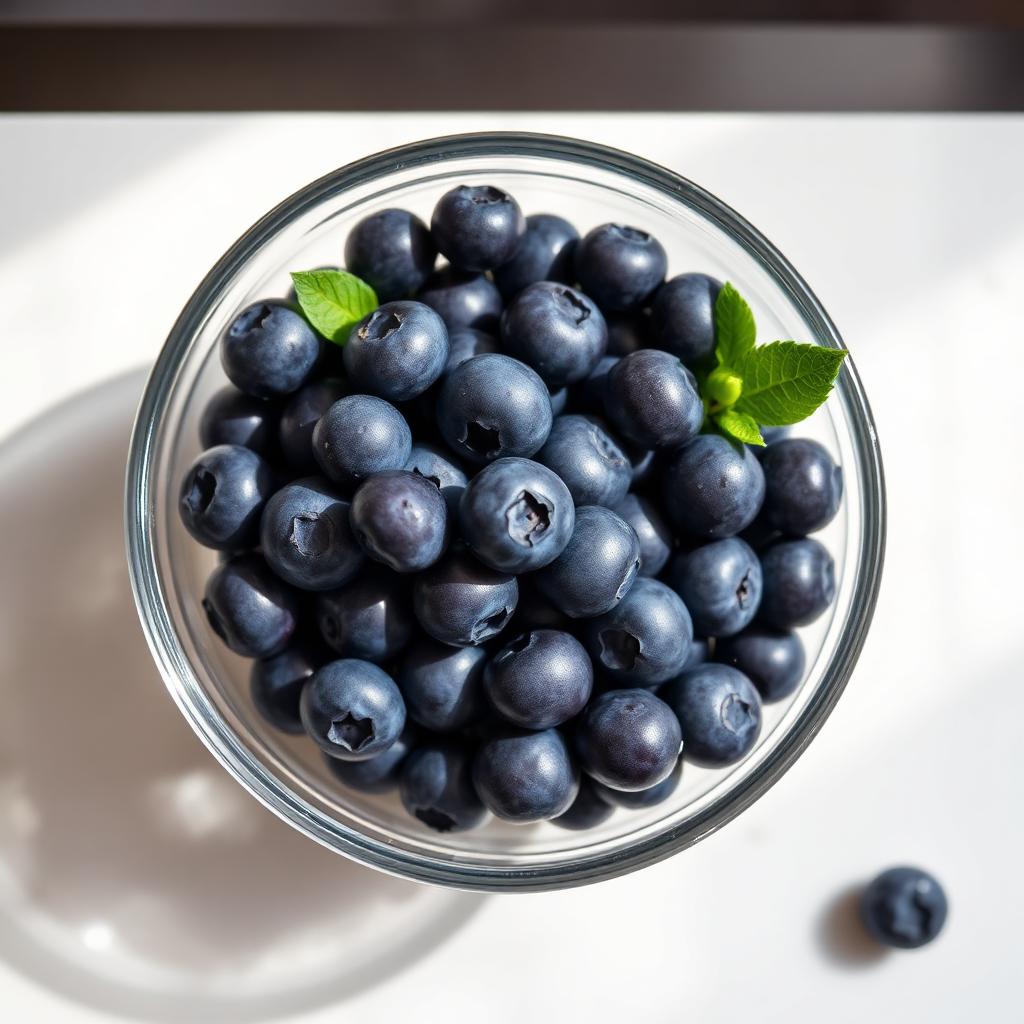
To make blueberries last up to three weeks: sort and discard any soft or leaking berries, soak the rest for 60 seconds in a 1:3 white vinegar and water bath, dry completely in a salad spinner lined with paper towel, then store loose in a paper towel lined container in the main fridge (not the crisper).
Moisture is the enemy. A dry berry on a breathable surface lasts roughly four times longer than the same berry left in its original plastic clamshell.
Why blueberries mold so fast
Fresh blueberries arrive home with a natural population of microscopic Botrytis cinerea spores (grey mold) on their skin. The spores are harmless on a healthy, dry berry. They become a problem when one berry splits or softens enough to weep juice, because that creates the warm humid microclimate Botrytis needs to bloom into the fuzzy grey or white fluff that ruins the rest of the punnet within 48 hours.
The whole preservation strategy is built around two principles: keep the population of live spores low, and keep the surface of every berry bone dry.
Step 1: The sorting audit
The moment you bring blueberries into the kitchen, tip the entire punnet out onto a baking sheet or large dinner plate. Spread the berries into a single layer so you can see each one.
- Discard anything visibly soft, wrinkled, or weeping juice.
- Discard any berry with a brown spot or visible fuzz.
- Discard berries that feel hollow when you nudge them; that means the flesh has collapsed inside the skin.
One leaking berry left in the box can take out the rest in two days. This single step does more for shelf life than any storage trick.
Step 2: The vinegar bath
Fill a large bowl with 3 parts cold water to 1 part plain distilled white vinegar. Submerge the sorted berries and agitate gently with your hand for 60 seconds. Do not soak for longer than a minute; the acid only needs brief contact to disrupt fungal spores and rinse away surface bloom and residue.
You will not be able to taste vinegar in the finished berries. The acetic acid is dilute, sits only on the waxy outer skin, and gets rinsed off in the next step.
If you prefer not to use vinegar, a 1:10 baking soda solution (1 tablespoon per litre of water) is a milder alternative shown in shelf life trials at the University of Maine to noticeably reduce mold growth on fresh fruit.
Step 3: Total surface dry
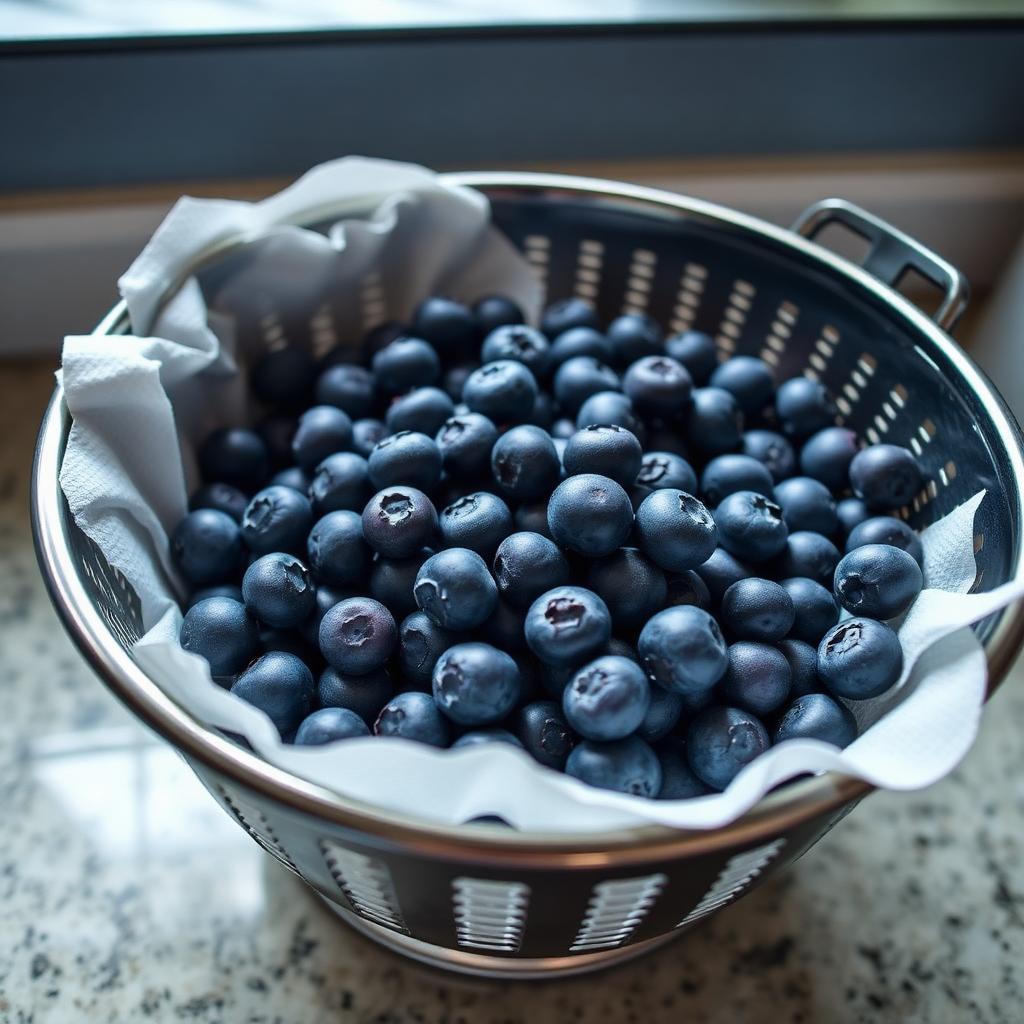
Drain the berries in a colander, rinse once with cold tap water to remove the vinegar, then transfer them to a salad spinner whose basket is lined with two layers of thick paper towel. Spin gently for about 10 seconds. The centrifugal force throws the water droplets off the berries and into the absorbent paper.
Spread the berries on a fresh dry tea towel and leave them to air dry for another 20 to 30 minutes. The skins should feel completely dry and slightly tacky before you store them. Any visible moisture and the mold clock restarts.
Step 4: Store in a breathable container
Throw the original plastic clamshell in the recycling. Choose a wide shallow container instead: a glass dish, a vented produce keeper, or even a clean cardboard berry basket. Line the bottom with a dry paper towel.
Arrange the berries loosely, no more than two layers deep. Do not snap an airtight lid on top. Either leave it off, set it on loosely, or use a lid with passive vents. Trapped condensation pooling on the underside of a sealed lid will drip back onto the fruit and undo all your work.
Place the container on a middle or upper shelf of the fridge where air circulates freely. Counterintuitively, the crisper drawer is the worst spot for berries because its purpose is to trap humidity for leafy greens.
How long they will actually last
With sorting alone, expect 5 to 7 days. Add the vinegar rinse and proper drying and you will routinely hit 14 to 21 days. The same protocol works on raspberries (more fragile, expect 7 to 10 days), blackberries, strawberries (slice off the green top after drying), and cherries.
What if they start to soften anyway?
If a few berries go soft toward the end of week two, you have two good options before they pass the point of usefulness:
- Freeze them flat: spread on a parchment-lined tray, freeze until solid (about 2 hours), then transfer to a freezer bag. They keep their shape for smoothies, muffins, and porridge for 6 months.
- Quick jam: simmer 500 g of berries with 200 g of sugar and a tablespoon of lemon juice for 12 to 15 minutes until thickened. Keeps refrigerated for 3 weeks.
Buying tips that compound the effect
Storage works best on berries that started strong. At the shop:
- Look for berries with intact silvery bloom (the natural protective wax). A glossy berry has been rubbed and is more prone to spoilage.
- Tilt the punnet. The berries should roll freely. Anything clumped together has likely begun leaking juice.
- Check the bottom of the container for purple staining; that is a tell-tale sign of crushed or fermenting fruit underneath.
- Choose containers with multiple ventilation holes over solid clamshells.
Combine smart buying with the vinegar protocol and a single punnet can comfortably last from one weekend shop to the next.
Freezing as a longer-term backup
Frozen blueberries keep most of their nutrition and almost all of their flavour for around 6 months. The trick is to freeze them dry and individually. Spread sorted, washed, fully dried berries in a single layer on a parchment-lined baking sheet and freeze for 2 hours until solid. Transfer to a labelled freezer bag, push out as much air as you can, and they will pour like marbles when you need them. Skip the parchment step and you end up with a single welded brick of berries.
The takeaway
A quick vinegar bath, a thorough dry, and a paper-towel-lined airtight container in the fridge is the combination that buys me two extra weeks of mold-free blueberries. Freeze whatever I cannot eat within ten days.