Quick Answer
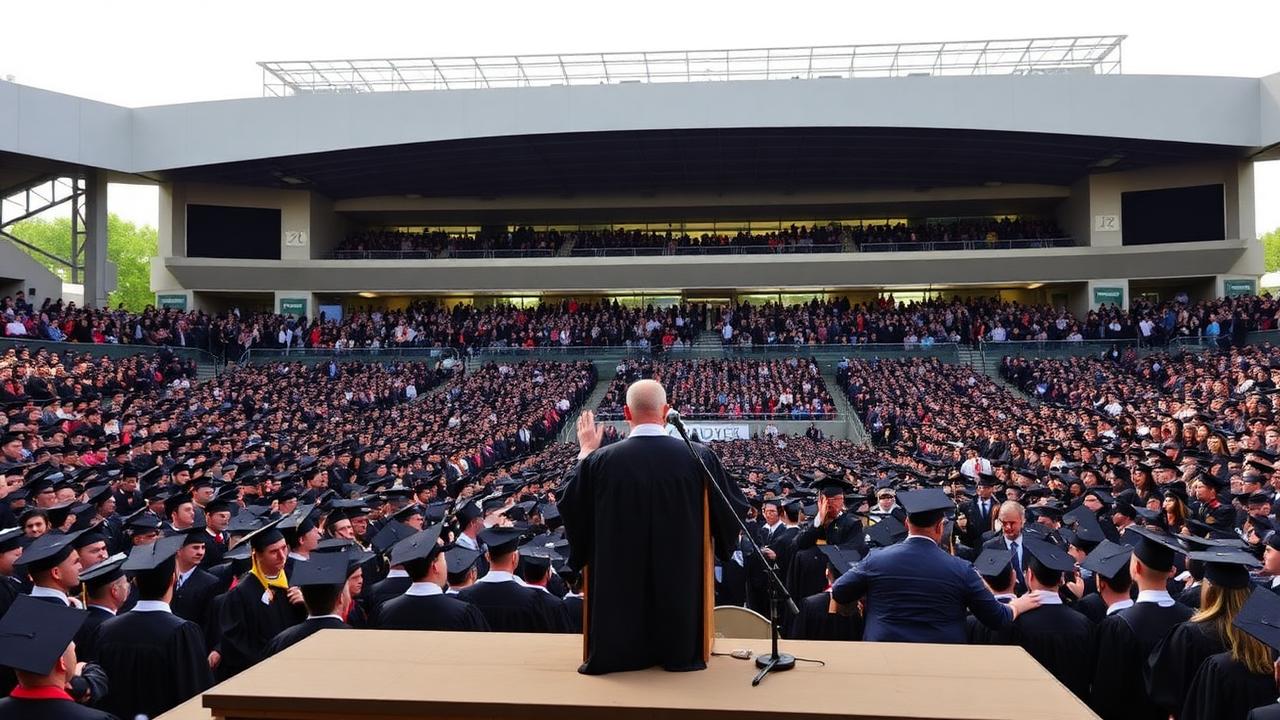
Country music star Eric Church delivered the 2026 spring commencement address at the University of North Carolina at Chapel Hill on Saturday, May 9, 2026 at Kenan Stadium. He spoke to more than 7,100 graduates and was awarded an honorary degree by the university.
Church framed his speech around the strings of a guitar, mapping each string to a life lesson: faith, family, partnership, and the tension between ambition and resilience. He also issued a direct warning about social media comparison and ended with a hometown performance of his song "Carolina."
A Homecoming in Chapel Hill
Church is a North Carolina native and a lifelong Tar Heel fan, which made the appearance feel less like a celebrity drop in and more like a homecoming. He spent two days in Chapel Hill before the ceremony, taking photos with professors and engaging with the community.
When he walked on stage with an acoustic guitar slung over his shoulder, the crowd knew the speech would not follow the standard commencement template.
Navigating a Microphone Glitch
The address opened with a classic live event hiccup. The stadium audio failed and thousands of graduates began pointing to their ears. Church, a veteran of arena shows, paused, smiled, and waited for the crew to fix it.
Once the sound returned, he leaned in: "Three things mattered to my family when I was growing up: God, family, and Dean Edwards Smith." The Carolina crowd roared, and the rest of the speech rode that energy.
Life Lessons Through Guitar Strings
Instead of academic clichés, Church anchored his speech in his instrument. Each string represented a foundation of a grounded life.
- Low E (faith): the foundation every chord rests on, the thing that keeps you in tune in extraordinary seasons.
- A string (family): the warmth and body of a chord, the people in the bleachers who supported you at your worst.
- D string (partnership): the heart of a chord, the importance of choosing the right partner.
- G string (ambition and resilience): the constant tug between chasing goals and recovering from inevitable failures.
He quoted Hemingway on resilience, reminding graduates that "the best of us are stronger at the broken places."
A Stark Warning About Social Media
The most resonant section addressed the digital pressure unique to the Class of 2026. "Your generation faces a temptation no generation before has ever faced: the temptation to perform for everyone, and belong to no one," Church told the stadium.
He urged the graduates to plant real roots in physical communities rather than chasing curated online lives. "Someone's comments, someone's criticism, someone's cold opinion is going to try to convince you to re tune yourself to match what they think you should sound like. Do not let them touch your string."
An Honorary Tar Heel Forever
Church closed not with a formal sign off but with a performance, leading a sing along of his hit "Carolina" that echoed out of Kenan Stadium. UNC awarded him an honorary degree during the weekend in recognition of his music and his philanthropic work in western North Carolina.
The takeaway
Eric Church's 2026 UNC commencement address turned a familiar format into something memorable. By replacing standard advice with a guitar based metaphor and confronting the realities of social media head on, he gave the Class of 2026 a speech they are likely to carry well beyond graduation weekend.
How Eric Church Ended Up at UNC
Eric Church is a North Carolina native and an Appalachian State University alumnus, where he played local bars with his band the Mountain Boys before moving to Nashville. The invitation to deliver the UNC commencement address came from the chancellor's office, with strong backing from the music industry alumni network and student leadership. Church accepted, on the condition that the speech would be his own work and the day would belong to the graduates.
He kept that promise. No band, no merchandise, no surprise performance, just a speech and a hand-shake line.
The Core Message
Church built the speech around a single idea: the most important career skill is the ability to keep showing up when nothing is working. He told the graduates that he had been told no more often than yes, that the early years of his music career were defined by rejection, and that the breakthrough came from refusing to negotiate his standards with the doubters.
He paired that with a warning against the curated digital version of success. The real work, he said, is mostly invisible and often boring.
The Lines That Went Viral
- "The world rewards the people who refuse to leave the room."
- "Do not confuse a busy life for a meaningful one."
- "You will fail loudly. Try to fail in ways that teach you something."
- "The day you stop being embarrassed by your old work is the day you stopped growing."
- "Sing the song you actually wrote, not the one you think they want to hear."
The Personal Story That Anchored the Speech
Church spent several minutes on the period when he was fired from a major opening tour for playing too long, refusing to cut his set. He described the panic of returning home with no income and no prospects, and the moment he decided he would only build a career on his own terms. That story shaped the rest of the speech, framing every piece of advice as something he had learned in a hard way.
How the Audience Responded
Graduates gave Church a long standing ovation, and the moment was carried widely on social media within hours. Faculty noted that the speech avoided the common commencement traps of clichéd inspiration and political point-scoring. Parents in attendance singled out the section on resilience as the part that resonated most with their own working lives.
Why This Speech Will Be Remembered
- It was specific to the speaker, not interchangeable with any other celebrity speech.
- It addressed both the graduates and the people who raised them.
- It refused to flatter the audience or pander to the moment.
- It ended with a clean call to action rather than an open-ended platitude.
Where to Watch the Full Speech
UNC has posted the full address on its official YouTube channel, with a transcript available on the university's news site. The speech runs about 14 minutes, which is short by commencement standards and one of the reasons it has held attention so well online.
If you are graduating soon, or you know someone who is, it is worth the time. So is a re-watch a year from now, when the advice tends to land differently the second time through.