Quick Answer
Both. China and Italy each developed their own noodle traditions independently.
The popular myth that Marco Polo brought pasta back from China in 1295 is false. Documents prove Italian cooks were already making and selling dried noodles in Genoa and Sicily before Polo returned. China holds the oldest archaeological record of noodles, while Italy developed its own distinct durum wheat pasta tradition optimised for drying and long storage.
The Oldest Noodles Are From China
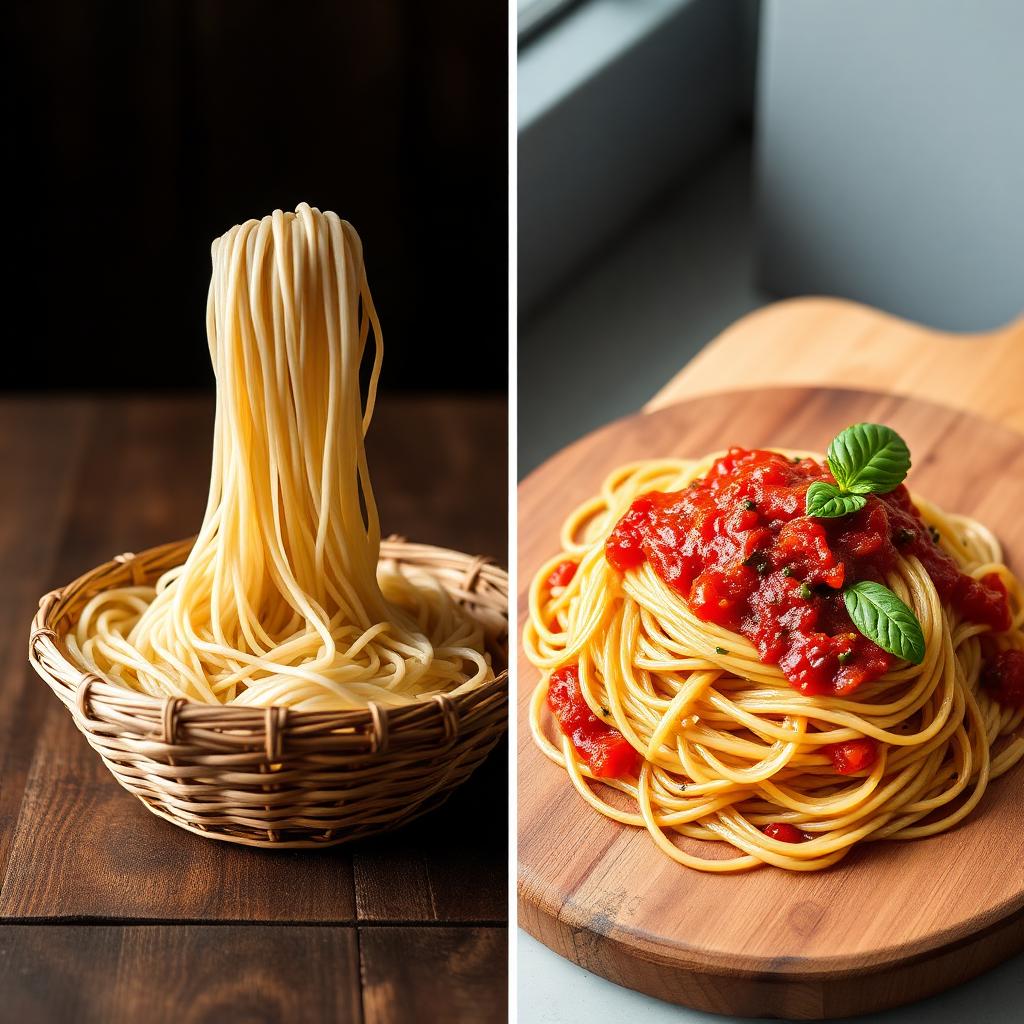
The oldest known physical noodle evidence is Chinese. In 2005 archaeologists working at the Lajia site in Qinghai province, China unearthed a sealed bowl of preserved noodles dated to roughly 4,000 years ago. The noodles were thin, long and made from millet, not wheat. The find pushes the documented Chinese noodle tradition back nearly two millennia before anything comparable in Europe.
How Italy Developed Pasta Independently
Italy did not import this Chinese technique. The Italian path looks completely different:
- Ancient Roman lagana: wide sheets of flour and water dough, fried or baked, never boiled.
- Arab Sicily (9th to 12th centuries): Arab traders introduced drying and long storage techniques for noodles, settling on the sun drenched Sicilian climate.
- Trabia, Sicily, 1154 CE: the Arab geographer Al Idrisi describes a thriving dry pasta industry exporting noodles across the Mediterranean.
- Durum wheat: southern Italy proved ideal for the high protein hard wheat that gives dry pasta its bite and shelf life.
By the time Marco Polo returned to Venice in 1295, dried pasta was already being made, sold and exported from Italian ports.
The Marco Polo Myth, Decoded
The Marco Polo story comes from a 1929 article in a US trade publication called the Macaroni Journal, which printed a fictionalised version aimed at promoting pasta sales. It spread quickly, then was repeated in cookbooks for decades before food historians traced it back to its marketing origin. There is no contemporaneous evidence that Polo brought pasta to Italy.
The Real Differences Between Chinese and Italian Noodles
- Flour: Chinese noodles use a wide mix including wheat, rice, mung bean and millet flours. Italian pasta is dominated by durum wheat semolina.
- Method: Chinese noodle traditions include hand pulling, knife cutting, hand rolling and machine extrusion. Italian pasta leans heavily on rolling and bronze die extrusion.
- Drying: Italy industrialised slow drying for long term storage centuries ago. Many Chinese noodles are eaten fresh.
- Saucing: Chinese noodles often arrive in broth or with stir fried toppings. Italian pasta is tossed in sauce, finished with starchy pasta water.
So Who Invented Pasta?
Nobody, in the singular sense. Noodle and pasta traditions arose more than once across cultures over thousands of years. China can rightly claim the oldest archaeological example. Italy built the dry semolina pasta tradition that defines pasta culture globally today. The two evolved on parallel tracks, not a single shared one.
Bottom Line
Pasta did not come from China or from Italy in a single moment. China holds the oldest physical noodle record at around 4,000 years old. Italy developed its own durum wheat dry pasta culture independently, refined under Arab Sicilian influence by the 12th century. The Marco Polo story is a 20th century marketing myth that history quietly disproved.
Did Pasta Come from China or Italy: Reader Questions
Did pasta come from China through the Silk Road?
There is no documented evidence of a noodle transfer from China to Italy via the Silk Road. Italian and Chinese noodle traditions developed independently on parallel timelines.
Did pasta come from Italy through Arab trade in Sicily?
Arab traders and rulers in Sicily contributed crucial drying and storage techniques that turned Italian noodles into a shelf stable export industry by the 12th century, but the dough technique itself predated their arrival.
Are Chinese noodles older than Italian pasta?
Yes, by a wide margin. The oldest archaeological noodle evidence in China dates back roughly 4,000 years to the Lajia site in Qinghai province.
So who invented pasta in the modern sense?
Modern Italian dry pasta is a synthesis of Roman dough traditions, Arab drying techniques and southern Italian durum wheat farming. No single inventor, no single country.
Why do so many people still believe Marco Polo brought pasta to Italy?
The story was popularised by a US trade magazine in 1929 and spread for decades in cookbooks before food historians traced and discredited it.
Final Word on Whether Pasta Did Come from China or Italy
Pasta did not come from one country in a single moment. China developed its own noodle tradition more than 4,000 years ago. Italy built its own dry durum wheat pasta culture under Arab Sicilian influence by the 12th century. The Marco Polo story is a 20th century marketing myth. The truthful answer to whether pasta came from China or Italy is both, independently and on parallel timelines, with two different staple grains and two different cooking traditions.