Quick Answer
Yes, a quote or short phrase can be trademarked if it is used to identify the source of goods or services. Famous examples include Nike's "Just Do It," McDonald's "I'm Lovin' It" and L'Oreal's "Because You're Worth It." The USPTO will only register a phrase as a trademark if it acts as a brand identifier, not as decoration or a general motivational message.
A quote that just appears across the front of a T shirt as ornamentation is not a trademark, even if it is original. It has to point to a single commercial source in the consumer's mind.
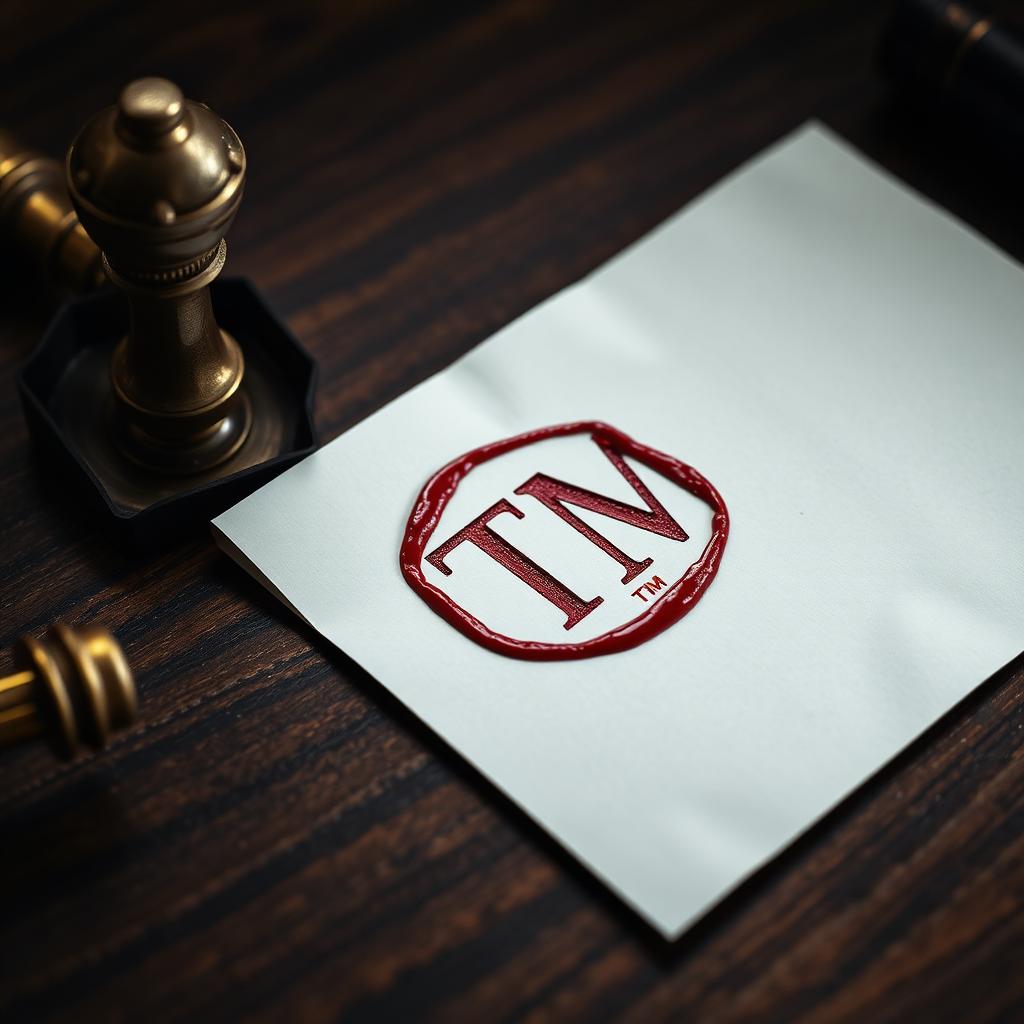
What the USPTO Looks For
To register a phrase with the United States Patent and Trademark Office, you need to show three things: the phrase is used in commerce in connection with specific goods or services, it is distinctive enough to identify the source, and it is not merely ornamental or descriptive.
Ornamental use is the most common reason slogan applications are refused. If the phrase is splashed across the chest of a T shirt with no small "by Brand X" tag inside, examiners often say consumers will read it as a slogan, not as a brand. That refusal is well documented in the USPTO's Trademark Manual of Examining Procedure.
Descriptive Quotes Are Harder
If the quote merely describes a feature, quality or purpose of the product, it has to acquire distinctiveness through years of marketing before it can register. "Best Coffee in Town" cannot be registered for a cafe. "I'm Lovin' It" can, because it does not describe McDonald's food in any literal sense.

Famous Trademarked Quotes
- "Just Do It" registered by Nike in 1989 for athletic apparel.
- "I'm Lovin' It" registered by McDonald's globally in 2003.
- "Finger Lickin' Good" registered by KFC for decades.
- "Have It Your Way" long used by Burger King.
- "The Happiest Place on Earth" registered by Disney for Disneyland.
Notice the pattern: each phrase is short, distinctive, used consistently in marketing, and tied to a single company across decades.
Can Anyone Trademark a Famous Quote
Usually no. You cannot trademark "I have a dream" for general apparel because consumers do not associate that phrase with a single commercial source; they associate it with Dr Martin Luther King Jr's speech. The King estate has trademarked specific commercial uses tied to its licensing activities, but the historical phrase itself is not a free for all to claim.
Famous individuals' names and signature phrases ("That's Hot," "Bam!") are sometimes registered when used as part of a personal brand product line. Paris Hilton's "That's Hot" registration is the textbook example.
How a Quote Becomes Your Trademark
- Use it consistently in commerce on packaging, advertising, websites and product tags, tied to a specific product or service category.
- File an application at the USPTO website for the relevant class of goods or services.
- Show non-ornamental use by placing the phrase as a small brand tag, on hangtags, in nameplate position, or paired with your registered brand name.
- Be ready for a refusal. Slogan refusals are common and you may need to argue secondary meaning or rework your specimen.
Quotes You Cannot Register
- Common expressions like "Good Morning" or "Hello World" used decoratively.
- Quotes already widely used by other brands in the same category.
- Quotes that are merely descriptive of the product.
- Quotes that would confuse consumers with an existing registered mark.
Bottom Line
A quote can become a trademark when it consistently functions as a brand identifier in commerce, not when it is decorative. Slogan registrations are real but harder than registering a brand name, and the USPTO will refuse phrases that read as ornament, motivation or description rather than as a source identifier.
More context worth knowing
To round out the answer, here is some additional background on whether a short phrase or quote can be registered as a trademark. Style guides treat this rule as more than a cosmetic choice. It signals to readers that the writer respects the original source, follows a consistent convention, and understands the difference between American and British practice. When you write about quotes trademarked in any professional setting, that consistency is what separates a polished page from a draft that distracts the reader.
Editors at major publishers, including university presses, trade magazines, and legal journals, run every manuscript through a style check that flags exactly this kind of issue. If the guidance feels picky, remember that search engines and screen readers also rely on consistent punctuation to parse a sentence correctly. A misplaced quotation mark can change how an excerpt is rendered in a featured snippet, an email preview, or an accessibility tool.
Practical tip: keep a one-page cheat sheet next to your keyboard with the three rules you reach for most often. For quotes trademarked, that usually means the rule about capitalization, the rule about punctuation placement, and the rule about block quotations. Anything more than three rules tends to be forgotten under deadline pressure, so curate ruthlessly.
If you write for a global audience, double check whether your house style follows American English or British English. The two traditions disagree on punctuation placement around quotation marks, on the choice between single and double marks for the outer quotation, and on whether long quotations should be indented or set off with a colon. Picking one tradition and sticking to it across a whole site is more important than picking the "correct" one, because mixed styles confuse readers and weaken trust.
Finally, if you are publishing online, remember that screen readers announce quotation marks differently depending on the user's settings. Curly smart quotes, straight typewriter quotes, and the special primes used for measurements are not interchangeable. Use the correct character for the job so that assistive tech reads your sentence the way you intended, and so that copy-paste into another document preserves your meaning.