Quick Answer
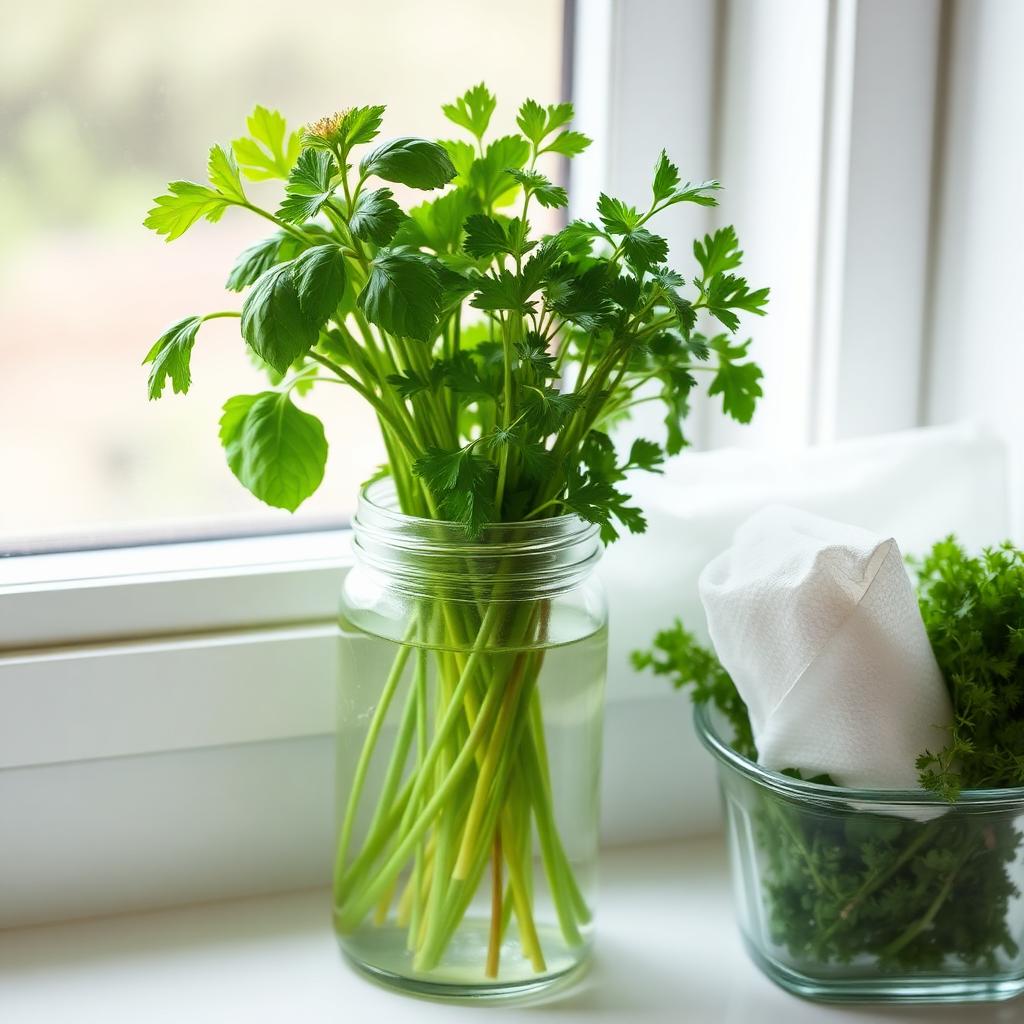
Treat soft herbs (cilantro, parsley, dill, basil) like cut flowers. Trim the stems, stand them in a jar with an inch of water, and store in the fridge with a loose bag over the leaves. Basil is the exception: keep it on the counter.
Hard herbs (rosemary, thyme, sage, oregano) keep best wrapped loosely in damp paper towel in a sealed container in the crisper drawer.
Why Storage Matters
Fresh herbs cost $2 to $4 per bunch and most of them turn to slime within four days because they were thrown straight into a plastic bag in the crisper. Correct storage stretches that to two weeks or more, which cuts both grocery spend and waste.
The Soft Herb Method (Parsley, Cilantro, Dill, Mint)
1. Snip half an inch off the bottom of the stems with kitchen shears.
2. Fill a clean jar with about an inch of cold water.
3. Stand the bunch in the water like flowers.
4. Cover loosely with a plastic produce bag.
5. Refrigerate. Change the water every three days.
Shelf life: 10 to 14 days. Compare with 3 to 4 days for a flat-packed bunch.
Basil Gets Different Treatment
Basil hates the cold. Treat it the same way (jar of water) but leave it on the counter, out of direct sunlight. Refrigerated basil turns black quickly. Counter-stored basil keeps for 5 to 7 days.
The Hard Herb Method (Rosemary, Thyme, Sage, Oregano)
1. Rinse only if necessary, and pat fully dry. Moisture is the enemy.
2. Wrap loosely in slightly damp paper towel.
3. Place in a sealed container or zip bag with the seal open one inch.
4. Refrigerate in the crisper.
Shelf life: 2 to 3 weeks. The waxy leaves resist drying out, so the damp wrap mainly prevents shriveling.
Freezing for Longer Storage
Both soft and hard herbs freeze well. Chop the herbs, pack into ice cube trays, top with olive oil or water, freeze, then transfer cubes to a freezer bag. Drop a cube straight into a hot pan or simmering soup. Frozen herbs lose some bright color but the flavor stays intact for up to six months.
Drying Herbs
Hard herbs dry well, soft herbs do not. Tie rosemary, thyme or oregano stems together and hang upside down in a dark, dry spot for 1 to 2 weeks. Crumble into a jar and store away from light. Use within a year for best flavor.
Common Mistakes
- Washing herbs before storage. Wet leaves rot.
- Storing basil in the fridge. Cold injury turns leaves black.
- Sealing tightly. Trapped ethylene speeds decay.
- Leaving herbs in the original clamshell. Most clamshells crush stems and trap moisture.
- Mixing herbs in one container. Different respiration rates shorten shelf life.
How to Tell Herbs Have Gone Bad
Soft herbs go dark, slimy and smell sour. Hard herbs lose their oils and snap dry. Mold on stems means the whole bunch goes.
Bottom Line
Two storage rules cover almost every herb. Jar of water in the fridge for soft, damp paper towel in a container for hard. Basil stays on the counter. Get those right and the average bunch lasts two weeks instead of three days.
Common Questions About Storing Fresh Herbs
Why does my basil turn black in the fridge?
Cold injury. Basil is a tropical plant and turns black below 40 F. Always store on the counter in water.
Can I use a salad spinner to dry herbs?
Yes. A quick rinse and spin removes excess water without bruising the leaves.
Should I wash herbs before storing?
Only if visibly dirty. Excess moisture speeds spoilage. Wash right before use whenever possible.
What about hydroponic herbs in plastic clamshells?
Treat them like soft herbs: snip the roots, stand in water on the counter or in the fridge with a loose bag.
Choosing Fresher Bunches at the Store
Smell first. Vibrant herbs have a strong, clean aroma. If a bunch smells faint or grassy, it is past its peak. Look at the stems. Cut ends should look freshly trimmed, not brown and dry. Avoid any bunch with yellow or wilted leaves. Buy small bunches more often rather than one giant bag. The best storage in the world cannot save herbs that were already two weeks past harvest when you bought them. Farmers markets and refrigerated herb sections at the grocery store usually have fresher product than the open produce displays.
Why Most Herbs Die in Three Days
Three things kill bagged supermarket herbs: trapped moisture from condensation, ethylene gas from neighboring fruit, and constant temperature changes from the fridge door swinging open. The jar-of-water method beats all three. Stems stay hydrated, leaves stay dry, and a middle shelf keeps the bunch at a stable cold. Buying small and storing right is what stretches that $3 bunch into two weeks of cooking instead of three meals.