Quick Answer
Nutritionally they are almost identical: same calories, same protein, same fibre, same beta-glucan content per gram. The differences show up in how your body processes them. Steel cut oats have a glycemic index around 55; rolled oats around 59; instant oats around 79. That gap makes steel cut marginally better for blood-sugar control and satiety.
Rolled oats win on convenience: 5 minute stovetop, work in overnight jars, blend into smoothies, bake into cookies and granola. If you will actually eat oats daily as rolled but weekly as steel cut, rolled is better for you.
Head-to-Head on What Actually Matters
- Fibre: 4 g per quarter cup dry, either type.
- Beta-glucan: ~2 g per serving, either type. Meets one third of the daily 3 g heart-health target.
- Protein: 5 g per quarter cup dry, either type.
- Glycemic index: ~55 steel cut vs ~59 rolled. Real-world difference is small.
- Satiety: steel cut keep hunger down 30 to 60 minutes longer on average, per small feeding studies.
- Cook time: 20 to 30 minutes vs 5 minutes.
Which One Beats the Other in Real Life
The healthiest oat is the one you actually eat. Behavioural nutrition research consistently shows that people abandon slower breakfasts within two weeks. If steel cut cooking time keeps you from eating breakfast on Tuesdays, rolled delivers more fibre over a month than steel cut you skipped.
A Simple Weekly Plan
Monday to Friday: rolled or overnight jars for speed. Weekend: steel cut cooked slowly with berries and nuts. That pattern captures the marginal glycemic wins of steel cut on calm mornings and the reliability of rolled on rushed ones.
Frequently Asked Questions
Do steel cut oats need refrigeration once cooked?
Yes. A cooked batch keeps 4 to 5 days in a sealed container in the fridge and freezes well in single portions for up to 3 months.
Can kids eat steel cut oats?
Yes, from around 6 months as a soft porridge, provided they are cooked soft and not seasoned with honey (which is unsafe under 12 months).
Are they better than protein shakes for breakfast?
They complement each other. Oats supply steady carbs and fibre; a shake supplies fast protein. Together they beat either alone for satiety and muscle recovery.
Do steel cut oats spike insulin?
Less than most breakfast cereals. The 55 GI is well below cornflakes (81), instant oats (79) or white toast (75).
Pro Tips
- Salt matters. Cook with a quarter teaspoon of fine sea salt per cup of dry oats. Unsalted oatmeal is the number-one reason people say they "do not like oats".
- Batch on Sunday. One cup dry gives four cups cooked. Divide into four jars, reheat with a splash of milk each morning.
- Toast first. A 2 minute dry toast in the saucepan before adding water triples the depth of flavour.
- Rotate toppings weekly. Bananas Monday, berries Tuesday, apple-cinnamon Wednesday, PB and jam Thursday, savoury egg Friday. Same base, no boredom.
Glycemic Response in Practice
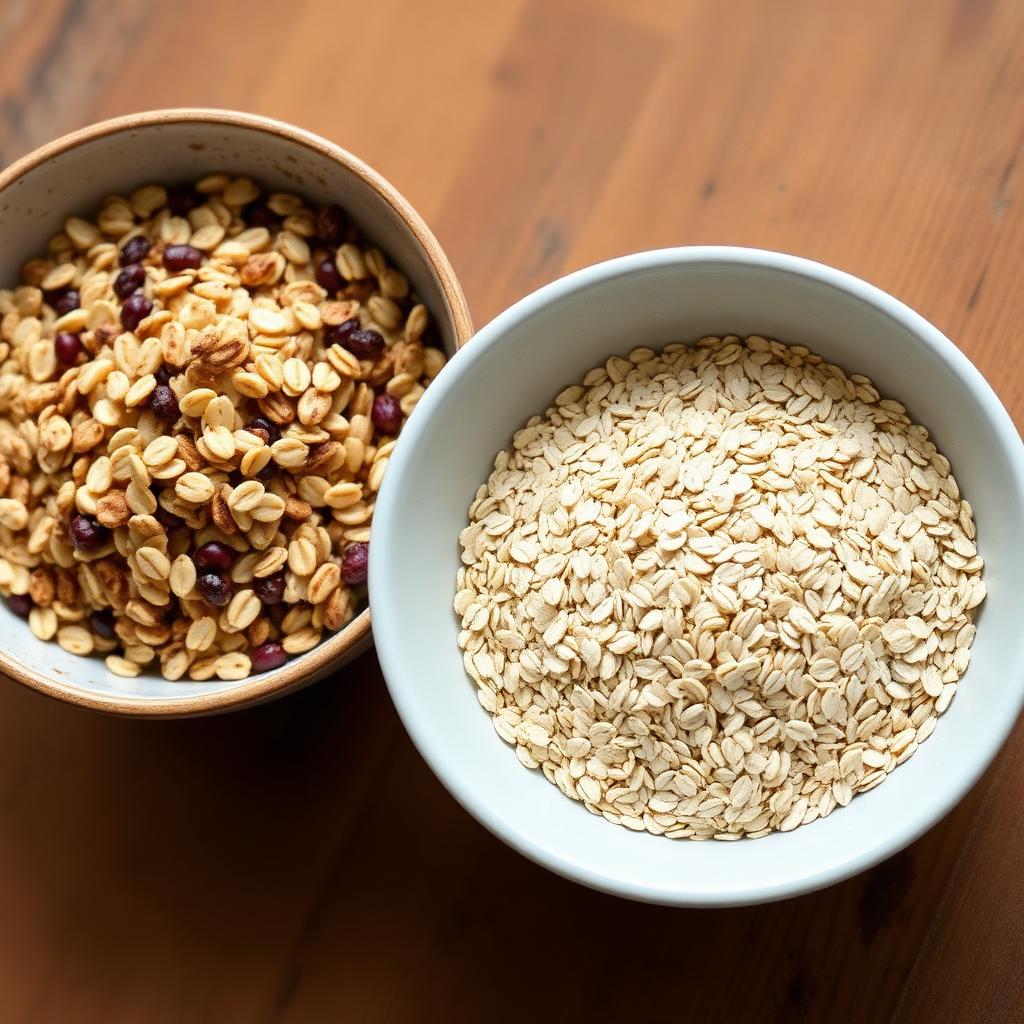
Steel cut oats are simply the whole oat groat chopped into two or three pieces, while rolled oats are groats that have been steamed and pressed flat. That extra processing is the only meaningful nutritional difference, and it shows up in digestion speed rather than in the nutrient panel.
Because steel cut pieces are denser, water and digestive enzymes reach the starch more slowly. Most published comparisons put steel cut oats a few points lower on the glycemic index than rolled oats, and rolled oats well below instant oats. For a person tracking blood sugar, that difference is real but small, and it is easily outweighed by what you add to the bowl.
Fibre, Protein and Micronutrients Side by Side
Per 40 g dry, both forms deliver roughly 150 calories, 5 g protein, 4 g fibre and about 2 g of beta glucan, the soluble fibre linked to lower LDL cholesterol. Iron, magnesium, phosphorus and manganese are effectively identical because nothing is removed during rolling.
The practical takeaway is that neither oat is nutritionally superior in any way that matters over a week of eating. Choose steel cut when you want chew and a slower burn, rolled when you want a five minute breakfast, and stop worrying about the gap.
Bottom Line
Steel cut oats are cheap, nutrient-dense and endlessly flexible. Learn one good base recipe, then let toppings do the variety.
Cost Comparison at US and UK Grocers
- US mid-tier: rolled oats 3 to 4 USD for a 2 lb canister; steel cut 4 to 6 USD for a 24 oz canister.
- US organic: rolled 5 to 7 USD; steel cut 6 to 9 USD.
- UK mid-tier: jumbo rolled oats 1.50 to 2 GBP per kg; steel cut 3 to 4 GBP per kg.
- Bulk bins: both drop 30 to 50 percent per pound compared with canister prices.
Environmental Footprint
Oats are one of the lowest-impact grains globally. Both rolled and steel cut oats have a carbon footprint of around 0.9 kg CO2e per kg, well below wheat (1.4), rice (2.7) and beef (99). The processing difference between rolled and steel cut is negligible in life-cycle terms.
Sports and Athletic Performance Angle
Endurance athletes often prefer steel cut oats 60 to 90 minutes before long training because the slower digestion gives sustained fuel. Sprint and strength athletes typically prefer rolled or instant closer to a session for faster availability. Neither is objectively "better"; the choice depends on the timing of your workout.
Post-workout, a mix of rolled oats with whey protein and fruit hits the fast-carb-plus-protein window most researchers recommend within 30 to 45 minutes of finishing.