Quick Answer
"Better" depends on what you value. Steel cut oats win on texture (chewy, nutty), on glycemic index (about 55 vs 63 for old-fashioned rolled and 79 for instant), and on being the least processed form. Rolled oats win on cook time (5 minutes vs 25), on versatility (baking, granola, overnight oats) and on price per pound at most grocers.
Nutritionally, the difference per cooked cup is minor: within about 1 gram of fibre and identical calories, protein and micronutrients. Both are whole grains with the bran and germ intact.
Head to Head
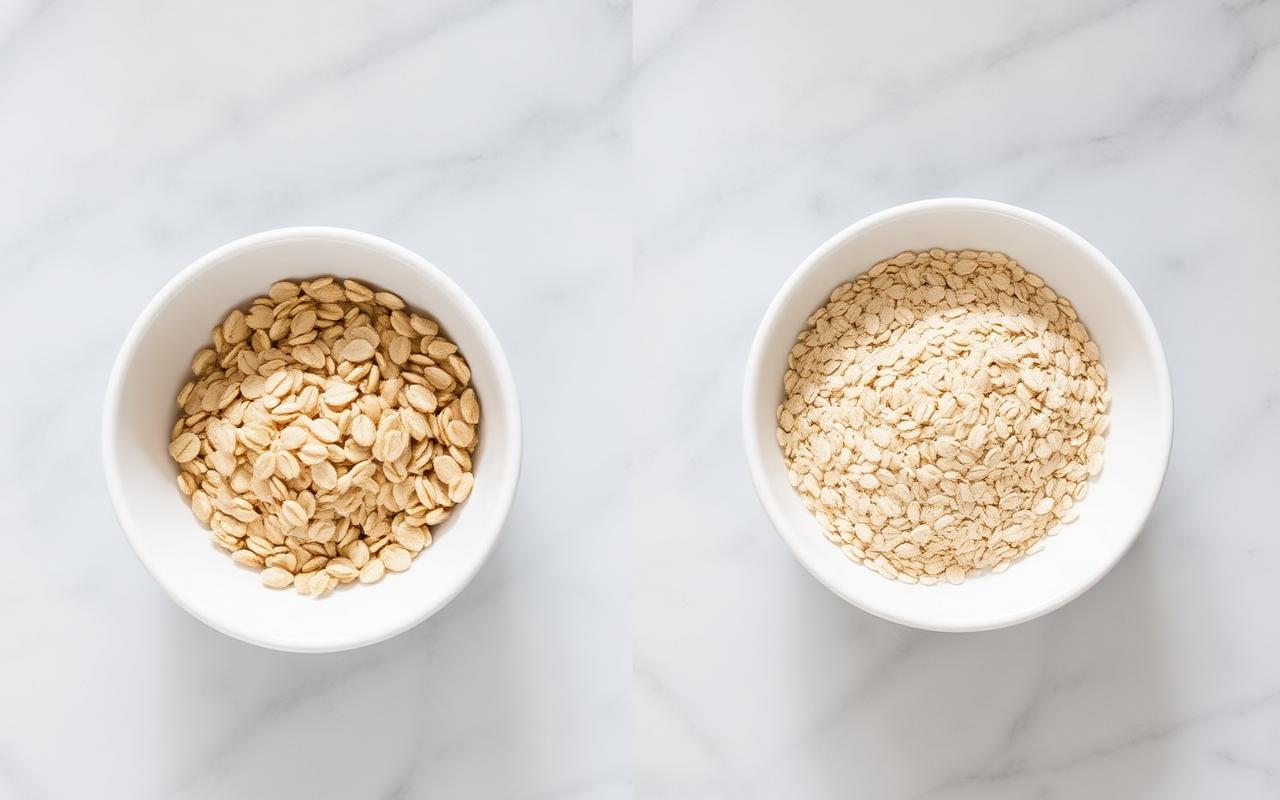
- Cook time: steel cut 20 to 30 min stovetop, rolled 5 min stovetop or 2 min microwave.
- Texture: steel cut chewy and nutty; rolled soft and creamy.
- Glycemic index: steel cut about 55, rolled about 63, instant about 79.
- Fibre per cooked cup: steel cut 5 g, rolled 4 g.
- Baking suitability: steel cut poor (too hard); rolled excellent.
When Steel Cut Is the Better Choice
- You want maximum satiety and the lowest glycemic response.
- You like a chewy porridge and dislike the "gluey" mouthfeel of rolled.
- You batch cook once and reheat all week.
When Rolled Is the Better Choice
- You have 5 minutes before work.
- You are baking cookies, granola, energy bars or muffins.
- You are making overnight oats (steel cut do not soften enough cold).
- You feed kids who dislike the chewy texture.
The Verdict
Neither is objectively "better". They serve different jobs. Most home cooks keep both: rolled for weekday speed and baking, steel cut for weekend batches and cold-morning bowls.
Frequently Asked Questions
Can I eat steel cut oats every day?
Yes. Harvard's Nutrition Source lists oats as one of the best whole grains to eat daily, thanks to their beta-glucan fibre. Rotate toppings so you do not get bored, and vary the fruit for different vitamins.
Do steel cut oats need to be soaked?
Not required, but a 6 to 12 hour overnight soak cuts stovetop time from 25 minutes to about 10 and softens the phytic acid, which can slightly improve mineral absorption.
Are they safe during pregnancy?
Yes. Oats are fibre-rich, iron-friendly and a common obstetric recommendation for constipation and steady energy. Choose certified gluten-free if you have celiac disease.
Do they go bad?
Dry, unopened steel cut oats keep 12 to 24 months in a cool pantry. Once cooked, refrigerate up to 5 days or freeze in portions for up to 3 months.
Pro Tips
- Toast first. Dry-toast the raw groats in the saucepan for 2 to 3 minutes before adding liquid. It deepens the nutty flavour and is the single biggest upgrade you can make.
- Salt the water. A quarter teaspoon of salt per cup of oats fixes the "bland cardboard" complaint most people have with plain oatmeal.
- Batch cook Sunday. Cook a full cup dry (yields about 4 cups cooked), portion into jars, and reheat with a splash of milk each morning.
- Do not stir constantly. Unlike rolled oats, steel cut oats keep their chew when left mostly alone. Over-stirring makes them gummy.
Bottom Line
Steel cut oats are one of the least processed, most affordable whole grains you can put in a bowl. They are worth the extra cooking time on days you have it, and worth batch cooking on days you do not.
Cooking Method Matters More Than the Cut
The single biggest determinant of how your oatmeal affects blood sugar is not steel cut vs rolled, it is the water-to-oat ratio and cook time. Slow-cooked oats with more water and less stirring hold their structure and score lower on GI than the same oats blitzed into a smooth pudding. Rolled oats simmered gently for 8 minutes can outperform steel cut boiled hard for 20.
Which One Wins on Cost
Rolled oats in a two-pound bag run 3 to 5 USD at most US grocers. Steel cut oats run 4 to 7 USD for the same weight, and organic or Purity Protocol steel cut can hit 10 USD. Per serving the gap is small, but at family scale it adds up.
The Verdict, Repeated
The best oats are the ones you actually eat every week.
What About Overnight Oats?
Overnight oats are the one recipe where rolled oats win outright. Cold soaking softens rolled oats overnight into a creamy pudding; steel cut stay stubbornly hard even after 12 hours in milk. If overnight oats are your go-to, buy rolled and stop feeling guilty about it. The "steel cut overnight oats" recipes circulating online almost always require a brief cook first, defeating the point.
Storage Notes
Both keep 12 to 24 months dry in a cool pantry. Once cooked, refrigerate up to 5 days or freeze in silicone cube trays for up to 3 months. Frozen cubes reheat in 90 seconds with a splash of milk.